

In the spring of 2026, two contradictory sculptures emerged on the world stage, both demanding public attention and sparking fierce debate. The first is the 22-foot “Don Colossus,” a golden statue of Donald Trump erected at his Miami golf course, whose unveiling prompted immediate accusations of biblical idolatry. The second is Banksy’s newest London installation on Waterloo Place—a statue of a suited man whose face is completely covered by a flag, striding blindly toward the edge of his plinth.
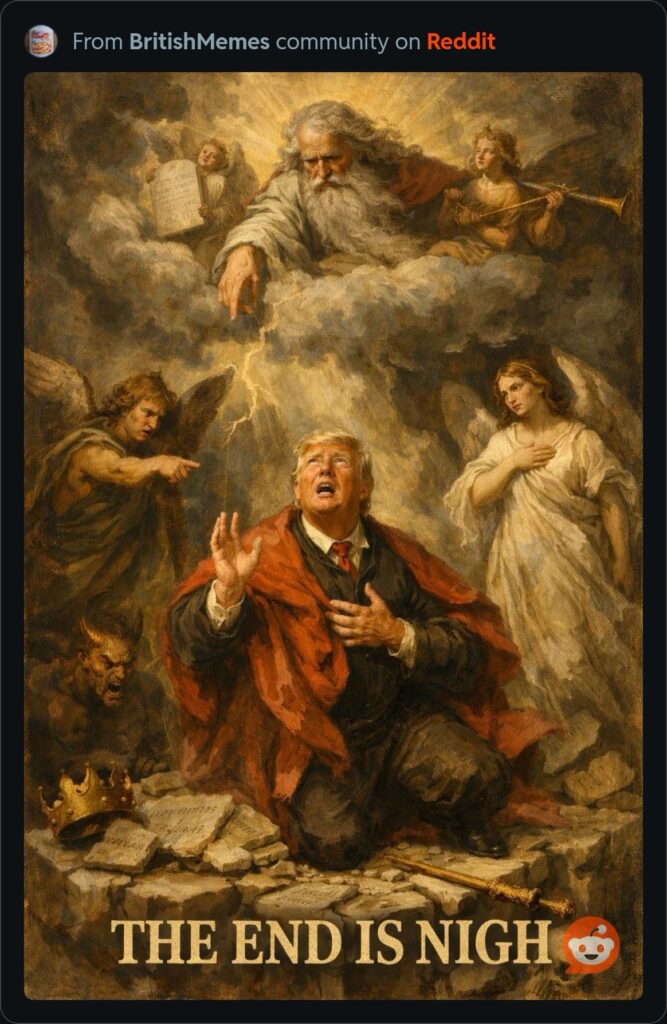
One statue is an exercise in literal, self-celebratory homage; the other is a masterclass in satirical critique. Together, they offer a fascinating case study in how art and political iconography can be used, and how they often reflect the societies that produce them.
The Golden Trump Statues: A Pattern of Homage
The recent controversy over a golden Trump statue is not without precedent. In 2021, a six-foot-tall golden effigy of Trump, dressed in American flag shorts and holding a copy of the Constitution, was wheeled around the Conservative Political Action Conference (CPAC). The reaction was immediate, with critics condemning it as a “golden calf”.

However, it was the unveiling of “Don Colossus” in May 2026 that truly intensified the debate. The 22-foot bronze sculpture, coated in gold leaf and depicting Trump with his fist raised after surviving an assassination attempt, was installed at the Trump National Doral golf course. The project was funded by a cryptocurrency group and blessed by Pastor Mark Burns, an evangelical minister and Trump’s spiritual adviser.
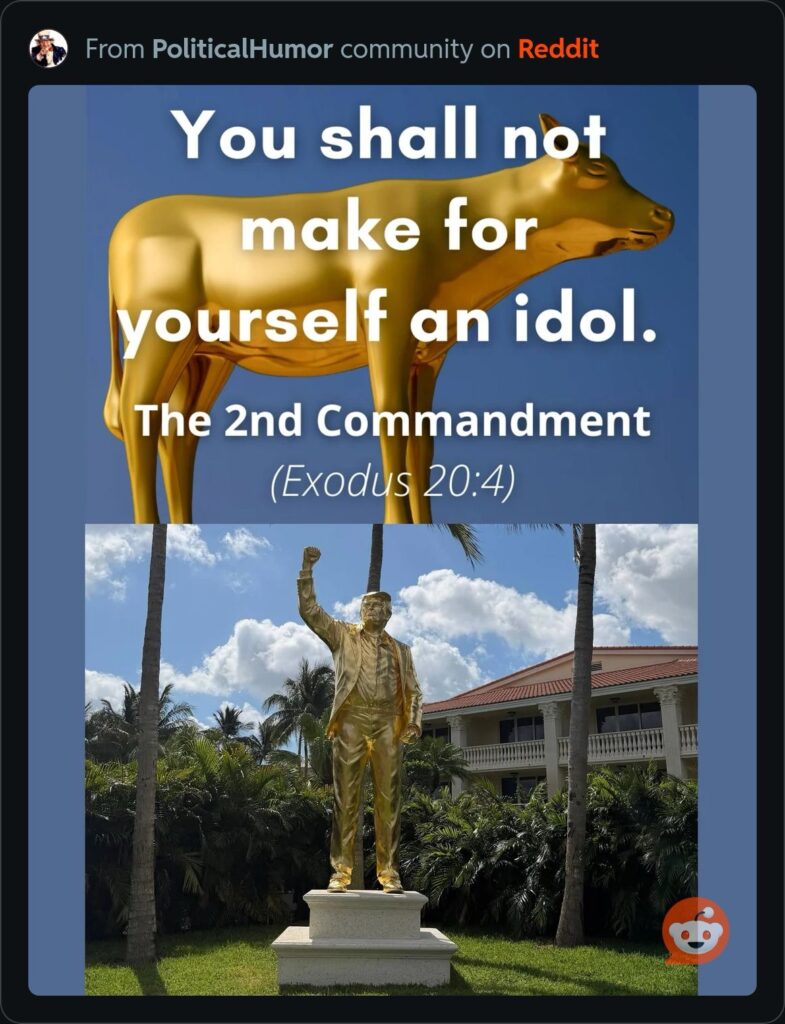
“This is Not a Golden Calf”: The Defense of “Don Colossus”
Pastor Burns, who led the unveiling ceremony, was forced to defend the project against a wave of biblical criticism. Critics immediately drew a parallel between “Don Colossus” and the Old Testament story of the golden calf, in which the Israelites, in Moses’ absence, demanded a god they could see, leading Aaron to fashion a calf from their gold earrings. This act is the quintessential example of idolatry in the Judeo-Christian tradition, a violation of the Second Commandment which prohibits the fashioning of idols.
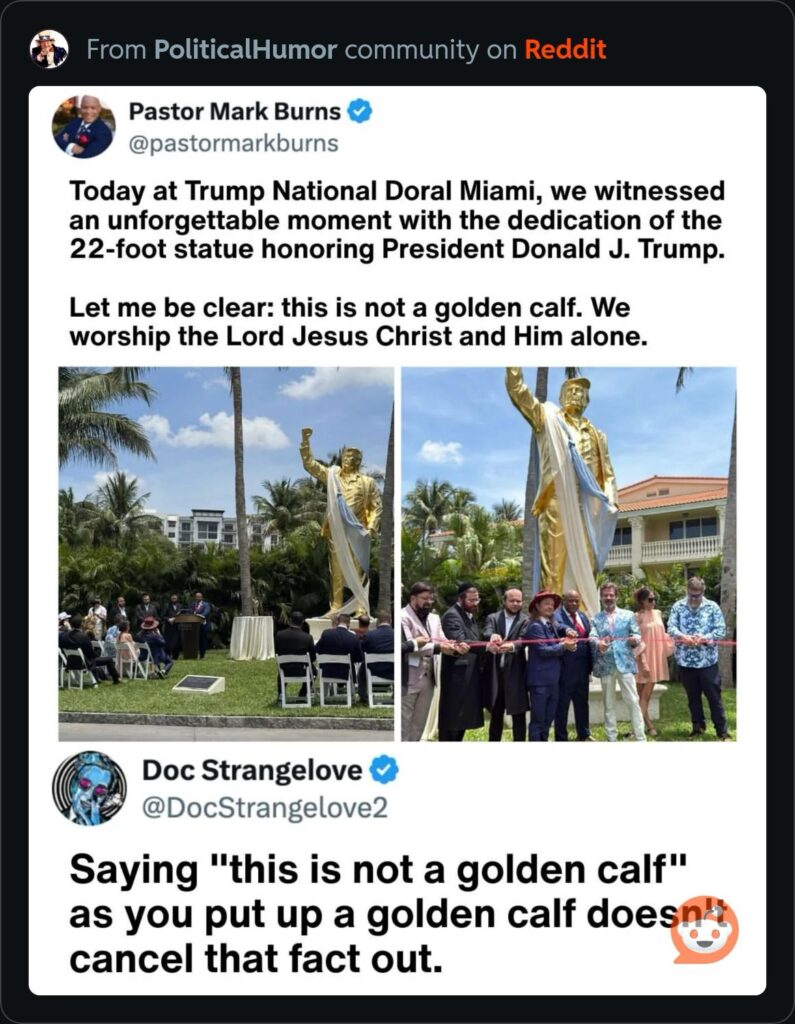
Pastor Burns pushed back strongly, arguing the statue was an act of honor, not worship. “Let me say this plainly: this is not a golden calf,” he wrote. “This statue is not about worship. It is about honor… a powerful symbol of resilience, freedom, patriotism, courage, and the will to keep fighting for America”. He maintained that he and his followers worship the Lord Jesus Christ alone, quoting Romans 13:7 on rendering honor to whom honor is due.

Yet, these defenses may miss the point. The biblical critique of idols is not just about the act of kneeling. The Carthaginian theologian Tertullian famously inquired, “What difference does it make whether it is of metal or of political power?” The sin of the golden calf, after all, was not merely the creation of the object but the profound misdirection of faith and loyalty it represented.
In this light, the presence of a Christian pastor blessing a monument to a worldly leader appears troublingly akin to Aaron building an altar before the calf and proclaiming a feast to the Lord. It raises the question of whether the line between honoring a leader and venerating him has become dangerously blurred, especially when a leader is already surrounded by personality-driven branding, from Bibles to sneakers.

Banksy’s Flag: A Mirror for a Different Idolatry
Across the Atlantic, Banksy’s statue offers a stark contrast. The anonymous artist’s work depicts a man in a suit, carrying a flag that completely obscures his face, stepping off a plinth as if about to fall. Erected covertly overnight in Waterloo Place, an area designed to celebrate British imperialism, the statue has been interpreted as a powerful critique of blind patriotism and jingoism—a warning against allowing national symbols to become objects of uncritical adoration.
Banksy is not crafting an object for physical worship; he is holding a mirror to a different kind of idolatry—one where the flag itself becomes a sacred symbol, and where the person carrying it is rendered unable to see where they are going. The statue has drawn comparisons to totalitarian aesthetics, with commentators calling it a warning about the far-right. This is the mark of the iconoclast, an artist who, as the critic James Peak noted, captures the “perfect freeze-frame” of a bumptious figure of authority about to take a fall.

Worship of the Golden State
The contrast between the two statues is illuminating. Trump’s golden effigy, even when defended as “merely” an act of honor, uses the most precious materials to celebrate a singular individual. It is a literal attempt to carve a permanent, gleaming legacy in his own image.
Banksy’s statue, by contrast, is anonymous. Its figure is faceless and universal. The flag does not carry a specific national insignia, making its critique applicable anywhere.

This leads to a profound irony: Pastor Mark Burns was forced to defend his statue against accusations of idol worship. Yet, it is Banksy’s work, not Trump’s, that is fundamentally and unflinchingly about idolatry. It warns that the worship of national symbols can easily become a form of idolatry as well, ascribing divine power and infallibility to a piece of cloth.

In the biblical narrative, the golden calf was not just a statue; it was a desperate grasp for a tangible God in the absence of a mysterious one, a desire to reduce the numinous to a manageable, portable form. One could argue that a 22-foot-tall statue of a political leader, blessed by a pastor and coated in gold leaf, is an even more literal example of that failed grasp. As one critic noted when the statue was first unveiled, perhaps the most appropriate moment for CPAC attendees to read the Second Commandment was before they posed for photos with their new golden god.