

The financial cost of modern warfare is often measured in the staggering price of the equipment lost on the battlefield. The ongoing conflict between the United States and Iran has provided a stark illustration of this, with the loss of an advanced MQ-4C Triton surveillance drone emerging as a multi-million-dollar symbol of the war’s escalating price tag. This article breaks down the cost of that lost drone, the value of other American equipment destroyed, and the estimated daily expense of the conflict.
The $240 Million MQ-4C Triton
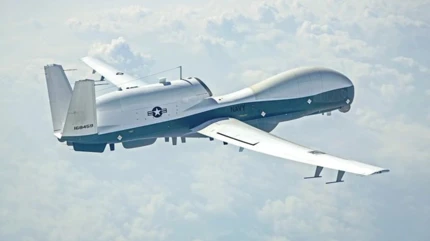
The most significant single equipment loss was the crash of an MQ-4C Triton. The US Navy officially categorized the April 9 incident, in which the drone crashed in the Persian Gulf, as a “Class A mishap”—the military’s most serious aviation loss category. While initial reports suggested it may have been shot down, US authorities later confirmed the aircraft had simply “crashed”.

The financial impact of this loss is severe. The MQ-4C Triton is one of the Pentagon’s most expensive unmanned platforms. Depending on the source and the specific budgetary documents cited, its unit cost is estimated to be between $200 million and $250 million. More precise estimates place the value between $238 million and $245 million. This makes the drone’s price tag roughly double that of a single upgraded F-35 fighter jet, which costs nearly $100 million.

Other Key Losses: Aircraft, Radar, and Carriers
The Triton is far from the only high-value asset the US has lost. Since the start of the conflict on February 28, American forces have seen a wide range of equipment destroyed or damaged. The Center for Strategic and International Studies (CSIS) estimated that the US suffered at least $1.4 billion in combat losses and infrastructure damage in the first six days of fighting alone.

Broader analyses put the total cost of battle damage and equipment replacement between $2.1 billion and $3.6 billion.
This total is the sum of numerous smaller, but still substantial, losses:
· MQ-9 Reaper Drones: The US has lost 24 MQ-9 Reaper drones in the conflict, representing a loss of approximately $720 million, given that each drone can cost $30 million or more. These losses, combined with the Triton, bring total US drone losses to nearly $1 billion.

· Manned Aircraft: The war has also seen the loss of at least 44 aircraft, including a rare incident where an F-35 Lightning II stealth fighter was hit. A single AWACS surveillance plane (an E-3 Sentry) costs the American taxpayer $724 million to replace. Other losses include F-15 fighter jets and A-10 attack planes, some of which were lost to friendly fire.
· Naval and Radar Systems: The price tag also includes the cost of repairing the USS Gerald R. Ford, an aircraft carrier, and replacing a drone-damaged ballistic missile early warning system in Qatar. Iran has prioritized targeting expensive radar systems, such as the AN/TPY-2, which are critical for advanced missile defense.

Estimated Cost Per Day of the Trump-Iran War
The daily cost of waging the war is a subject of significant debate, with estimates varying based on what is included in the calculation. The figures range from hundreds of millions to over a billion dollars per day.
· Hundreds of Millions: Mark Cancian, a senior adviser at CSIS, estimated the campaign was costing the US about half a billion dollars ($500 million) every day. About a tenth of this daily expenditure goes directly to replacing equipment destroyed by Iranian strikes.

· Approaching $1 Billion: Other estimates place the daily cost closer to $890 million. This figure, based on data from the Stockholm International Peace Research Institute (SIPRI), covers munitions, air and naval operations, missile defense, and intelligence.
· Up to $2 Billion: Some of the highest estimates, including analysis from Harvard’s Linda Bilmes, suggest the war is costing about two billion dollars a day in short-term, upfront costs. This is supported by reports that the conflict could be costing as much as $2 billion per day, a figure that emerged from closed-door congressional briefings. The immense cost is driven by the rapid expenditure of munitions, including over $2 million per Tomahawk missile, and the deployment of multiple carrier strike groups.

Ultimately, the total cost of the war is likely to be far higher than these initial estimates, as the Pentagon has requested an additional $200 billion from Congress to cover its operations. The loss of the MQ-4C Triton is just one line item in what is shaping up to be an enormously expensive conflict.