

By Trump ShagsKids
KAISERSLAUTERN, Germany — Deep in the woods of southwestern Germany, at the Landstuhl Regional Medical Center, something strange happened in the first week of March 2026. The largest American military hospital outside the United States—the primary evacuation hub for wounded soldiers from the Middle East—quietly announced it was suspending labor and delivery services. Newborn babies, it seemed, were no longer the priority.

The official explanation was vague: the hospital needed to focus on its “primary objective.” But inside sources tell a different story—one of combat casualties flooding the facility in numbers that dwarf the Pentagon’s public reports, of a systematic cover-up designed to shield President Donald Trump from the political consequences of a war he promised never to fight .
Twelve days into “Operation Epic Fury”—the joint U.S.-Israeli military campaign against Iran—the gap between official narratives and on-the-ground reality has become a chasm. While the Pentagon admits to seven American deaths and 140 wounded, evidence suggests the true toll is far higher. And as the body count rises, so do questions about the legality of a conflict launched without congressional authorization, based on intelligence that even administration allies view with skepticism .
The Numbers Don’t Add Up
On March 13, the Pentagon released its first comprehensive casualty update since the war began on February 28. The numbers were carefully calibrated to project control: seven service members killed, 140 wounded, with 108 of those injured “already returned to duty.” The message was unmistakable—losses are minimal, the mission is working .
But even as that statement circulated, Iranian officials were making vastly different claims. Ali Larijani, head of Iran’s National Security Council, asserted that American combat deaths had already exceeded 500—a figure that Western journalists cannot independently verify, but one that aligns uncomfortably with other indicators the administration would prefer the public ignore .
The most troubling evidence comes not from Tehran, but from Germany. Landstuhl Regional Medical Center serves as the Defense Department’s primary trauma hospital for Europe, the Middle East, and Africa. When it suspends obstetric services—when it stops delivering babies—military medical experts know exactly what that means.
A former supervisor of the Defense Department’s Wounded Warrior Program, who worked extensively with Landstuhl during the Iraq and Afghanistan wars, told independent journalist Larry C. Johnson that the hospital is experiencing a “flood of casualties.” The numbers, the source said, are so large that the facility can no longer allocate resources to routine care .
“LRMC’s core role is treating combat- and training-related injuries,” Johnson noted. “It also is the main medical evacuation point for wounded troops from ongoing operations.” When such a facility halts non-emergency services, it signals a mass casualty event that the Pentagon is actively concealing .
Adding to the suspicion: on March 8, the Pentagon announced that a service member in Kuwait had died of “sudden illness.” In the history of military cover-ups, “disease and non-battle injury” has long been the category where inconvenient combat deaths disappear—especially when bodies are too badly damaged for immediate identification, delaying notification of families and freezing the official death count .
‘Every Once in a While, You Might Have a Squirter’
The administration’s public messaging on casualties has been, at best, erratic—and at worst, disturbingly callous.
On March 2, as the first American deaths were confirmed, President Trump recorded a video address vowing to “avenge” the fallen. But he also offered a strange ad-lib: “Sadly, there will likely be more before it ends. That’s the way it is. Likely be more” .
Defense Secretary Pete Hegseth, the former Fox News host, has been even less polished. Referring to Iranian weapons that kill Americans, Hegseth told reporters: “Every once in a while, you might have a squirter that makes its way through” .
By March 4, Hegseth had adopted a more aggressive posture—not toward Iran, but toward the journalists covering the war. At a Pentagon briefing, he complained that American combat deaths were receiving “front-page news” coverage, suggesting the media was highlighting fatalities “to make the president look bad” .
“When a few drones get through or tragic things happen, it’s front-page news,” Hegseth said. “I get it—the press only wants to make the president look bad, but try for once to report the reality” .
The implication was unmistakable: the deaths of American service members should be downplayed to protect the administration’s political interests.
A War Without Authorization, Based on Unproven Claims
The casualty cover-up is compounded by fundamental questions about the war’s legality and justification.
Trump has justified the attack by claiming Iran was on the verge of acquiring nuclear weapons—an assertion for which there is no credible evidence. “An Iranian regime armed with long-range missiles and nuclear weapons would be a dire threat to every American,” Trump said in his March 1 address. Intelligence agencies have repeatedly assessed that Iran has not actively pursued a nuclear weapon since 2003 .
Nor did Trump seek congressional authorization before launching strikes. While the 2001 Authorization for Use of Military Force has been stretched by multiple administrations to justify far-flung operations, the attack on Iran represents a significant escalation—one that many legal scholars argue exceeds presidential authority.
The administration’s planning appears to have been as reckless as its legal rationale. CNN reported that Trump’s national security team was caught off guard by Iran’s ability to close the Strait of Hormuz—a “worst-case, but somewhat predictable” scenario that has been a “bedrock principle of US national security policy for decades,” according to a former official who served both Republican and Democratic administrations .
“I’m dumbfounded,” the official told CNN. White House officials have privately admitted to members of Congress that they simply didn’t think Iran would close the strait—an oversight that has now left oil tankers stranded in the Persian Gulf and global energy markets in turmoil .
The Political Calculus: Why Trump Is Hiding the Truth
If the administration is concealing the true scale of American casualties, the motivation is not difficult to discern.
Trump campaigned for reelection on a promise to end “endless wars.” His “America First” agenda was built in part on the assertion that he would keep American troops out of foreign quagmires. Now, just months into his term, he has launched exactly the kind of conflict he promised to avoid—and some of his most loyal supporters are furious .
“I honestly can’t believe we’re doing this again,” conservative media host Megyn Kelly posted on social media. Former Congresswoman Marjorie Taylor Greene was even blunter: “Trump and his admin betrayed their campaign promises of No More Foreign Wars/No More Regime Change” .

The political math is brutal. During the Iraq War, when American deaths exceeded 4,000, anti-war sentiment paralyzed the Bush administration. Trump faces midterm elections in November 2026. A steady stream of body bags returning to Dover Air Force Base—and images of severely wounded soldiers filling European hospitals—could devastate Republican prospects .
There is also the question of military prestige. Admitting significant casualties would require acknowledging that Iranian missiles have successfully penetrated American defenses—that the “patriot” and “THAAD” systems lauded as impenetrable have failed. For an administration built on projecting strength, such admissions are unacceptable .
‘The Truth Is Not Something They Can Hide’
As the administration scrambles to control the narrative, Iranian officials have seized on the discrepancies.
“The Americans claim that they have been killed in action,” Larijani posted on X. “But despite their futile efforts, the truth is not something they can hide for too long” .
That truth may already be emerging—not through official channels, but through the quiet suspension of baby deliveries at a German hospital, the puzzled expressions of military families awaiting notifications, and the growing skepticism of a public that has heard these denials before.
On March 13, a Chinese analysis of the conflict put it bluntly: “The United States is desperately trying to hide casualties, with the core goal being to prevent domestic anti-war sentiment from resurging” .
Twelve days into the war, with no end in sight and Trump refusing to rule out ground troops, the administration faces an impossible choice. It can continue concealing the true cost of the conflict, risking a crisis of credibility when the truth inevitably emerges. Or it can come clean—and confront the political consequences of a war that much of America never wanted.
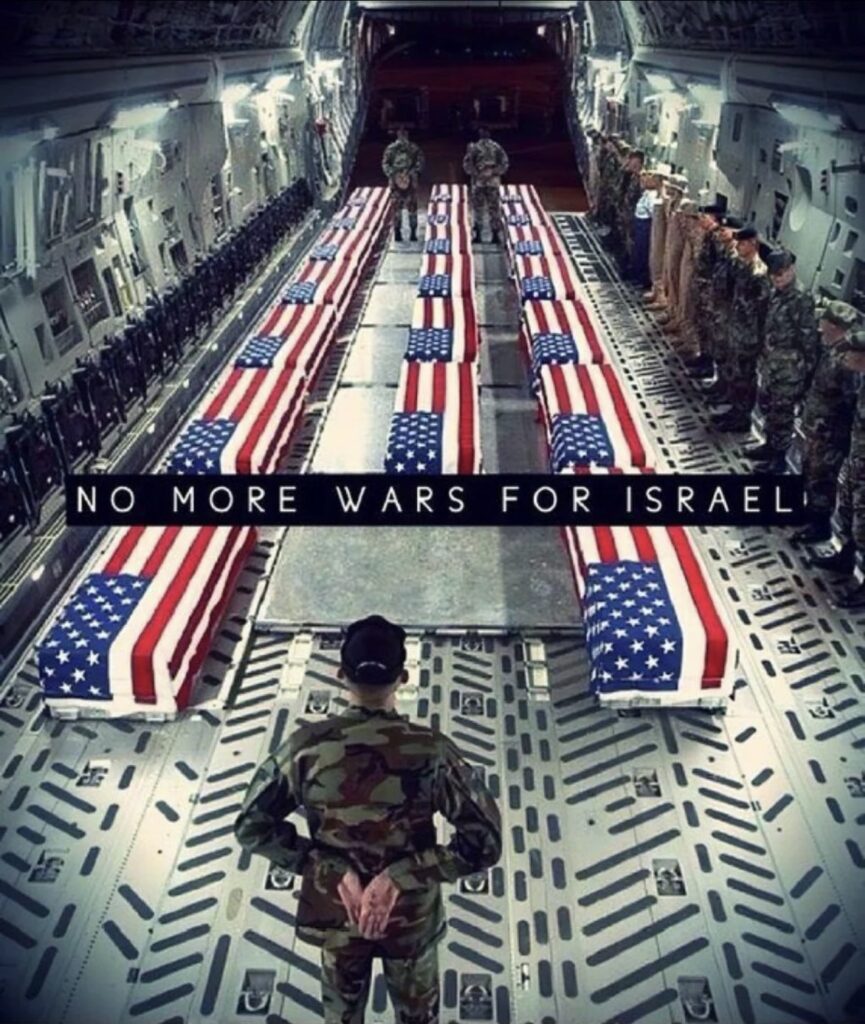
Either way, the families of the fallen—and the wounded soldiers recovering in that overwhelmed German hospital—will know what really happened. The question is whether the rest of us will be allowed to know, too.
Editor’s note: The Pentagon did not respond to requests for comment on the suspension of obstetric services at Landstuhl Regional Medical Center or on allegations that casualty figures are being underreported. The White House press office declined to make anyone available for this story.