
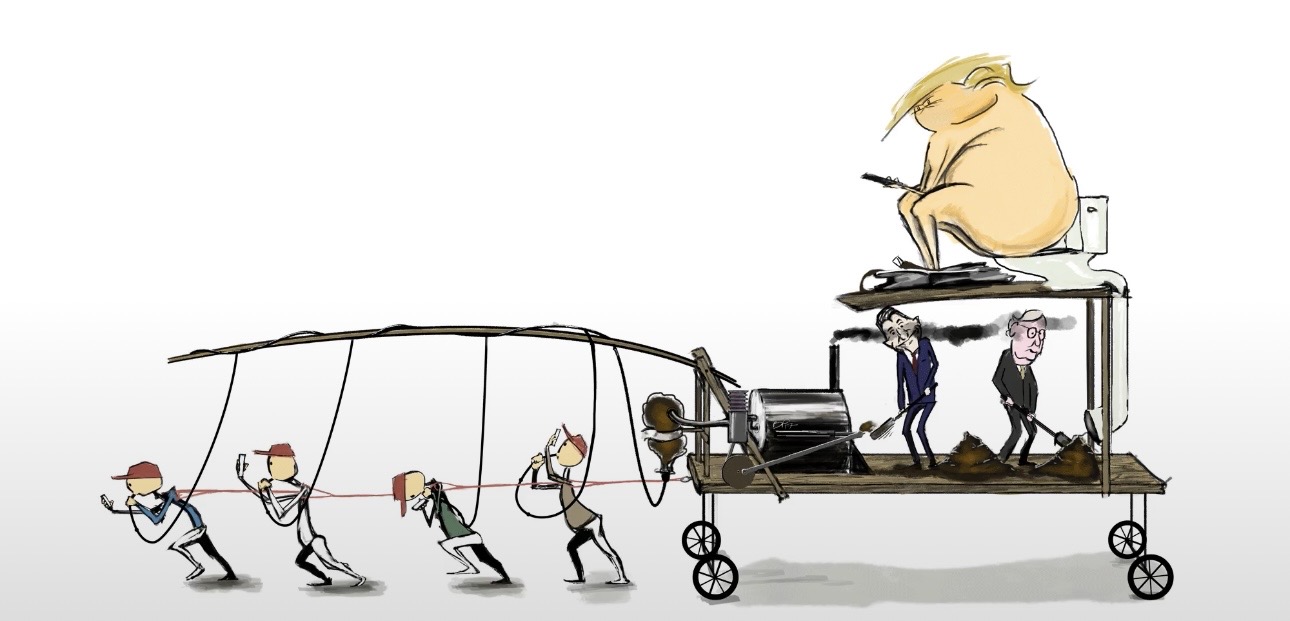
Rasmus’s economic outlook is built on a multi-layered analysis of what he calls a “perfect storm of negative US economic reports and events” . He argues that the “real economy” is stagnating and that official figures are obscuring a more dangerous reality .

🔍 Deconstructing the Jobs Data
One of the primary pillars of Rasmus’s argument is his dissection of the jobs market. He points to the July 2025 jobs report as a critical turning point, suggesting that employment is no longer a “lagging indicator” but has “caught up” and is now “flashing red” . He highlights that only 73,000 net new jobs were created in July, a figure he expects to be revised downward significantly, mirroring substantial negative revisions for the previous two months. Rasmus emphasizes that this is far below the estimated 125,000 jobs needed monthly just to keep pace with new workforce entrants .
Furthermore, he argues that the official unemployment rate of around 4% is a “cherry-picked” statistic that excludes millions of underemployed, part-time, and gig workers. By including these categories, he calculates a more accurate unemployment rate of approximately 8%, representing roughly 14 million workers who are unemployed or underemployed .

📉 GDP, Inflation, and the Tariff Effect
Rasmus is highly critical of how GDP is calculated, arguing that the annualized reporting method (turning 0.75% quarterly growth into a headline 3% figure) “puffs up” the numbers. He contends that even this 3% figure for Q2 2025 is a gross overestimate due to two main factors:
- Underestimating Inflation: The GDP report uses the PCE price index to adjust for inflation. Rasmus argues the PCE “grossly underestimates actual inflation” due to flawed methodologies, such as extrapolating insurance costs from company profits instead of surveying prices. By understating inflation, the government overstates “real” GDP .
- Distortions from Tariffs: Trump’s aggressive tariff policies have created significant volatility in the “net exports” component of GDP. Rasmus explains that in Q1 2025, companies rushed to import goods ahead of tariffs, creating a massive trade deficit that caused GDP to contract. In Q2, imports collapsed in response to the tariffs, artificially inflating the GDP figure. He asserts that “nearly all of the 2nd quarter 3% GDP growth was due to the collapse of imports,” not genuine economic health .
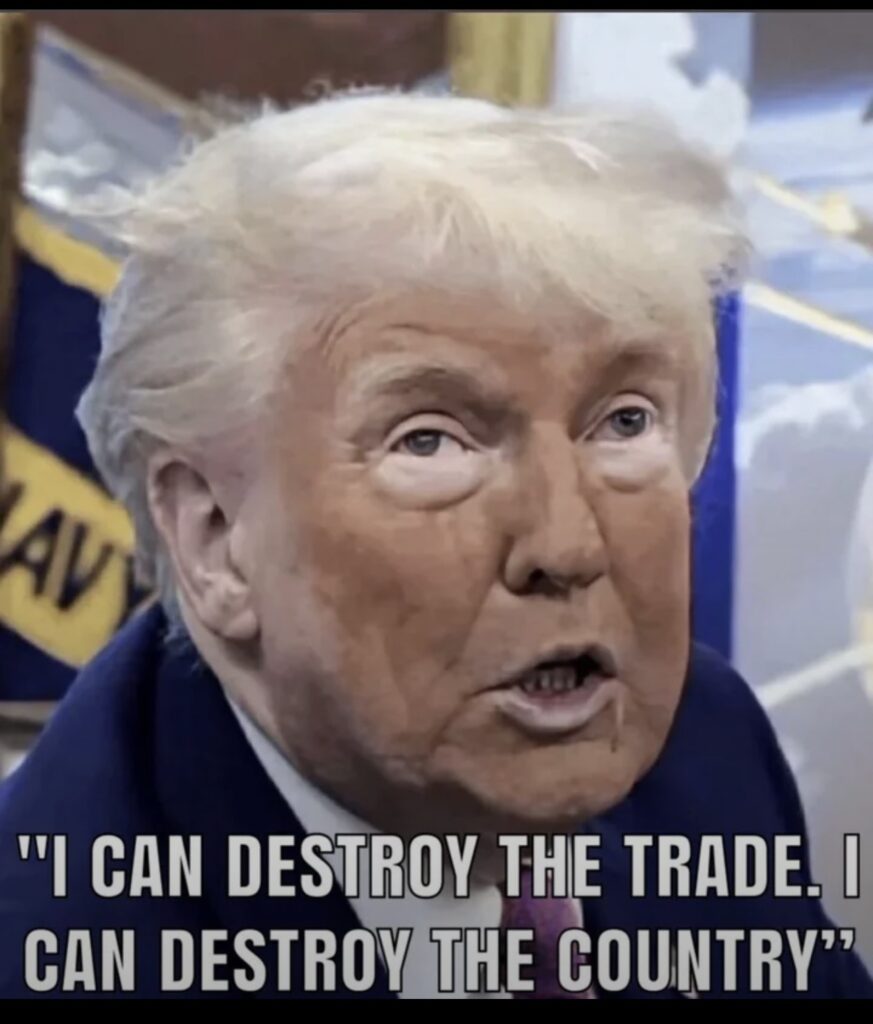
💰 The Four Financial Bubbles
Beyond the real economy, Rasmus warns of dangerous instability in financial markets. He identifies “Four financial bubbles now growing same time,” which include surging stock markets (driven by a handful of AI-focused tech giants), skyrocketing Bitcoin and crypto prices, and rapidly appreciating gold and silver . He describes the current AI investment boom as “17X larger than the 2000 Internet boom,” suggesting a speculative frenzy . The inevitable bursting of these bubbles, in his view, would be a central feature of any major financial collapse.
From “Neoliberalism” to “Destabilizing Regimen”: Rasmus’s Critique of Trump’s Policies
To understand Rasmus’s predictions, one must understand his broader critique of U.S. economic policy, which he laid out in his 2020 book, The Scourge of Neoliberalism: US Economic Policy from Reagan to Trump . He views Trump’s economic agenda not as a break from the past but as a “new, more aggressive and virulent form” of neoliberalism. He describes this as a “destabilizing policy regimen destined to break down” .
He applies this framework to Trump’s signature policies. His tariffs are seen not as strategic tools but as actions that “threaten to blow [the recession door] off its hinges” by disrupting supply chains and creating economic uncertainty . His $5 trillion tax cut package is criticized for failing to deliver promised investment and instead fueling inequality and federal deficits . Rasmus also scrutinizes Trump’s pressure on the Federal Reserve to lower interest rates, arguing that it ignores deeper structural problems in the 21st-century economy .
🏛️ The Political Impact on Trump
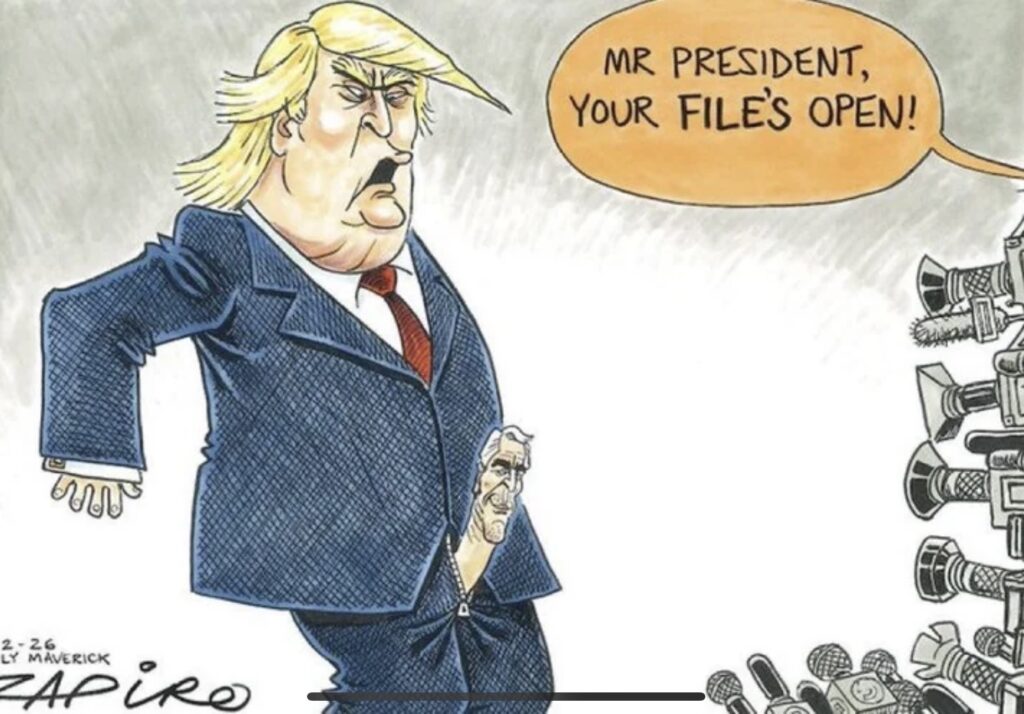
Should Dr. Rasmus’s predictions of a significant economic downturn prove accurate, the political consequences for Donald Trump would likely be profound. Rasmus’s own analysis points to a perfect storm of political vulnerability for the president, which would be impossible for him to spin his way out of.
· The Blame Game Fails: A central tenet of Rasmus’s argument is that the economic problems are not exogenous “shocks” but the direct result of Trump’s own policies—his tariffs, his tax cuts, and his politicization of the Fed . As Rasmus puts it, “Trump’s response… has been to shoot the messenger,” but if the economy collapses, “the facts have now deteriorated to such an extent that even efforts to pave over the pot holes… can no longer cover up the true condition” . His “Make America Great Again” brand, inextricably linked to economic strength, would suffer irreparable damage.
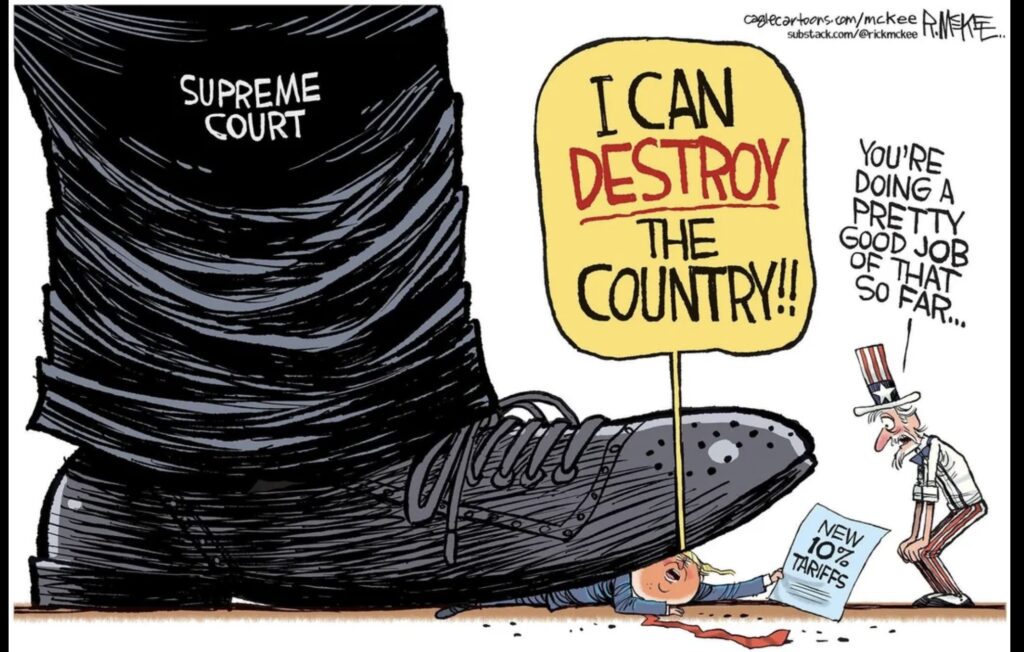
· Erosion of Political Mandate: Trump’s political identity is built on the persona of a deal-maker who alone can fix the economy. A recession occurring on his watch would directly contradict this core narrative. The “new, more aggressive and virulent form” of neoliberalism that Rasmus describes would have demonstrably failed, leaving his administration politically exposed .
· “White Elephant” Politics: The political coalition that supports Trump could begin to view him as a liability, or a “White Elephant”—an asset that has become too costly to maintain . Just as Senator Mitch McConnell found “new-found freedom” to criticize Trump after stepping down, other Republicans might begin to distance themselves, blaming the administration’s policies for the economic pain of their constituents . The unified front would fracture.

· Amplified Vulnerability to External Shocks: A weakened U.S. economy would be less resilient to international crises. Rasmus frequently discusses the “growing BRICS challenge and the falling U.S. dollar,” as well as conflicts in Ukraine and Venezuela . A financial collapse would severely constrain Trump’s ability to project power or respond to these global flashpoints, turning foreign policy challenges into domestic political crises.
🧐 Who Is Dr. Jack Rasmus?
For readers assessing his predictions, it’s important to understand his background. Dr. Jack Rasmus holds a Ph.D. in Political Economy and teaches at St. Mary’s College in California . He is not a Wall Street insider but a former union organizer and negotiator, which informs his focus on the conditions of working people often hidden by “official” statistics . He is the author of several books, including The Scourge of Neoliberalism, and hosts a weekly radio show, “Alternative Visions” . His work is frequently published by the Union for Radical Political Economics, situating him firmly in the tradition of heterodox, critical economic analysis .
Dr. Jack Rasmus presents a deeply concerning picture of the U.S. economy, one where political bravado and statistical manipulation have masked underlying decay. His prediction is not merely for a routine business cycle correction, but for a potential systemic collapse driven by unsustainable policies and massive financial bubbles. For Donald Trump, who has staked his political future on economic performance, a recession of the kind Rasmus describes would represent an existential threat to his presidency. It would transform him from a populist strongman into the face of a failed economic experiment, leaving him politically isolated and vulnerable to the very forces he once mastered.