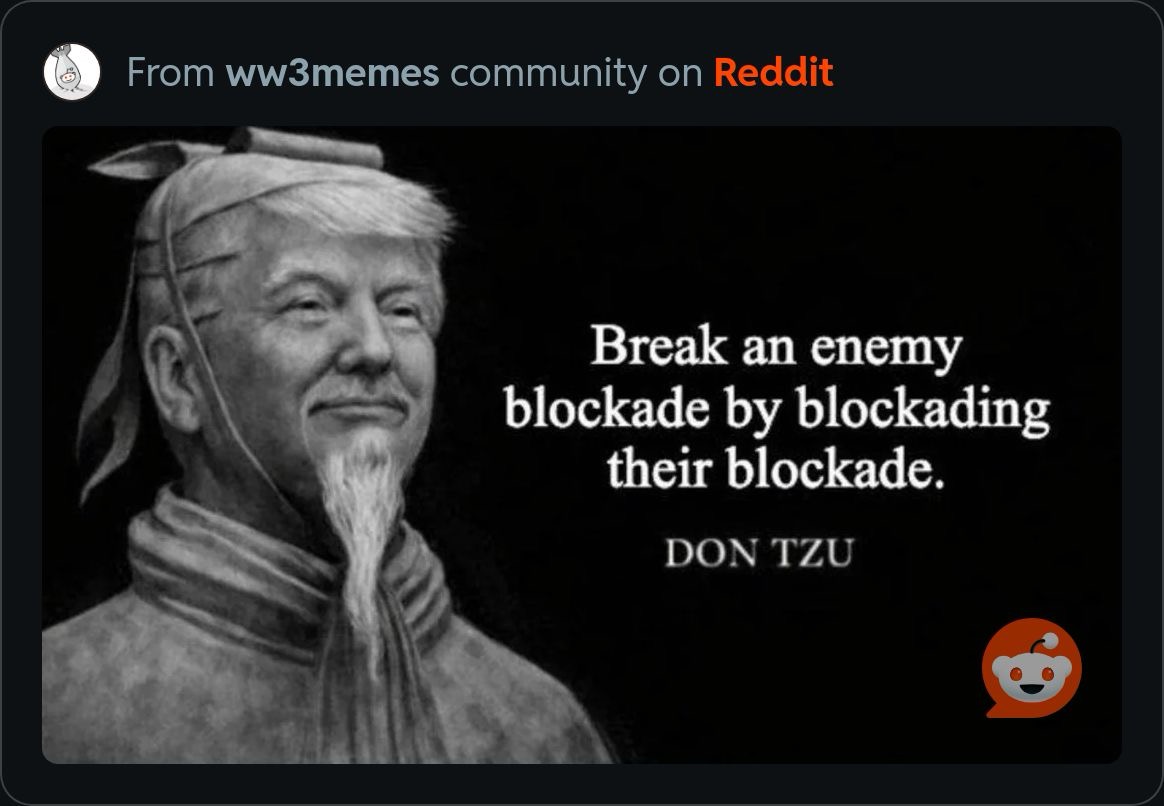
There’s a certain theatrical charm to the way the United States approaches global crises—like a blockbuster movie where the plot doesn’t quite make sense, but the explosions are impressive enough that no one questions it. Enter the latest episode: dramatic warnings, bold declarations, and a fresh round of confidently confusing commentary about the Strait of Hormuz.
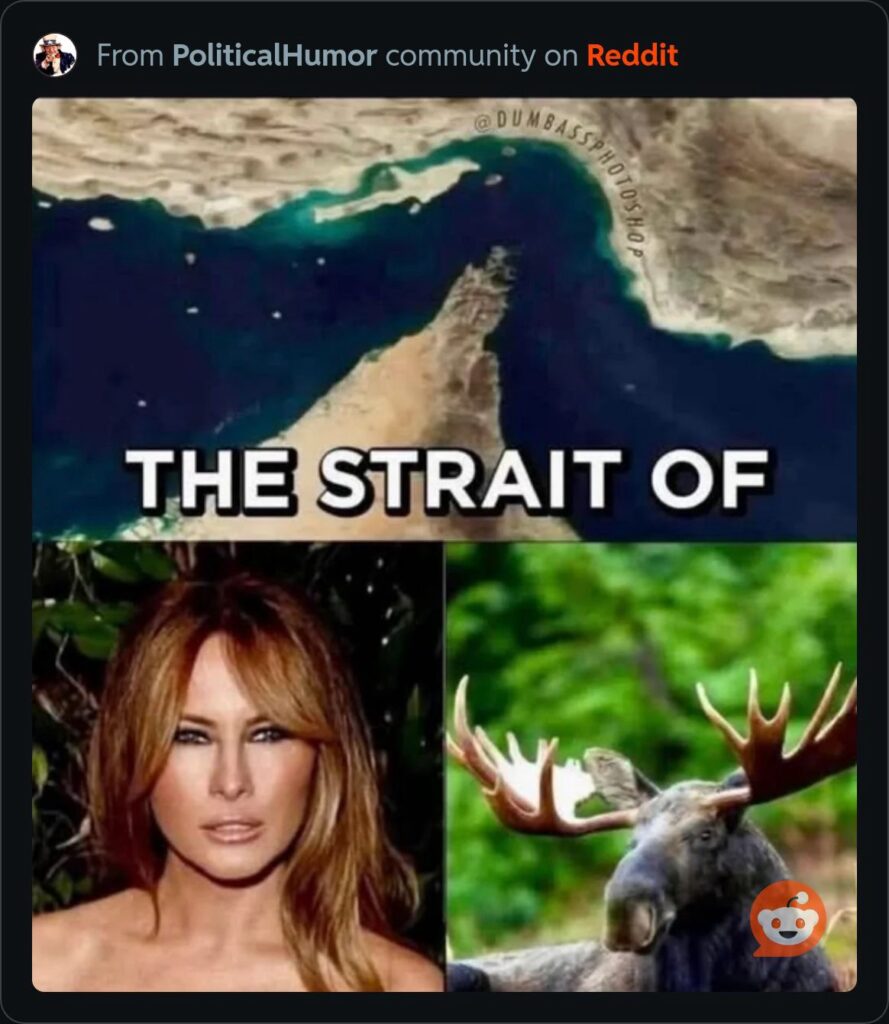
Naturally, no performance in this genre feels complete without a cameo from Donald Trump—a man who has elevated off-the-cuff remarks into something resembling an art form. When it comes to geopolitics, his statements often sound less like carefully considered strategy and more like someone narrating a high-stakes poker game they only half understand.
The Strait of Hormuz, for those keeping score, is one of the most strategically vital waterways on Earth—a narrow passage through which a significant portion of the world’s oil supply flows. It is, in other words, not the ideal setting for improvisation. Yet the commentary surrounding it has occasionally drifted into the surreal, as if the complexities of global energy markets could be resolved with the same logic used to negotiate a hotel deal.
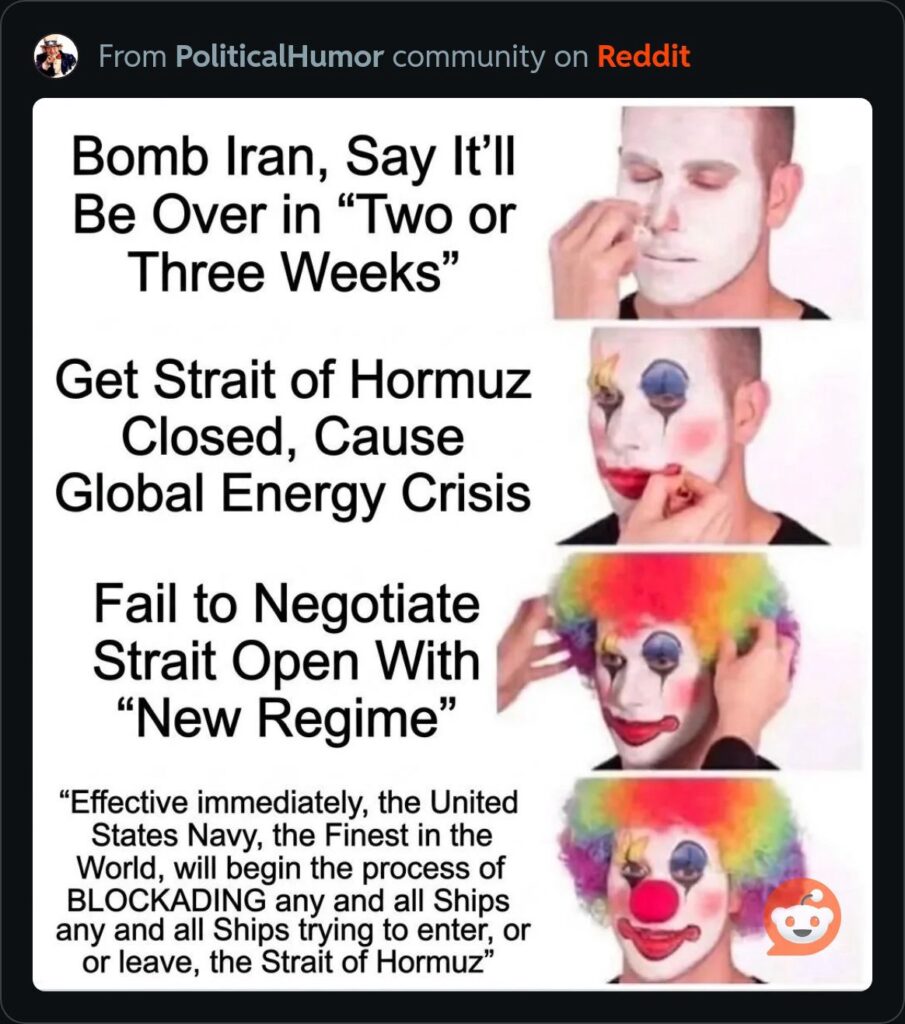
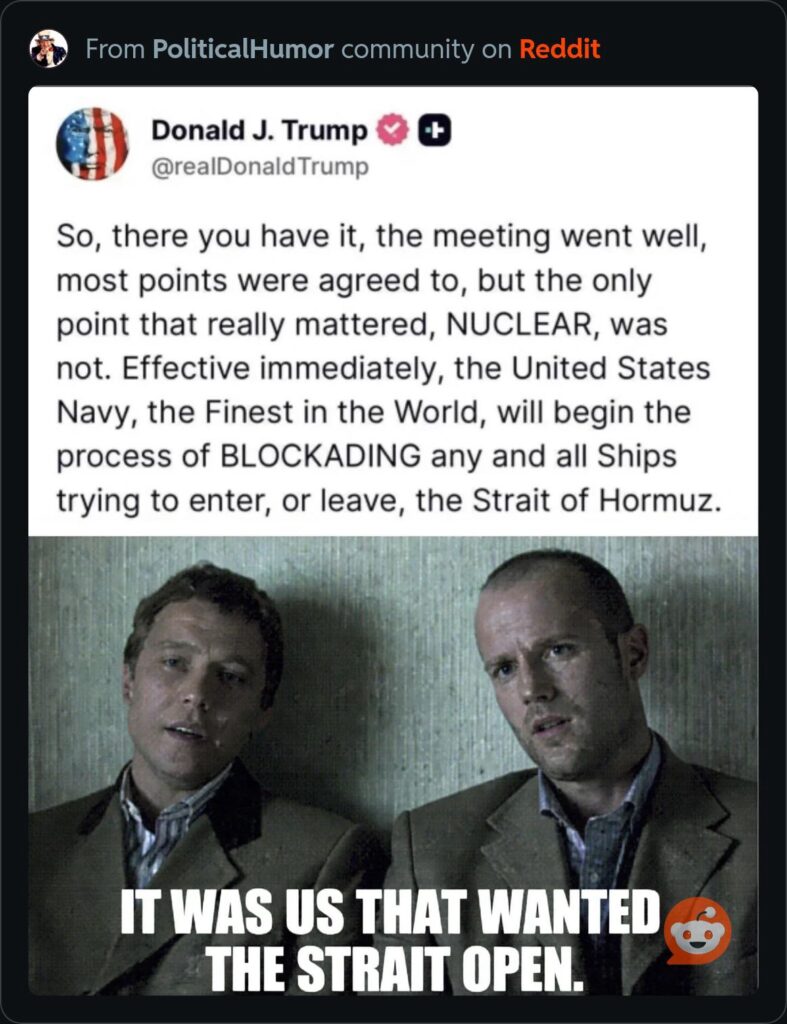
At times, the rhetoric has carried a curious blend of bravado and vagueness: stern warnings about “blockades” paired with explanations that seem to suggest the geography itself might be negotiable. One could almost imagine someone peering at a map and concluding that if you just “close it up,” the problem neatly disappears—like shutting a door in a drafty room.

This is part of a broader pattern in American political theater, where the tone often leans toward absolute certainty even when the substance is… aspirational. The idea that a complex, multinational waterway could be managed through sheer force of personality feels less like policy and more like a reality TV challenge: “This week, contestants attempt to control global shipping lanes.”
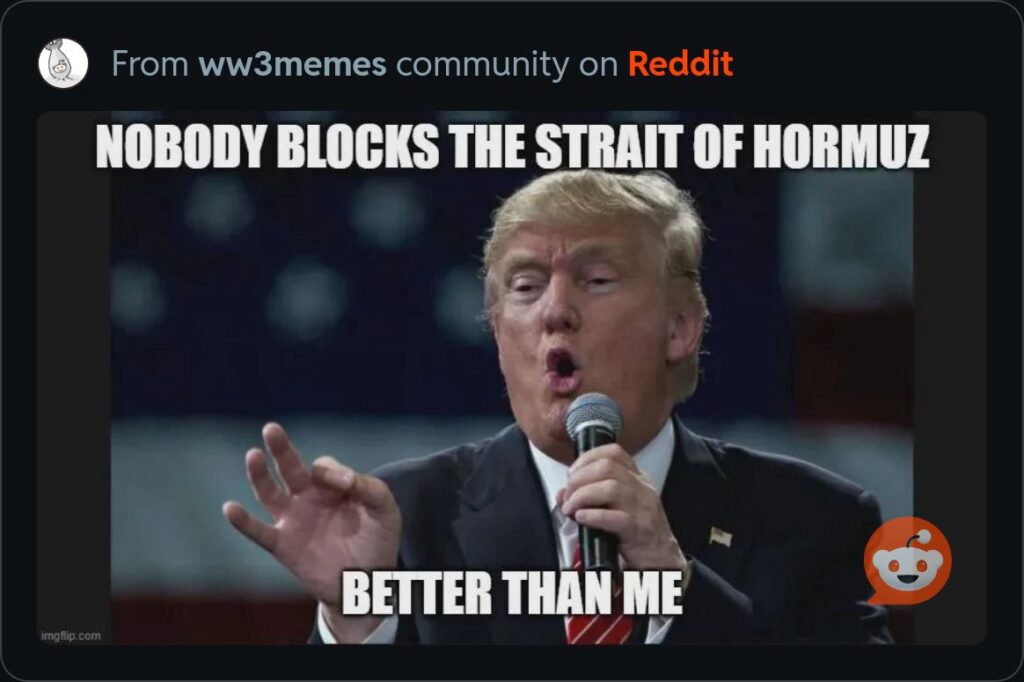
Meanwhile, the rest of the world watches with a mix of concern and bemusement, wondering whether the script will suddenly pivot from bluster to something resembling a plan. Allies attempt polite nods, analysts scramble to interpret what was actually meant, and diplomats quietly hope that the next statement will include at least one verifiable fact.
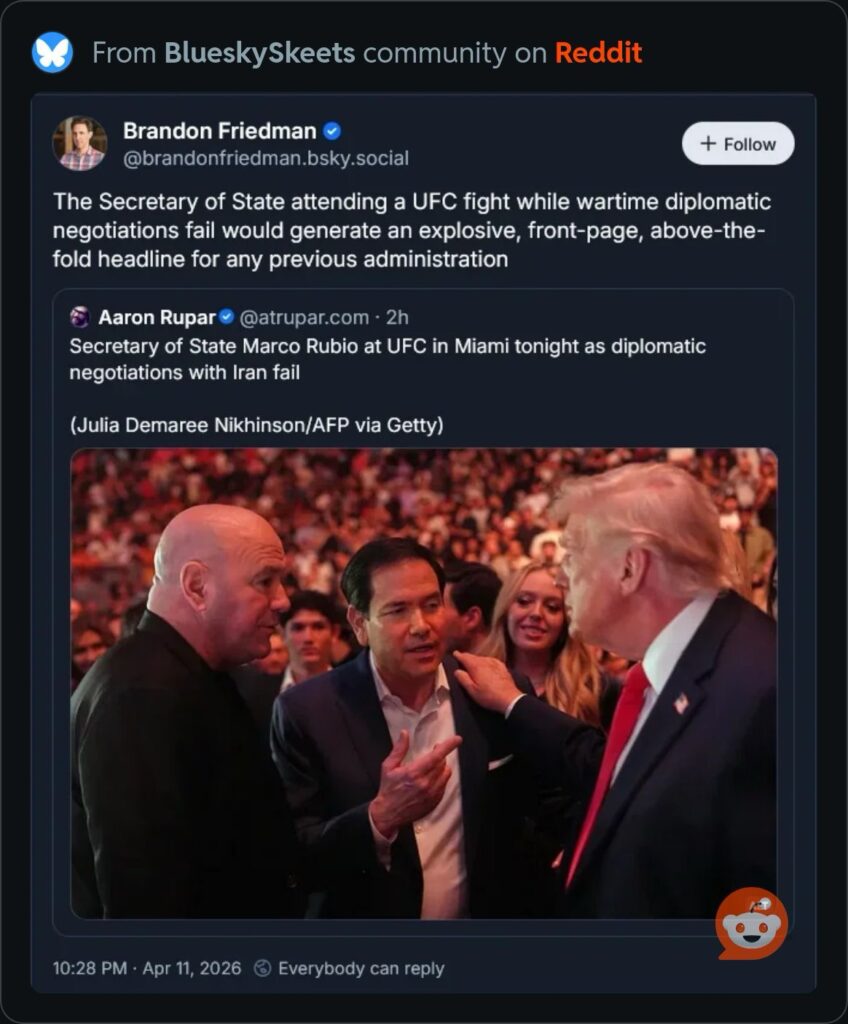
In fairness, this isn’t uniquely American—it’s just that the United States tends to do everything at maximum volume. When confusion happens elsewhere, it’s a footnote. When it happens in Washington, it’s a headline.
So here we are again: a critical chokepoint of global commerce discussed in tones that oscillate between chest-thumping and head-scratching. The Strait of Hormuz remains where it has always been, stubbornly unmoved by declarations, tweets, or rhetorical flourishes.
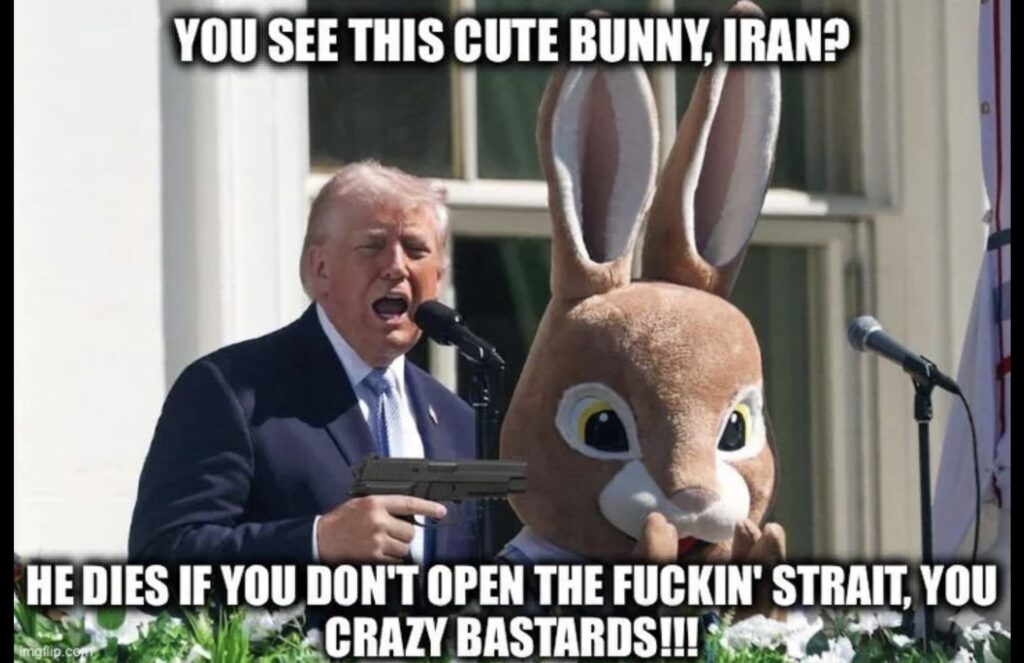
And perhaps that’s the real takeaway. Geography, unlike political messaging, does not bend easily. No matter how confidently someone speaks about “closing” a strait or “controlling” a region, the map remains the same—quietly reminding everyone that the world is a bit more complicated than a soundbite.