

Analysis by TrumpShagsKids Date: April 2, 2026
For the past decade, the $2.1 trillion private credit market was the financial world’s “golden child”—a shadow banking system that promised high yields, low volatility, and the fuel for America’s tech revolution. But as we move through the spring of 2026, that engine is sputtering. A confluence of rising defaults, a “liquidity lockdown,” and an existential threat from Artificial Intelligence (AI) is causing a seismic crack in the financial foundation of American innovation.
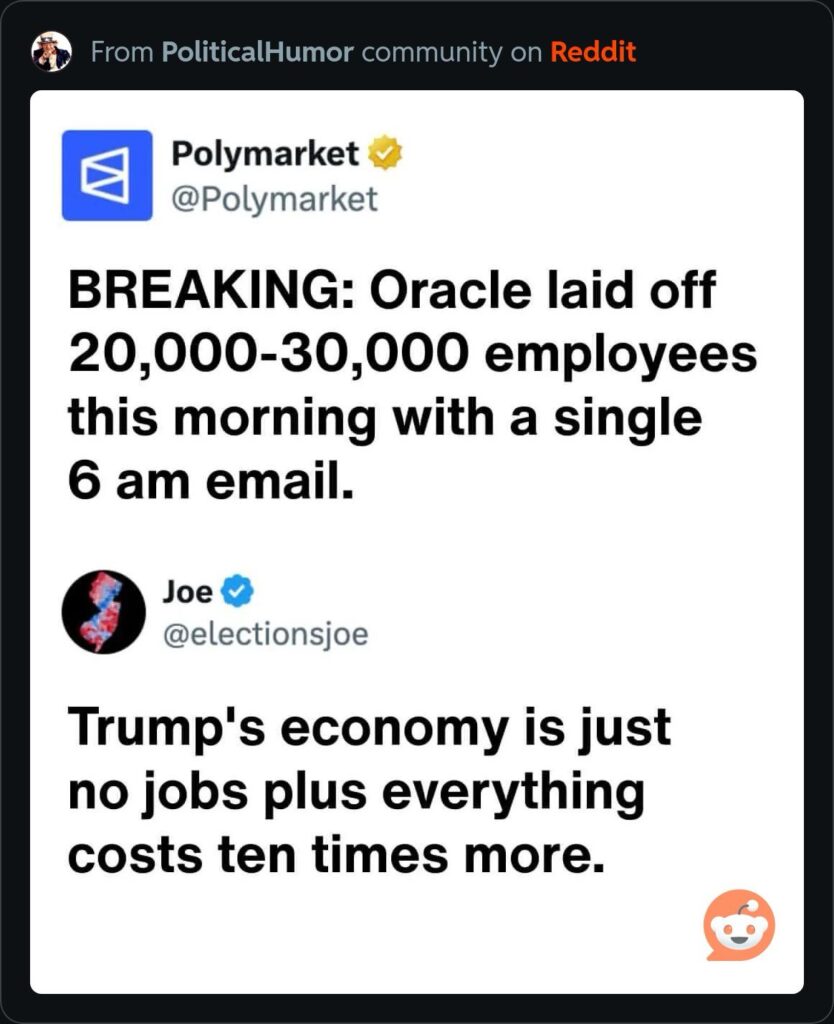
At the same moment this market is faltering, the Trump administration is pushing aggressively to open the $14 trillion 401(k) retirement market to these very same risky assets. This collision—between a collapsing private credit market, the desperate need for AI capital, and a deregulatory retirement agenda—sets the stage for what some analysts fear could be the next systemic financial crisis.
Here is the breakdown of the crisis, why AI startups are suddenly starving for cash, and how your retirement savings could become the “bag holder” for Wall Street’s mistakes.

Part I: The “SaaS-pocalypse” and the AI Funding Cliff
The current turmoil is not happening in a vacuum. It began with the rapid rise of Generative AI. Ironically, the technology that promised to revolutionize productivity is now eating its own financiers.
The Software Collateral Crisis
For years, private credit funds (managed by giants like Blue Owl, Ares, and KKR) poured billions into Software-as-a-Service (SaaS) companies. These firms were considered safe bets because of recurring revenue. However, the release of advanced AI automation tools—such as Anthropic’s “Claude Cowork”—has demolished the “moats” of legacy software.

In March 2026, JPMorgan Chase dropped a bomb on the industry. Citing the risk of AI disruption, the bank began aggressively marking down the value of the software loans it holds as collateral for private credit funds. This triggered a margin squeeze across Wall Street.
The Numbers Don’t Lie
The results have been brutal. Funds that once offered steady 9% returns are now trapped in a “doom loop.”
· Redemption Chaos: Blackstone’s flagship private credit fund (BCRED) faced $6.5 billion in withdrawal requests. BlackRock and Morgan Stanley have been forced to cap redemptions as investors flee.
· Default Projections: Morgan Stanley is now warning that default rates in direct lending—specifically tied to tech—could spike to 8% , a level not seen since the depths of the pandemic.

The AI Funding Gap
This matters because AI companies, particularly those building on top of large language models, are capital-intensive. They need billions to buy chips and compute power. Traditionally, they relied on private credit when bank loans were too strict. Today, with JPMorgan pulling back leverage and funds like Blue Owl Technology Income Corp “shutting the gates” on redemptions, the spigot has turned off. The result is a funding winter for American AI that is entirely self-inflicted by financial engineering.

Part II: The Trump 401(k) Agenda – “Democratization” or “Dumping Ground”?
Enter the policy response. President Trump has long argued that average Americans are locked out of the wealth generated by private markets. His solution, implemented via a Labor Department proposal released on March 30, 2026, is a “safe harbor” rule allowing 401(k) fiduciaries to stuff portfolios with private equity, crypto, and private credit.
Treasury Secretary Scott Bessent frames this as a way to “diversify” retirement savings. However, the timing of this deregulatory push—coinciding exactly with the collapse of private credit values—has sent alarm bells ringing from Capitol Hill to Boston.

The “Perfect Storm” Timing
As POLITICO noted, the administration’s plan “may land at the worst possible moment”. In theory, the rule is “asset neutral” and requires fiduciaries to vet investments. In reality, the private credit industry is desperate for new cash to offset the outflows from institutional investors.
Critics, including Sen. Elizabeth Warren, argue that the administration is setting up a bailout mechanism. “This is the worst possible moment to be opening up the private markets to everyday investors’ retirement accounts,” Warren told Politico. Danny Moses (of The Big Short fame) agrees, warning that when this market “goes off a cliff,” it will impact retail investors directly.

The Liquidity Mismatch
The core problem is structural. 401(k) investors expect daily liquidity—they want to withdraw their money when they retire or lose a job. Private credit assets are illiquid; they are loans to software companies that might take five years to mature. The Trump proposal allows these two incompatible products to mix. When the next wave of redemptions hits (and it will), 401(k) plans could be forced to sell these loans at “fire sale” prices, crystallizing losses for teachers, nurses, and factory workers.
Part III: Future Ramifications – What Comes Next?

As we look toward the remainder of 2026 and 2027, three major ramifications are emerging.
- The Regulatory Reckoning
The Treasury Department is already scrambling. On April 1, 2026, officials announced meetings with insurance regulators to discuss the “systemic risk” of private credit. The Fed is watching closely, but under Trump’s deregulatory stance (including a 30% cut to bank supervisory staff), there is no cop on the beat to stop the contagion. - The “Maturity Wall” Collision
Approximately $12.7 billion in private credit debt is set to mature this year—a 73% increase from 2025. With JPMorgan tightening standards and the secondary market frozen, many zombie software firms will simply go bankrupt. This will wipe out the value of the assets currently being marketed to 401(k) plans. - A Two-Tiered Economy
Ironically, the collapse of private credit may slow down AI development, ceding ground to China or Europe. Without the high-risk capital from shadow banks, American entrepreneurs will find it impossible to scale. The only “winners” here may be the mega-banks (Goldman, JPMorgan) and distressed debt vultures (Apollo) who are waiting to buy up these loans for pennies on the dollar.

Conclusion
The collapse of the private credit market is not an isolated “technical correction.” It is a structural failure driven by the AI revolution. The Trump administration’s answer—funneling 401(k) money into the void—is a high-stakes gamble. It assumes the market will recover before retirees need their money.

History suggests that when you mix illiquid assets with retail money, the retail investor loses. As the Boston Globe and Bloomberg Law note, the “safe harbor” proposed by the DOL may end up being a safe haven for Wall Street fund managers to dump their toxic assets, but a shipwreck for the American worker. The next 90 days will determine whether this is a “soft landing” or the beginning of a protracted financial winter for the US economy.