

In early March 2026, investors in two of America’s largest private credit funds received unwelcome news. Morgan Stanley capped withdrawals from its $8 billion North Haven Private Income Fund, returning less than half—just 45.8%—of what investors had requested. Hours earlier, Cliffwater LLC had done the same with its $33 billion flagship vehicle, limiting redemptions to 7% despite receiving demands for 14% of shares .

These weren’t isolated incidents. BlackRock, Blackstone, and Blue Owl have all imposed similar restrictions in recent weeks as a wave of redemption requests sweeps through the $2 trillion private credit industry . For an economy already grappling with the compounding effects of Trump-era trade policies, ongoing Middle East conflict, and a rapidly shifting technological landscape, the turmoil in private credit has become a flashing warning sign.
The Anatomy of a Liquidity Crunch
Private credit funds, unlike traditional mutual funds, were never designed to handle rapid exits. Most operate under quarterly redemption limits—typically 5% of assets—reflecting the fundamentally illiquid nature of their holdings . These vehicles lend directly to mid-sized companies, holding loans that cannot be sold quickly without steep discounts.
The current crisis exposes a structural flaw that critics have long warned about: these funds promise investors periodic liquidity while investing in assets that have none.

According to data compiled by the Financial Times, major private credit funds received over $10 billion in redemption requests during the first quarter of 2026 alone. Blackstone’s $82 billion flagship fund saw requests hit 7.9% of net asset value—a record high. HPS, now owned by BlackRock, faced 9.3% redemption demands but honored only its 5% quarterly limit .
The mismatch has triggered what one investor described as a “bank run dynamic.” As some funds restrict withdrawals, remaining investors worry about being trapped, prompting more redemption requests—a self-reinforcing cycle of panic.
JPMorgan Tightens the Screws
Perhaps more ominous than the redemption caps is what’s happening behind the scenes at major banks. JPMorgan Chase recently informed private credit funds that it had downgraded the collateral value of software-sector loans in their portfolios . The bank holds special clauses allowing it to revalue assets at any time—unlike competitors that typically wait for default triggers.
This move directly reduces the amount of leverage available to private credit funds, many of which rely on bank financing to amplify returns. While JPMorgan insists the action only affects a limited number of borrowers and hasn’t triggered margin calls, the message is clear: Wall Street’s largest bank is positioning for trouble .

The tightening comes after years of rapid expansion during which private credit firms used bank leverage to compete directly with traditional lenders for large leveraged buyouts. Now that expansion logic is being tested as underlying assets—many originated during the pandemic-era tech boom—face a dramatically different economic environment .
AI Disruption and the Software Sector Wrecking Ball
At the heart of the distress lies an unexpected culprit: artificial intelligence. The software industry accounts for approximately 26% of business development company (BDC) portfolios and 19% of private credit CLOs . For years, software companies were private credit’s darlings—stable, high-margin, reliable.
AI is rewriting that narrative.
Morgan Stanley analysts led by Joyce Jiang warned in a March 16 report that direct loan default rates could climb to 8%—levels not seen since the pandemic—as AI disruption reshapes the software industry . The problem is compounded by leverage. Software loans carry the highest leverage levels across major industries combined with the lowest interest coverage ratios.

“Software loans’ credit fundamentals are challenged,” the Morgan Stanley team wrote. “The industry has the highest leverage levels and the lowest coverage ratios among major sectors, and cash flow coverage continues to weaken” .
The numbers bear this out. Private credit borrowers average just $500 million in revenue—far smaller than the $4.6 billion average for leveraged loan issuers—yet carry net leverage of 5.6 times EBITDA compared to 4.6 times for public companies . Their interest coverage ratio stands at 2.1 times, significantly below the 3.9 times typical in public markets.
Worse, a wave of software loan maturities is approaching. PitchBook data shows 11% of software direct loans mature in 2027, with another 20% due in 2028 . If liquidity remains tight and refinancing conditions deteriorate, defaults could spike sharply.
The PIK Time Bomb
Another structural vulnerability is the widespread use of payment-in-kind (PIK) provisions—contractual features allowing borrowers to defer interest payments by adding them to principal. While PIK provides short-term cash flow relief, it masks underlying distress and compounds future obligations.
Currently, PIK accounts for about 8% of BDC investment income, but that headline number understates the risk. In the software sector, PIK usage exceeds 20% of loans, and what industry insiders call “distressed PIK”—where borrowers use the provision because they lack cash rather than as strategic flexibility—has surged from 36.7% in 2021 to 58.3% by mid-2025 .

“PIK mechanisms, while providing short-term relief for corporate cash flows, essentially defer risks,” noted a Huatai Securities analysis . Funds showing strong accounting returns may be collecting far less actual cash, creating a dangerous disconnect between reported performance and true portfolio health.
Trump’s Deregulatory Push Meets Market Reality
The private credit crisis presents an awkward test for the Trump administration’s financial deregulation agenda. Just as the Labor Department prepares to open private markets to 401(k) investors—a policy intended to democratize access to higher-yielding assets—the asset class is showing its most serious cracks .
White House spokesperson Kush Desai defended the approach, stating the administration remains “committed to making sure workers’ best interests are always top of mind for Wall Street” . Treasury Secretary Scott Bessent has acknowledged the need to ensure individual investors don’t become a “dumping ground” for sour assets, insisting the expansion must happen “in a safe, sound and smart way” .
But critics see a dangerous collision of policy and market reality. Sen. Elizabeth Warren, the top Democrat on the Senate Banking Committee, called it “the worst possible moment” to open private markets to retail retirement accounts . Former Goldman Sachs CEO Lloyd Blankfein has warned that individual investors are gaining exposure to opaque private assets just as “we’re due for a kind of a reckoning” .
The administration’s broader trade policies have compounded the uncertainty. The Supreme Court struck down President Trump’s IEEPA tariffs in February, but replacement tariffs under Section 122 were immediately announced—first at 10%, then raised to 15% the following day . For middle-market borrowers reliant on imported goods and floating-rate debt, the whiplash creates impossible planning conditions.

Middle East Conflict and the Inflation Dimension
Geopolitical tensions have added yet another layer of pressure. Iranian actions in the Persian Gulf have sparked fears of $200 per barrel oil . While prices haven’t reached those levels, the risk of supply disruptions has reintroduced inflation fears that were supposedly receding.
Huatai Securities estimates that if Brent crude averages $80 per barrel in 2026, global growth would be dragged down 0.1 to 0.3 percentage points while inflation rises 0.5 to 0.6 points. At $100 per barrel, the impact doubles—growth down 0.5 to 0.8 points, inflation up 1.5 to 2.0 points, potentially pushing U.S. inflation back above 3% .
For private credit borrowers already struggling with high floating-rate debt, such an outcome would be catastrophic. Most private credit loans are priced off SOFR plus 600 to 700 basis points . Even with the Fed holding rates steady at 3.5-3.75% after its January meeting, many borrowers are stretched thin . Higher oil-driven inflation would delay any rate cuts, prolonging the pressure.

Systemic Risk or ‘Teapot Tempest’?
The critical question facing policymakers and investors is whether private credit’s troubles will cascade into the broader financial system. So far, major analysts see contained damage.
Morgan Stanley strategists argue that private credit’s structural limitations actually prevent systemic contagion. Funds can cap redemptions, forcing investors to remain rather than triggering fire sales. Banks’ exposure is limited—less than 1% of total assets, according to Federal Reserve research—and the loans they have extended are typically senior secured .
Huatai Securities describes the current situation as a “teapot tempest”—a localized storm rather than a financial hurricane . In their base case scenario of a U.S. economic soft landing, private credit distress remains contained to the industry itself.
But the same analysis warns of two scenarios that could change the calculus dramatically. First, if the U.S. slips into stagflation—combining high inflation with economic contraction—private credit losses could cascade through banks, insurers, and pension funds. Second, if the AI boom proves overhyped and the software sector collapses, the impact would be direct and severe .

NAV Arbitrage and the Valuation Mirage
Underlying the redemption panic is a more fundamental problem: valuation discrepancies between public and private markets. While software stocks and related debt in public markets have fallen sharply, private credit funds have been slower to mark down their holdings .
This creates an arbitrage opportunity. If investors believe a fund’s loans are actually worth $98 but the fund values them at $100, they have an incentive to redeem at the higher book value. When funds pay out at inflated valuations, remaining investors absorb the dilution—encouraging still more redemptions.
Apollo Global Management is attempting to address this by moving toward monthly NAV reporting, with the ultimate goal of daily valuations using third-party pricing . But for now, the opacity that once protected private credit funds has become a liability.

The Road Ahead
The private credit industry faces a difficult year. Redemption pressures show no sign of abating; Blue Owl’s stock has fallen over 35% this year, with other major players suffering similar declines . The SEC has designated private credit and illiquid retail products as a top examination priority for fiscal 2026, promising heightened scrutiny of valuation practices and liquidity management .
For investors, the landscape has fundamentally changed. The era of easy returns in private credit—fueled by ultra-low rates and rapid growth—has ended. Funds that raised billions during the pandemic boom are now managing portfolios originated at peak valuations, facing a higher-rate environment, technological disruption, and a regulatory landscape in flux.
The redemption caps at Morgan Stanley, Cliffwater, BlackRock, and others may prevent immediate fire sales. But they also signal that the industry’s liquidity buffers are thinner than advertised. As one industry participant told Politico, private credit is “walking on eggshells in D.C. right now” .
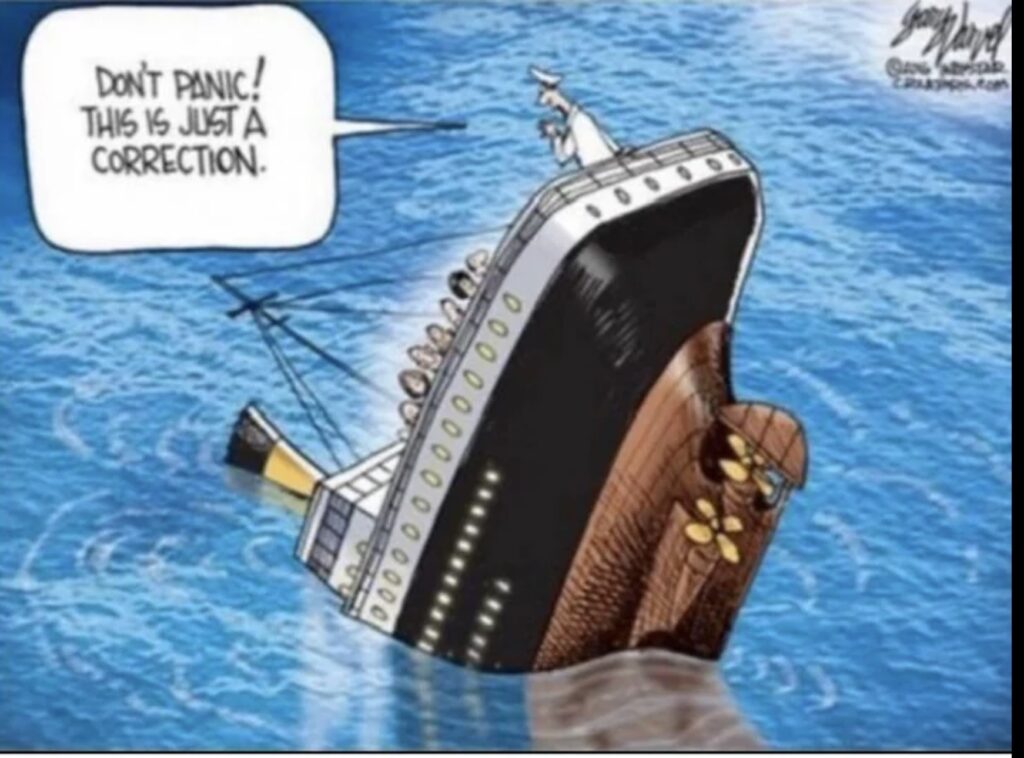
Whether this becomes a footnote in financial history or a precursor to something larger depends on forces beyond the industry’s control: the path of inflation, the pace of AI disruption, and the resilience of the broader economy. For now, the private credit market sits at an uncomfortable crossroads—too large to ignore, too fragile to trust completely, and testing the limits of a decade of rapid, lightly-regulated growth.