
By Trump ShagsKids
In the annals of presidential puffery, few things are as delightably absurd as watching a politician explain the Strategic Petroleum Reserve. It’s a bit like watching someone try to explain why their checking account is fine while the bank is literally boarding up the windows.

Enter Donald Trump, who has apparently decided that the laws of physics, geology, and basic arithmetic are merely “suggestions” when it comes to the nation’s emergency oil stash.
Let’s start with the headline: Trump has ordered a release of 172 million barrels of oil from the Strategic Petroleum Reserve . On its face, this sounds like a big number—because it is. But here’s where things get fun.
The Salt Cave Problem
The SPR isn’t a bunch of shiny tanks sitting in a field somewhere. It’s four heavily guarded sites along the Gulf Coast, tucked inside massive underground salt caverns . Think of them as nature’s Tupperware—great for storing oil, terrible for making the president’s math work.
Here’s the part Trump doesn’t want you to know: those salt caverns aren’t just holes in the ground you can suck dry like a milkshake. They have physical limits. Engineering limits. The kind of limits that don’t care about Truth Social rants.
According to energy analysts at JPMorgan, the SPR has a “physical safety floor” of about 150 to 160 million barrels . Drop below that, and you risk something the oil industry delicately calls “structural damage.” In English? The caves can collapse.

Not exactly the kind of thing you want to discover when you’re promising to “fill it back up.”
The Math That Doesn’t Math
Let’s do some simple addition, shall we?
Currently, the SPR holds about 415 million barrels . If Trump releases 172 million barrels, that leaves… wait for it… 243 million barrels . Sounds fine, right? Plenty of oil still in the ground.
Here’s the rub: U.S. law says that when the reserve dips below 252 million barrels, the government can’t touch it anymore . So after this release, not only will the SPR be below the legal limit—it will have blown past it by about 9 million barrels.

That’s like your credit card company saying “don’t go below $1,000” and you confidently swiping until you’re at $800 and declaring victory.
And that physical safety floor of 150 million barrels? That’s the point where engineers start using words like “catastrophic failure” and “multi-billion dollar cleanup.” The cushion between 243 million and 150 million is about 93 million barrels . That’s not extra oil. That’s the danger zone.
Enter the Iran War Factor
Now, let’s add some geopolitical gasoline to this fire.
The reason Trump is tapping the SPR is because we’re in a conflict with Iran that has effectively shut down the Strait of Hormuz—the tiny waterway through which about 20% of the world’s oil normally flows . Vortexa analysts estimate that lost exports from the region could hit 17.5 million barrels per day .
To put that in perspective: the entire SPR release of 172 million barrels would replace about ten days of lost supply . Ten. Days.
Senator Martin Heinrich, a New Mexico Democrat, put it more bluntly than any of us could: “The scale of what’s going on in the Middle East almost negates our ability to use [the SPR] in a way that’s meaningful” . He noted that when you take 20% of the world’s oil supply offline, “even something as large as what they’re pursuing with the Strategic Petroleum Reserve doesn’t begin to fill the gap” .

So What Happens to Oil Prices?
Here’s where the comedy turns dark. The SPR release is supposed to calm the market and bring prices down. Trump himself promised it would “bring the prices down” .
But markets aren’t stupid. They can read a balance sheet.
Once investors realize that the U.S. has burned through its emergency reserves down to the point where salt caves might start crumbling, the psychology shifts. Morgan Stanley and other analysts are already warning that when a policy tool is this close to exhaustion, its “signal effect” flips .

Translation: instead of reassuring the market that help is available, the market starts panicking that there’s nothing left.
The Russian Twist
And because this story needs more villains, let’s talk about who’s actually benefiting. Russia.
Since the Strait of Hormuz closure, Russian crude “on the water” has dropped by more than 20 million barrels—not because they’re exporting less, but because they’re selling it faster . India, which had cut Russian imports to about 1 million barrels a day after sanctions pressure, has already ramped back up to 1.5 million barrels a day in the first eleven days of March .
So the net effect of Trump’s Iran policy and SPR drawdown? We’re draining America’s emergency supply, pushing the reserve to dangerously low levels, while Russia happily steps in to fill the supply gap and laugh all the way to the bank.

The “Fill It Back Up” Fantasy
Trump has promised that after releasing the oil, “we’ll fill it up” . Energy Secretary Chris Wright has dutifully echoed this, claiming the U.S. will replace the 172 million barrels with “approximately 200 million barrels within the next year” .
Let’s pause to appreciate the physics of this.
The salt caverns can only handle so many fill-and-drain cycles. The system was designed in the 1970s for a 25-year lifespan and about five complete cycles . We’re on cycle number nine. The salt is tired. The engineers are nervous. And the idea that we’re going to pump 200 million barrels back in after a massive drawdown—at presumably much higher prices—is the kind of logic that only works in a parallel universe where oil is free and geology is optional.
What This Means for Your Wallet
Here’s the bottom line: the SPR release might provide a temporary pause in price increases, but it’s not a solution. The global market is facing a supply shock of historic proportions, and the U.S. is essentially throwing its emergency life raft into the water and hoping nobody notices it’s a pool noodle.
If—when—the market fully digests that America’s strategic reserve is functionally tapped out, the geopolitical risk premium in oil prices will spike. Combined with the ongoing Iran conflict and the Strait of Hormuz closure, we’re looking at sustained high prices for the foreseeable future.
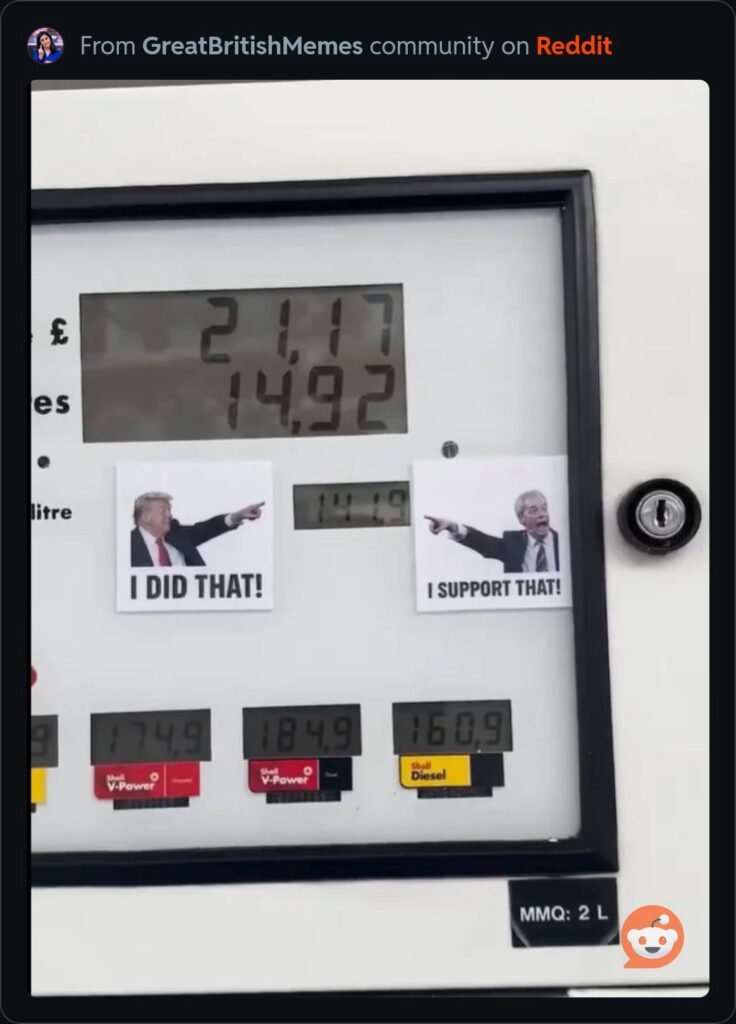
Trump can keep posting on Truth Social about how “the United States is the largest Oil Producer in the World, by far, so when oil prices go up, we make a lot of money” . But that’s cold comfort when you’re the one filling up your tank.
The Bottom Line
The Strategic Petroleum Reserve was designed for emergencies. What we’re witnessing isn’t an emergency response—it’s an emergency admission that we’ve run out of good options.

Between the legal limits, the physical limits of aging salt caverns, and a Middle East conflict that shows no signs of ending, the SPR has gone from being America’s energy security blanket to a political talking point that’s about three bad headlines away from becoming a national crisis.
And the next time someone tells you we can just keep draining the reserve with no consequences, remind them: salt caves don’t lie. Neither does math.
[Your Name] is a columnist who believes that physics should be bipartisan.