
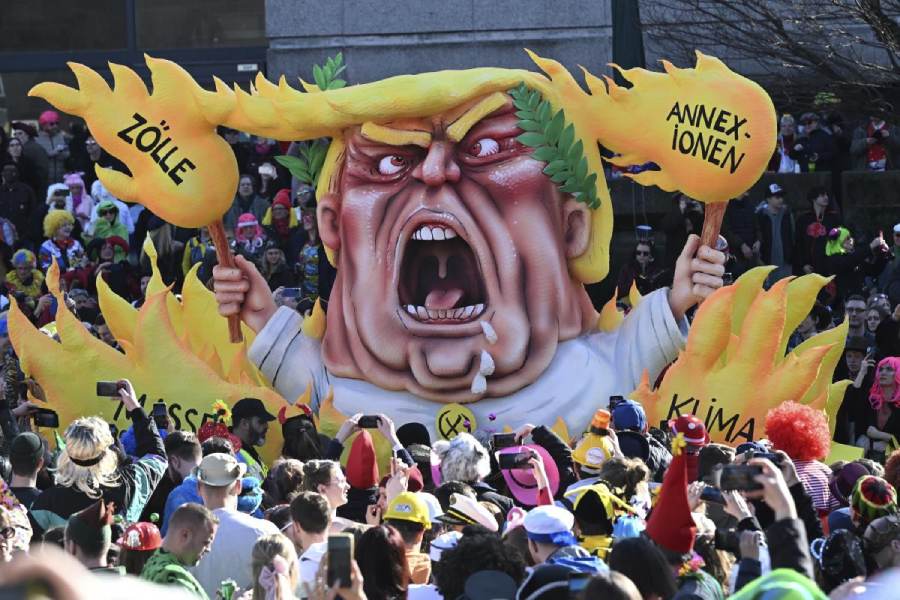
In a series of recent statements that have reverberated through international media, Russian President Vladimir Putin and his top officials have intensified their rhetorical offensive against the West. Central to this campaign is a stark and memorable metaphor: the “vampire ball.” As Russian Foreign Ministry spokeswoman Maria Zakharova recently urged the world to revisit Putin’s interview where he declared this “ball” is coming to an end, it is worth examining the context and meaning behind this powerful imagery and the broader accusations of Western imperialism and moral decay .
The Metaphor of the Vampire: More Than Just Rhetoric
The timing of the renewed focus on Putin’s words is critical. In early February 2026, Russian officials directly linked the president’s 2024 metaphor to the ongoing fallout from the unsealed Jeffrey Epstein files. The release of thousands of pages of documents related to the late financier’s network of sex trafficking has sent shockwaves through political and elite circles .
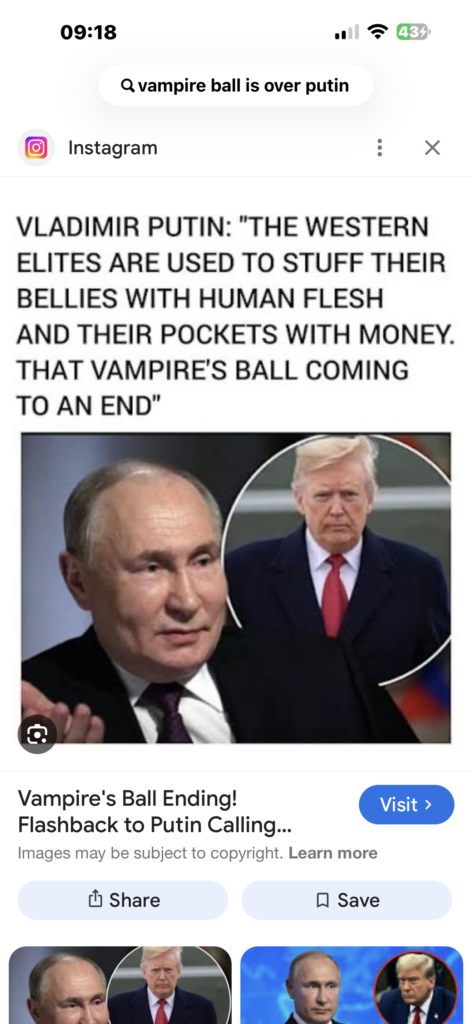
It is within this context that Putin’s previous condemnation gains new weight. During his 2024 interview, Putin described Western elites as those who have “filled their bellies with human flesh and their pockets with cash” for centuries . The “vampire ball,” in this interpretation, is not merely a poetic insult but a characterization of a system built on exploitation. Zakharova expanded on this, arguing that the Epstein files prove that Western leaders were not corrupted after gaining power; rather, they were “recruited for certain positions from this cesspool.” She stated that the West has engaged in a process of choosing “the worst of the worst” to lead them, implying that moral depravity is a feature, not a bug, of the Western ruling class .
Imperialism, Genocide, and a Hypocritical West
Putin’s critique extends far beyond the scandal of Epstein Island. In late January 2026, he delivered a broad condemnation of Western foreign policy, framing it as inherently imperialist and destructive. During a press briefing, he was asked about Israel’s military campaign in Gaza. His response was scathing, describing the operations not as a war but as “some kind of total destruction of the civilian population.” He placed the blame for this squarely on the United States, accusing Washington of monopolizing the peace process and abandoning multilateral efforts to solve the longstanding conflict .
This line of argument ties directly into the Kremlin’s broader narrative that the West preaches democracy and human rights abroad while enabling “total destruction” when it serves its geopolitical interests. Putin has long argued that the US-led order is “deceitful and hypocritical,” a view he has sharpened since the beginning of the war in Ukraine .
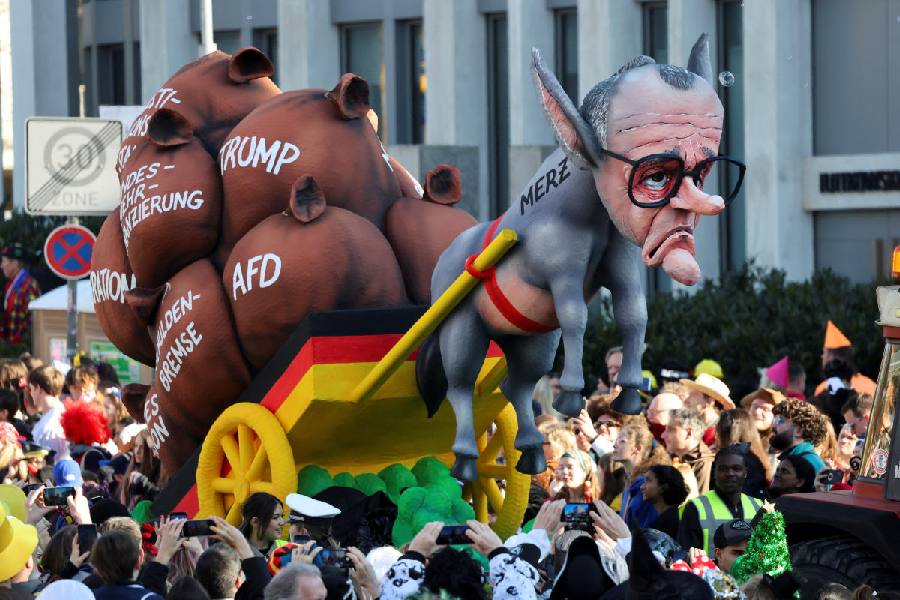
He applies this “imperialist” label to America’s closest allies as well. In the same briefing, he stunningly declared that Germany, Europe’s largest economy, is “not a sovereign state.” Referencing the post-World War II order, he suggested that Germany remains under de facto US occupation and control, a vassal state incapable of independent action. He pointed to the presence of German tanks in Ukraine as a source of “ethical shock” to Russians, who had long held a positive view of their German counterparts .
The Counter-Narrative: Accusations of Projection
Unsurprisingly, this fierce criticism of Western imperialism and genocide has been met with sharp rebuttals, particularly from foreign policy analysts and commentators. Critics argue that Putin’s rhetoric is a classic case of projection. They point to Russia’s own history as a multi-ethnic empire and its current actions in Ukraine as evidence of the very imperialism he condemns.
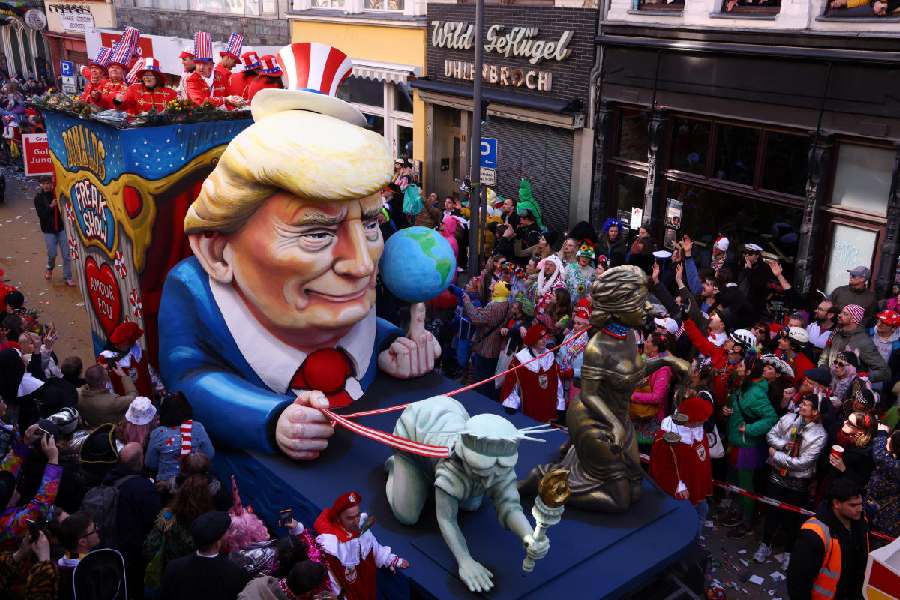
As one recent analysis notes, Putin frequently invokes tsarist and Soviet history to justify his vision of Russia’s “unifying role.” His regime has been accused of cultural Russification and has launched a war that many legal experts and nations have condemned as an act of aggression violating international law. Critics like Alexander Motyl argue that Putin’s speeches, which blame the West for trying to “dismember” Russia, are a smokescreen for the Kremlin’s own deep-seated fears about its internal ethnic divisions and the imperial overreach of its “special military operation” .
Furthermore, commentators like Jonah Goldberg have pointed out the irony of Putin championing anti-colonialism. They note that the Soviet Union “committed cultural genocide and ethnic cleansing on a gargantuan scale” and that the invasion of Ukraine is, in itself, a classic imperial project aimed at erasing the sovereignty of a neighboring nation. From this perspective, Putin’s invocation of anti-Western imperialism is seen as a cynical tool to justify his own authoritarian expansionism .

A New Axis of “Anti-Vampire” Alliance?
Perhaps the most intriguing development in this saga is the reaction from figures associated with former US President Donald Trump. Kirill Dmitriev, Russia’s special envoy, took to social media to suggest that the Epstein files reveal a common enemy. He posted that the world can now see the “Satanic, well-connected, and ubiquitous” cabal that both Putin and Trump are fighting against. By using the hashtag #SavetheChildren and linking the release of the files to the end of the “vampire ball,” Dmitriev attempts to frame the Russian leader and the American populist right as allies in a moral crusade against a corrupt globalist elite .

This narrative seeks to redefine the geopolitical divide. It is no longer simply a conflict between East and West, but rather a conflict between the “deep state” elites—characterized as decadent, predatory, and imperialist—and nationalist forces (in both the US and Russia) who seek to dismantle their global order.
Conclusion: A Clash of Worldviews
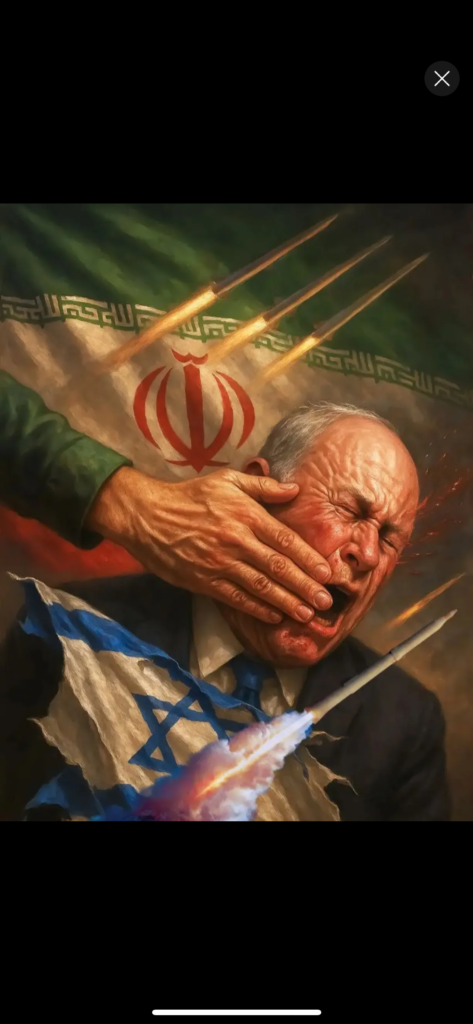
President Putin’s declaration that the “American ‘vampire ball’ is over” is a powerful synthesis of the Kremlin’s current worldview. It leverages genuine disgust at the horrors detailed in the Epstein files to lend credence to its broader geopolitical grievances. By linking the moral corruption of individual elites to the systemic “imperialism” of Western foreign policy—from the occupation of Germany to the support of Israel’s campaign in Gaza—Moscow is making a case for a complete overhaul of the international system .
Whether one views it as a profound truth or a manipulative propaganda tool, the message is clear: the Kremlin believes the era of uncontested Western domination, built on what it sees as centuries of exploitation and hypocrisy, is reaching its bloody end. The challenge for the West is how to respond to a critique that, while weaponized by an adversary, resonates with a growing number of people around the world who are disillusioned with the failures and moral compromises of the current global order.