
Was The question hangs heavy in the air at dinner tables, in boardrooms, and on social media feeds: Is the American experiment approaching its final act? As 2026 unfolds, a confluence of alarming trends—soaring federal debt, political paralysis, and unprecedented social polarization—has moved this question from the fringes of conspiracy theorists to the center of serious discourse.
To understand where we stand, we must examine two distinct but deeply interconnected crises: the structural unsustainability of the financial system and the fraying of the social contract that has historically held the nation together. The likelihood of complete societal collapse depends on whether these two fault lines intersect.
The “Ponzi Scheme” Argument: Examining the Financial Mechanics
The metaphor of a Ponzi scheme has gained traction among financial commentators describing the U.S. fiscal situation, and for understandable reasons. As Max Keiser succinctly put it, “You can’t taper a Ponzi scheme” . The argument rests on a troubling mathematical reality: the U.S. government’s spending commitments now require ever-increasing amounts of borrowing, which in turn requires ever-increasing monetary accommodation from the Federal Reserve.
The Congressional Budget Office’s latest 10-year outlook paints a stark picture. Federal debt held by the public is projected to rise from 101% of GDP to 120% over the next decade, exceeding historical highs . More ominously, the cost of servicing this debt recently exceeded $1 trillion annually for the first time—surpassing defense spending and nearly everything else in the budget except Social Security .
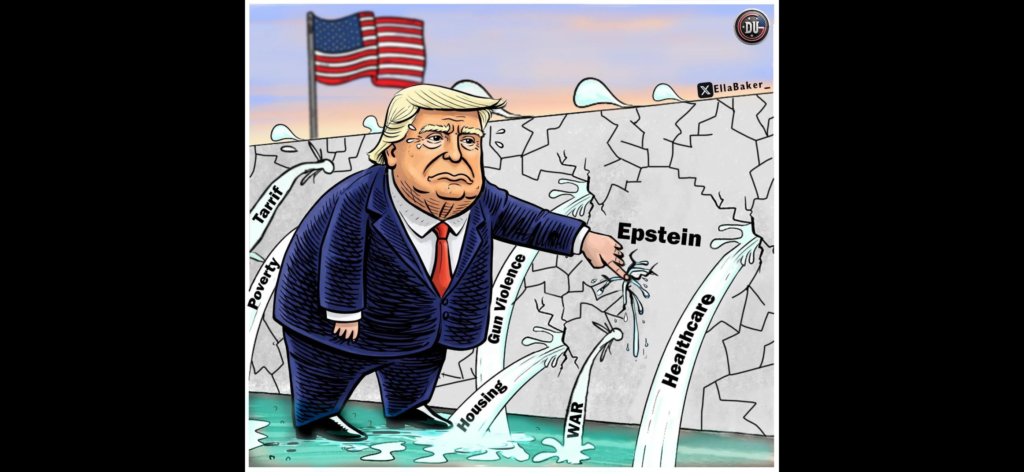
This creates what analysts call a “debt spiral”: the government borrows more, which increases interest expenses, which requires even more borrowing to maintain basic functions. When a government borrows merely to pay interest on existing debt, it has reached a critical inflection point .
A research report from Huafu Securities frames this in more academic terms, suggesting the U.S. is transitioning from “Ponzi financing” toward a “Minsky moment”—a point where unsustainable speculative bubbles suddenly collapse . The report argues that the costs of maintaining the global dollar system (driven by geopolitical conflict and high interest rates) are now rising faster than the system’s capacity to generate returns .
However, mainstream financial institutions offer a more tempered view. Goldman Sachs, in its 2026 outlook, acknowledges the rising debt trajectory but argues that “the US remains far from the tipping point of unsustainable debt-to-GDP levels” . They point to enduring structural strengths: unparalleled economic, human capital, and financial market advantages, paired with institutional resilience .
The critical question is not whether the current trajectory is sustainable indefinitely—it clearly is not—but whether the adjustment will be gradual or catastrophic. The answer depends largely on the dollar’s continued status as the world’s reserve currency. As long as global investors maintain faith in U.S. Treasury bonds, the system can continue to function despite deteriorating fundamentals.
The Social Fracture: Beyond Political Disagreement
While the financial debate involves competing models and forecasts, the social crisis is playing out in plain view—and it has become visceral.
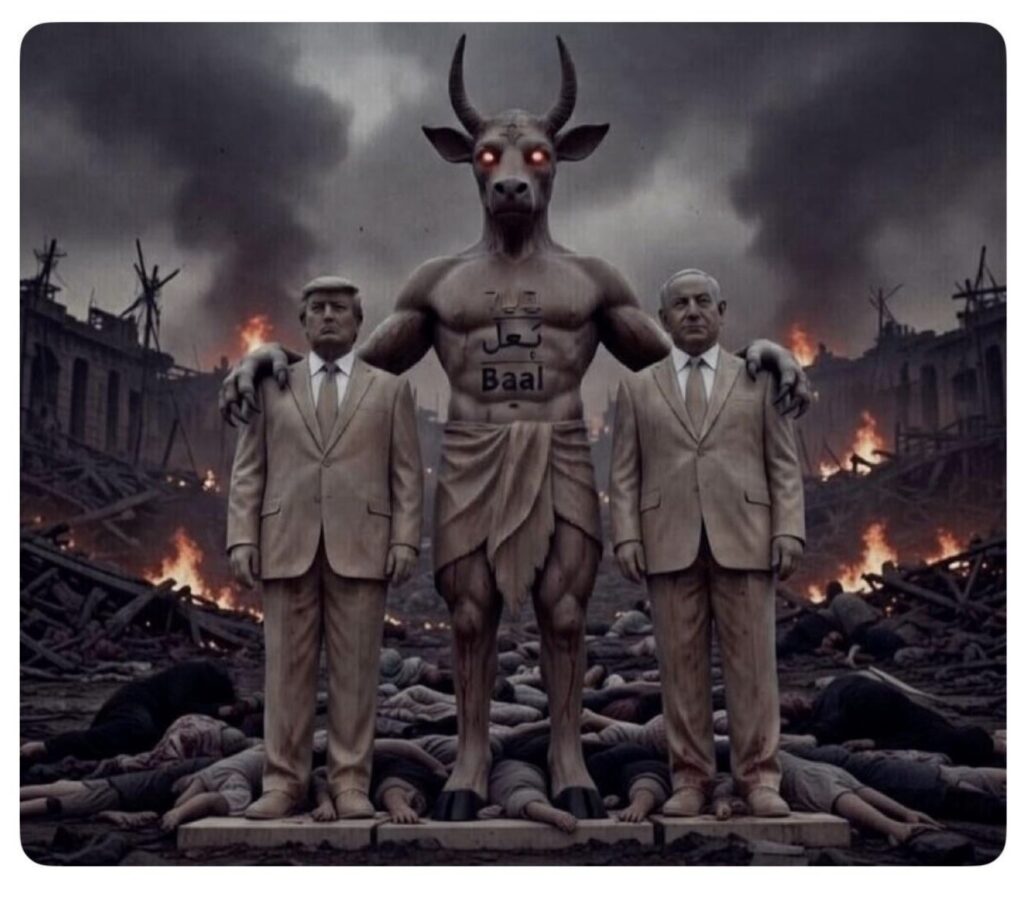
Bridgewater Associates founder Ray Dalio, who has studied the rise and fall of empires across centuries, places the United States in the “fifth stage” of the national lifecycle: a “periphery period” characterized by severe fiscal divergence, breakdown of political compromise mechanisms, and surging populism . Dalio warns that the U.S. is “on the verge of order collapse and civil war,” noting that approximately 25% of Americans say they would resort to extreme measures to advance their political positions .
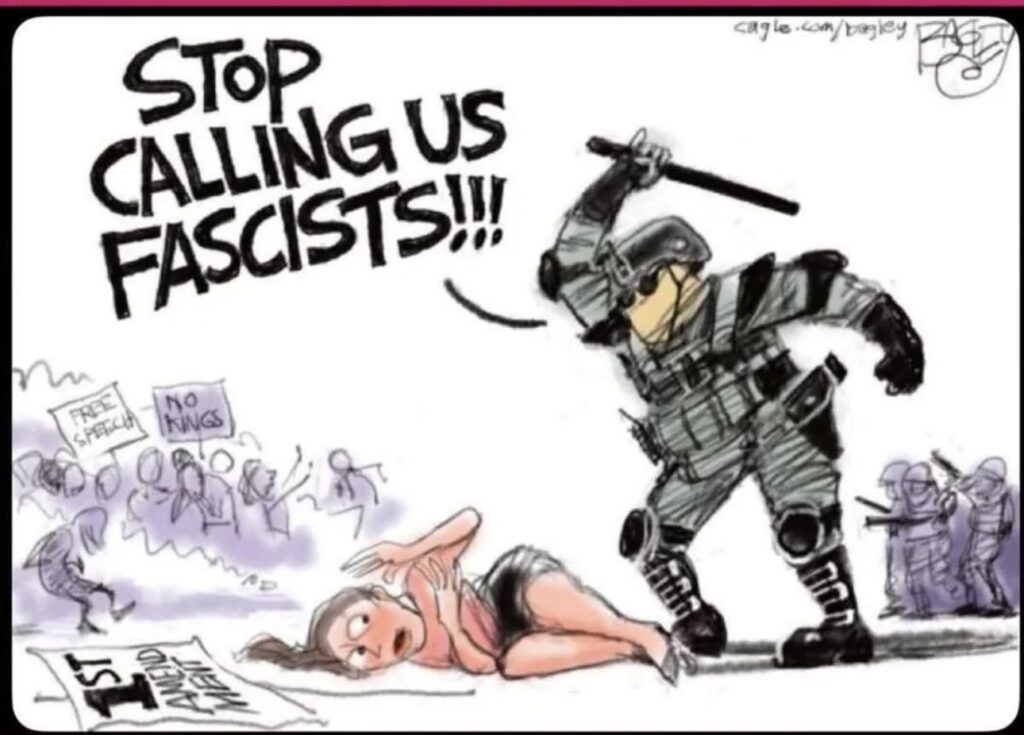
This is not hyperbole detached from observable events. In January 2026, federal immigration enforcement agents fatally shot a U.S. citizen in Minneapolis—the same city where George Floyd was killed in 2020—sparking confrontations between federal law enforcement and local communities . The scenes were described by one New York Times columnist, a veteran war correspondent, as “comparable to civil war” .
The standoff raised a terrifying prospect: if the governor of Minnesota were to deploy the National Guard to resist federal agents, and the president were to invoke the Insurrection Act to deploy active-duty military against the state, the result could be armed conflict between state and federal forces . This is not a speculative movie plot; legal scholars at the University of Pennsylvania have conducted tabletop exercises simulating exactly this scenario .
The ideological dimension of this division is increasingly ethnic and cultural. Polling from early 2026 shows that 89% of Americans expect high levels of political conflict this year . The discourse has moved beyond policy disagreements into what researchers call “affective polarization”—Americans no longer merely disagree with each other; they actively dislike and dehumanize those on the other side .
This was graphically illustrated by the 2026 Super Bowl controversy, where Puerto Rican artist Bad Bunny’s halftime performance sparked a conservative boycott and an alternative “All-American” broadcast, splitting the national audience into two mutually exclusive cultural camps . When a shared cultural touchstone becomes another battlefield, the “melting pot” ideal gives way to something more like warring tribes.
Where the Crises Intersect
The most dangerous scenarios emerge when financial stress and social division reinforce each other. This is where we must consider the “regime cleavage” concept: a political struggle no longer concerned with winning elections, but one where dominant groups fundamentally disagree on the very definition of the nation itself .
Historically, severe economic crises have either unified countries or torn them apart, depending on the pre-existing social fabric. The Great Depression eventually led to the New Deal coalition that stabilized American politics for a generation. But that outcome required political leadership capable of bridging divides and institutions that retained public trust.
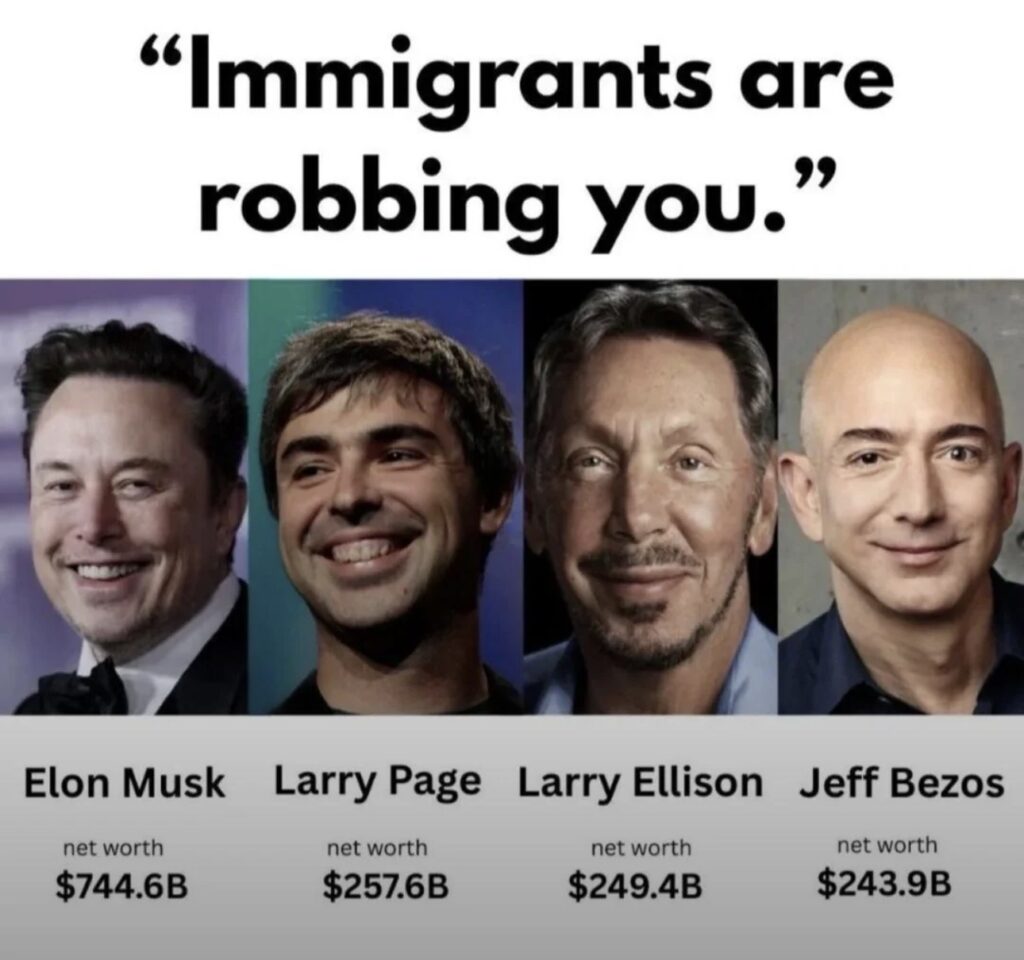
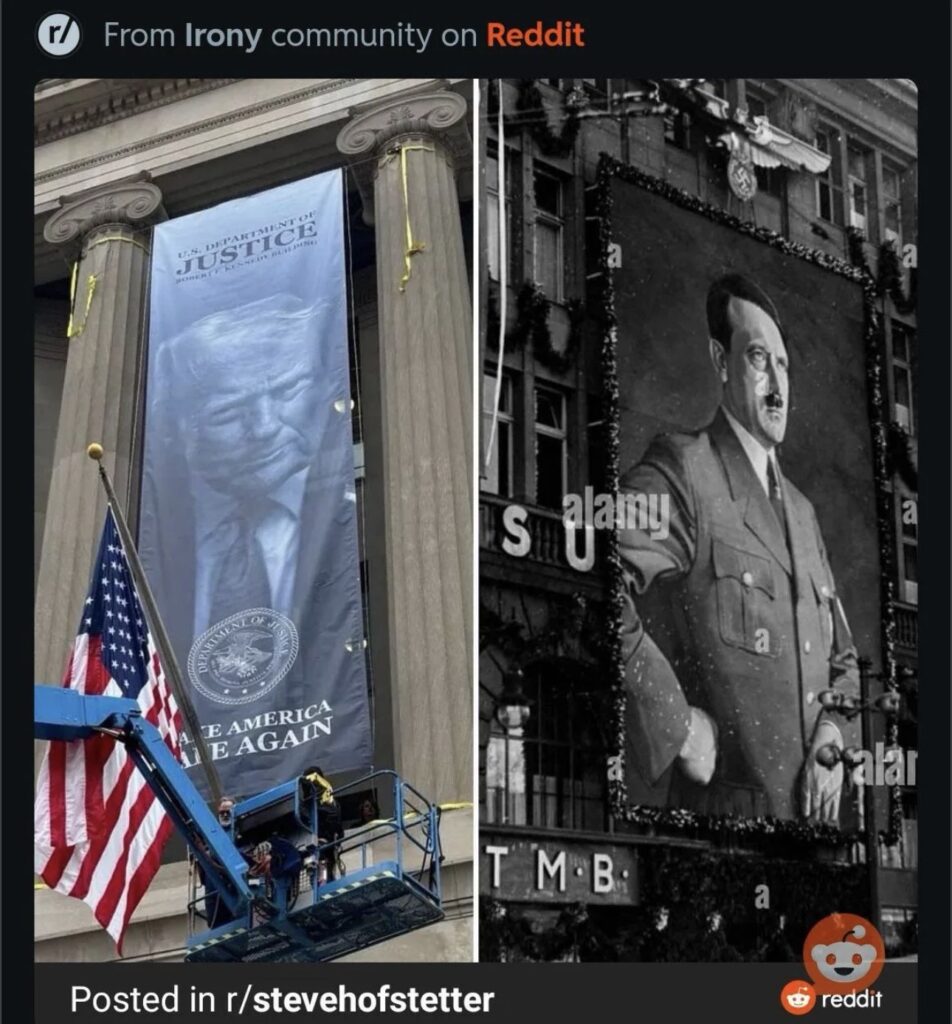
Today, those conditions are absent. Trust in traditional political institutions among voters aged 18-25 has plummeted to historic lows, with over 65% expressing dissatisfaction with both major parties . The Democratic Party, which might have channeled economic grievances into reform, is viewed by many young people as incapable of stopping the drift toward authoritarianism . Meanwhile, the MAGA movement maintains ideological cohesion but frames its opponents as existential enemies rather than political adversaries .
The financial trigger for a breakdown could take several forms. A sharp spike in long-term interest rates would dramatically increase the government’s borrowing costs, potentially forcing a choice between defaulting on debt or imposing austerity that would deepen economic pain . A collapse of the AI bubble, which some analysts view as inextricably linked to the dollar debt cycle, could trigger a credit contraction that the overleveraged financial system might not survive .
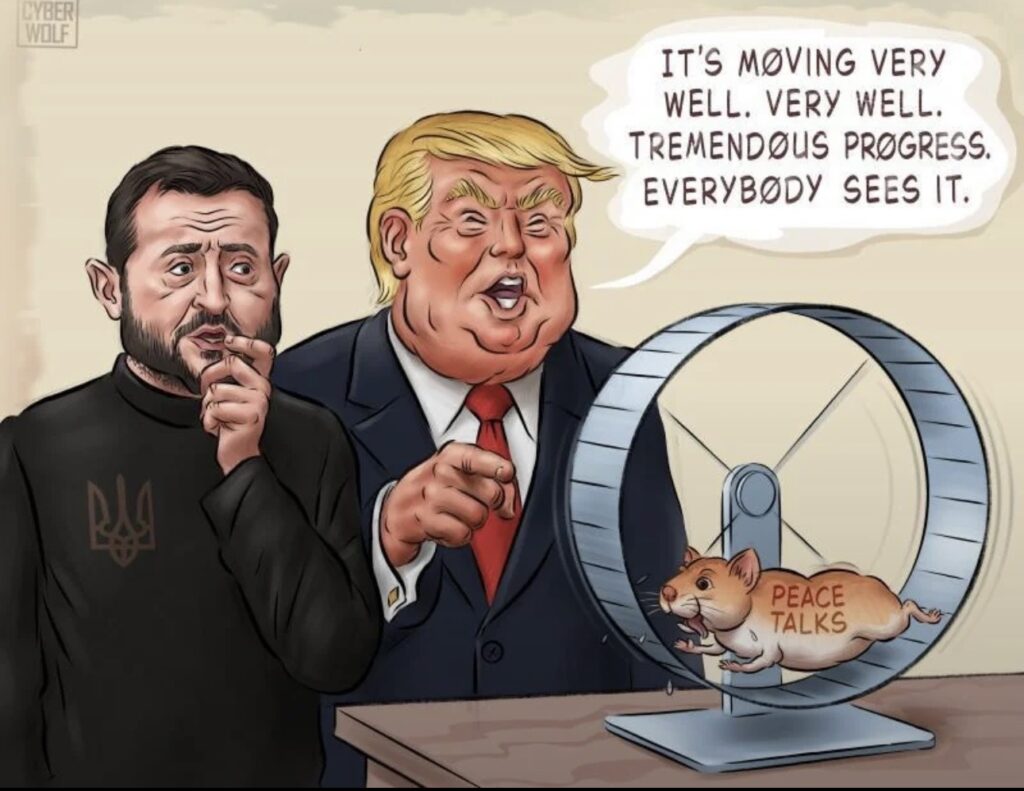
Alternatively, a geopolitical crisis—perhaps involving Taiwan or Ukraine—could expose the limits of American military and financial power simultaneously, creating a crisis of confidence in both U.S. security guarantees and the dollar’s safety .

What Would Societal Collapse Actually Look Like?
It is crucial to distinguish between different degrees of breakdown. A full societal collapse—the complete failure of governance, currency, and social order—remains unlikely in the near term, but the spectrum of possibility includes several disturbing scenarios.
The Debt Spiral Scenario: The Federal Reserve faces an impossible choice: either continue monetizing debt, triggering currency debasement and inflation that devastates savers and fixed-income populations, or refuse to print, causing interest rates to spike and the government to face a genuine default crisis . The likely outcome is continued inflation that stealthily reduces the real value of debt while imposing a regressive tax on the vulnerable. This is not collapse, but it is a slow-motion wealth transfer from the middle class to the political class .
The Federalism Crisis Scenario: A future confrontation between a state government and federal law enforcement escalates to the point of armed resistance. This would not immediately be “civil war” in the 1860s sense—organized armies marching to battle—but could resemble the low-intensity conflicts seen in other countries, with federal agents and local militias in sporadic armed confrontation . The legitimacy of the federal government would be shattered, and the economy would suffer immediate consequences as investment fled the chaos.
The Cultural Secession Scenario: Without armed conflict, American society could simply cease to function as a unified polity. Red states and blue states would increasingly govern themselves according to incompatible worldviews, with economic integration gradually replaced by autarky. The national government would retain its military and monetary functions but lose the consent of half the governed . This is the “regime cleavage” outcome—two nations sharing the same territory but not the same values or loyalties.
What the Experts Recommend
Given these risks, what should individuals and policymakers do? The prescriptions vary widely, reflecting different diagnoses of the underlying disease.
Ray Dalio, the investor who has most systematically studied historical cycles, offers practical advice for individuals: maintain financial discipline by controlling spending and preserving liquidity, diversify assets with particular attention to gold as a “non-liability-based asset,” and consider carefully where one lives . He recommends allocating 5-15% of portfolios to gold, not as a speculation but as insurance against currency debasement .
On the policy left, proposals focus on structural reform: breaking up too-big-to-fail banks and restoring the Glass-Steagall separation between commercial and investment banking, allowing speculative bubbles to implode without bailouts, taxing the wealthy, and expanding social insurance to rebuild working-class trust in government . The political theory underlying these proposals is that only a dramatic reassertion of democratic control over capital can prevent the slide into oligarchy and its inevitable fascist backlash .
On the institutionalist center, the prescription is more modest: lawmakers must work together to explore options for raising revenue, trimming spending, and slowing the growth of major cost drivers . The CBO’s projections, while alarming, still allow time for corrective action—but the window is closing .
Conclusion: Between Danger and Destiny
The United States in 2026 faces dangers that would have seemed unimaginable to the generation that won World War II or even to the Americans who lived through the 2008 financial crisis. The fiscal arithmetic is unforgiving, the political divisions are existential, and the institutions that might mediate conflict are weakened.
Yet predictions of imminent collapse should be tempered by historical perspective. Declinism has a long tradition in American letters, and thus far the “declinists” have been consistently wrong . The country retains enormous advantages: demographic strength relative to other developed nations, unrivaled technological innovation, energy independence, and geographic security that most of the world envies .
The question is whether these structural advantages can survive the political and social corrosion eating at them from within. The answer depends on leadership—not just from politicians, but from every institution and individual capable of choosing shared nationhood over tribal warfare.
Ray Dalio, despite his grim warnings, holds open the possibility that a leader of sufficient wisdom could still pull the country back from the edge . The alternative is a future in which, as one analyst put it, “the world is up for grabs” and “the power is in the streets, waiting to be picked up” .
Whether that power is seized by demagogues or democrats, by those who would divide or those who would unite, is the defining question of our time. The financial crisis may be the trigger, but the response will determine whether America faces a manageable adjustment or a true national catastrophe.