
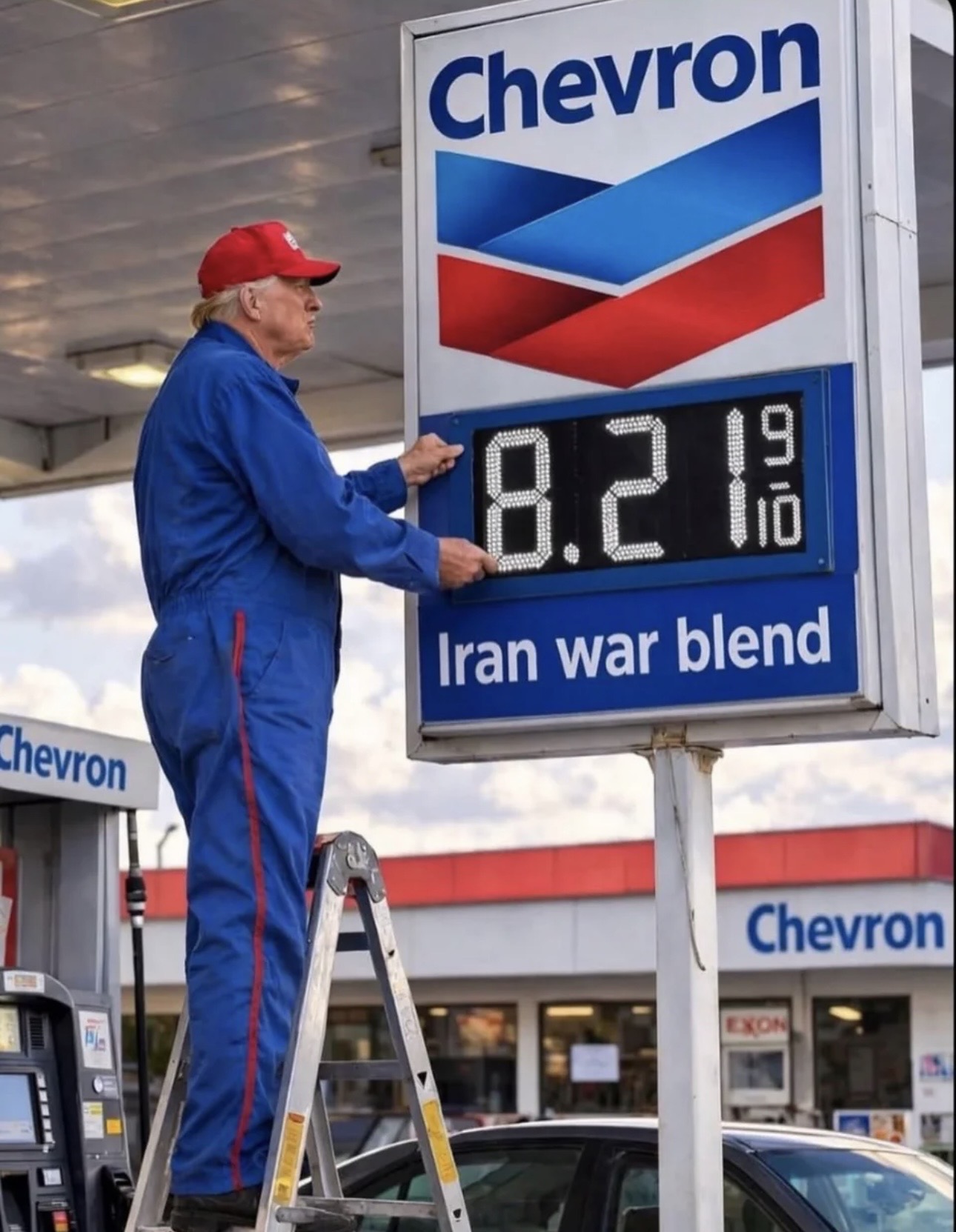
Just as American drivers are reeling from a month of relentless price hikes at the pump, two major energy shocks have converged to threaten even steeper increases. A massive explosion at a Texas refinery this week has knocked out a critical piece of U.S. fuel infrastructure, while the ongoing war with Iran continues to rattle global oil markets. Together, these events are creating a perfect storm for gasoline prices—and for President Donald Trump’s political prospects ahead of the November midterm elections.

Texas Refinery Blaze: A Critical Supply Hit
On March 23, a powerful explosion rocked the Valero Energy refinery in Port Arthur, Texas, sending thick black smoke billowing into the sky and shaking homes up to 18 kilometers away . The facility, one of the ten largest refineries in the United States, processes approximately 435,000 barrels of crude oil daily into gasoline, diesel, and jet fuel .
The fire originated in a diesel hydrotreater unit, which sustained severe damage, with flames spreading to an adjacent fluid catalytic cracking unit . While no fatalities were reported, the incident caused at least eight injuries, with three reported as serious . Local authorities briefly issued shelter-in-place orders for nearby residents as emergency crews worked to contain the blaze .

The timing could hardly be worse. According to energy consultant Andy Lipow of Lipow Oil Associates, the refinery’s diesel-producing unit is likely to remain offline for an extended period, while gasoline production could resume in the coming weeks . In the immediate aftermath, wholesale gasoline prices jumped 10 cents per gallon, while diesel surged 16 cents .
Already Skyrocketing: The Numbers Behind the Pain
Even before the Texas fire, American drivers were feeling an intense squeeze at the pump. The national average for regular gasoline has climbed to $3.98 per gallon—a staggering 35% increase over the past month . Diesel prices have been hit even harder, soaring 43% to $5.35 per gallon .
For context, this represents a $1.03 per gallon increase in just four weeks, marking the highest prices since August 2022 . While diesel is used by relatively few passenger vehicles, it powers the nation’s trucking fleet and farm equipment—meaning higher diesel costs quickly translate into more expensive groceries and consumer goods across the board .

The Iran Factor: War and Volatility
The refinery fire alone would be significant, but it is occurring against the backdrop of an escalating war with Iran that has already reshaped global energy markets. The conflict, now in its fourth week, has effectively closed the Strait of Hormuz—a critical chokepoint through which approximately one-fifth of global oil supplies typically flow .
Crude oil prices have reflected the turmoil. Brent crude, the global benchmark, briefly exceeded $114 per barrel earlier this week before settling around $101.70 . West Texas Intermediate (WTI) crude traded at $90.60 following the refinery explosion . These figures represent dramatic increases from pre-conflict levels, with analysts warning that sustained prices above $100 per barrel could tip the U.S. economy toward recession .

President Trump’s approach to the conflict has been characteristically volatile. On one hand, he has threatened to “obliterate” Iranian power plants; on the other, he has suggested he is considering “winding down” military operations and reported “productive conversations” with Iranian officials—claims Tehran has denied . This mixed messaging has injected additional uncertainty into already jittery markets .
The Political Calculus: Gas Prices and the Midterms
For a president who campaigned on an “America First” promise to prioritize domestic concerns, the convergence of high gas prices and foreign military engagement presents a dangerous political equation. The November midterm elections will determine whether Republicans maintain their narrow control of Congress, and recent polling suggests the party faces significant headwinds .

A CBS News/YouGov poll conducted March 17-20 found Trump’s overall job approval at a net -20 points, with 60% disapproving of his performance . More troubling for Republicans, 60% of Americans now disapprove of U.S. military action against Iran, and 66% view the war as one “America chose to fight” rather than a necessity .
Independent voters—a crucial bloc likely to decide the midterms—are particularly skeptical. A Quinnipiac University survey found independents oppose U.S. military action against Iran by a 60% to 31% margin, with 71% saying the administration has failed to clearly explain its objectives .
“The administration’s struggles in delivering a compelling and clear case for the military actions in Iran and the simultaneous exacerbating effects on the cost of living in the U.S. have only added to the Republicans’ tedious position among independents,” said Christopher Borick, director of the Muhlenberg College Institute of Public Opinion .
Voices from the Swing States
In Pennsylvania, a critical swing state, voters are already wrestling with these issues. Jolene Lloyd, a 65-year-old retired postal worker, told AFP she plans to vote only for Democrats in November—a shift from her previous ticket-splitting habits. “Trump’s just miring us in another Iraq, Vietnam situation,” she said. “Gas prices are obviously skyrocketing. It’s a total mess” .
Even some Trump voters are expressing unease. Vince Lucisano, a 42-year-old welder who supported Trump in 2024, told AFP he still plans to vote Republican but has misgivings about foreign spending. “The guy who ran on ‘America First’ is dumping billions overseas,” Lucisano said. “We’re not putting America first there, bud” .
Conservative media voices are sounding alarms. Jesse Kelly, host of The Jesse Kelly Show, warned on X that if current polling holds, Republicans will “get massacred in the midterms” .

The Economic Transmission Mechanism
The political damage flows directly from economic pain. Higher diesel prices don’t just affect trucking companies—they ripple through the entire economy. Most major carriers have fuel surcharge mechanisms that automatically pass increased costs to shippers, who in turn raise prices on virtually every good that moves through the supply chain . With spring planting season approaching, farmers face steep diesel costs that will ultimately affect food prices .
Economists warn that sustained high oil prices could trigger a recession. Tim Rezvan, managing director at KeyBanc Capital Markets, told the Daily Mail that if oil prices remain above $100 for three months, “we’d likely see very challenging economic conditions in the U.S.” .
Looking Ahead
The path forward remains uncertain. The Valero refinery’s full restart timeline is unclear, though the gasoline-producing units may resume within weeks . Meanwhile, Trump has indicated he is considering winding down military operations against Iran, though fighting continues and the Strait of Hormuz remains effectively closed .
For American consumers, the immediate outlook is for continued pain at the pump. AAA data shows retail gasoline prices have risen nearly every day for the past month, with no clear inflection point in sight . And for President Trump and congressional Republicans, November’s elections will test whether they can overcome the potent combination of high energy costs and voter skepticism about foreign entanglements.

As Bobby Marozzi, a Pennsylvania diner employee, put it: “If it’s high gas prices and high groceries that we have to sacrifice for the next four years, it’s OK so long as the Trump administration is going to get something done.” . Whether a majority of voters share that patience may well determine control of Congress—and the trajectory of the final two years of Trump’s term.