

By Trump ShagsKids
Well, folks, it turns out that fighting a war with Iran isn’t quite the “quick, easy” transaction President Donald Trump promised us back when he was firing off Truth Social posts about “virtually unlimited” weapons stockpiles . Who could have guessed that shooting down thousands of cheap Iranian drones with multi-million-dollar American missiles might get a little… expensive?

In fact, just ten days into what the administration is calling Operation Epic Fury (a name so grandiose it sounds like a energy drink flavor), the United States has managed to blow through an estimated $10.35 billion .
That’s not a typo. Billion. With a B.
If you’re keeping score at home, that’s more than $1 billion per day. But don’t worry—according to the White House, everything is going great, and the defense contractors are definitely not the only ones profiting here.
The Math Doesn’t Math
Let’s break down the economics of this mess, because it’s almost funny if it weren’t your tax dollars.
When Iran launches a Shahed-136 drone—a glorified lawnmower engine strapped to a delta wing that costs about $20,000 to produce—the U.S. military’s preferred method of dealing with it is to shoot it down with a Patriot PAC-3 interceptor . Each Patriot PAC-3 costs roughly $4 million .

So, for every $20,000 nuisance Iran sends over, the American taxpayer is on the hook for $4 million. That’s a ratio of 200 to 1. In what world is that a sustainable business model? Even the worst timeshare presentation offers a better return on investment.
If Iran fires a ballistic missile, the price tag gets even more absurd. The military has been relying heavily on SM-3 interceptors, which run up to $14 million a pop, and THAAD interceptors, which hover around $12-13 million each .
Analysts estimate that in the first 100 hours alone, the U.S. and its allies spent roughly $1.7 billion just on interceptors . That’s enough money to pay for free college tuition for every kid in Rhode Island, or to build a small fleet of luxury yachts for the Lockheed Martin board of directors.

Wait, It Gets Worse
You’d think for a billion dollars a day, we’d at least be keeping our toys in good shape. But the Iranians—who apparently didn’t get the memo that they’re supposed to just roll over and let the world’s sole superpower dictate terms—have actually managed to blow up quite a lot of expensive American equipment.
The highlight reel of U.S. losses in just the first ten days includes:
· One AN/FPS-132 early warning radar system in Qatar: $1.1 billion. Poof. Gone. Hit by an Iranian missile .
· Three F-15E Strike Eagle fighter jets: $282 million. Destroyed in a friendly fire incident in Kuwait. Yes, you read that right. Friendly fire. The Kuwaitis accidentally shot down three of our own jets. That’s not war; that’s a blooper reel .
· Two AN/TPY-2 radar components (part of the THAAD system): Approximately $500 million each in the UAE and Jordan .
· Four to eleven MQ-9 Reaper drones: Approximately $120 million. Iran has been plucking these things out of the sky like they’re playing a carnival game .
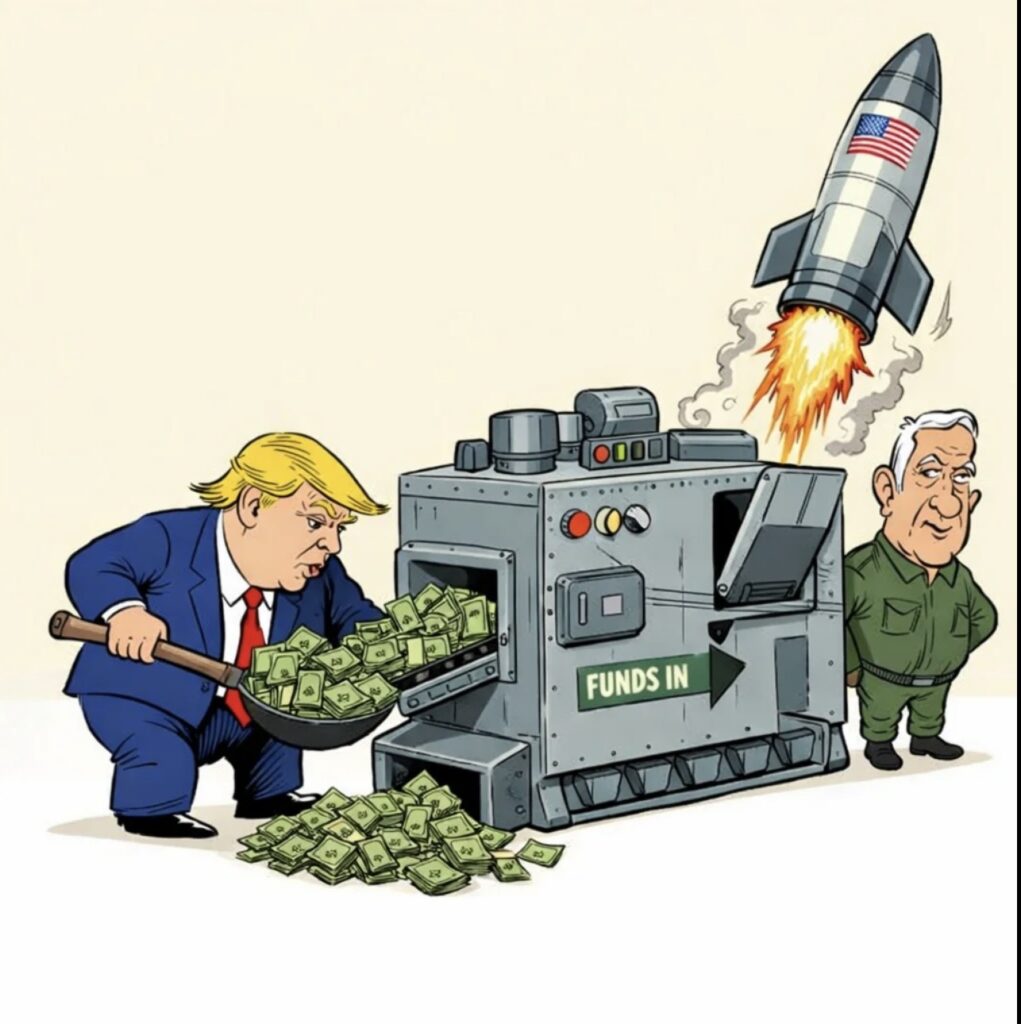
By March 17, the American Foreign Policy Research Institute estimated that total U.S. losses, including munitions expenditure and destroyed equipment, had ballooned to a staggering $20 billion .
Twenty. Billion. Dollars.
For context, that’s roughly 1.23% of the entire 2026 defense budget—spent in just over two weeks .
The Pentagon’s “Unlimited” Gaslighting
Now, you might think this would cause a little bit of panic inside the Pentagon. And you’d be right—except that the official line is that everything is fine.

Defense Secretary Pete Hegseth appeared before reporters on March 4 to assure the American people that the Defense Department has “a nearly unlimited stockpile” of stand-in weapons . Hegseth claimed that “the enemy can no longer shoot the volume of missiles they once did,” which is a comforting thought, except for the part where Iran has launched over 500 ballistic missiles and 2,000 drones since the conflict began .
Meanwhile, General Dan Caine, the Chairman of the Joint Chiefs of Staff, told reporters that the U.S. has enough precision munitions “for the task at hand” . But just days earlier, The Washington Post reported that Caine had privately warned Trump that a lack of critical munitions could seriously hinder efforts to contain Iranian retaliation .

Which is it, gentlemen? Is the cupboard full, or are we running on empty?
The truth probably lies somewhere in the middle, and it’s not pretty. According to leaks from the Pentagon reported by Al Jazeera and Bloomberg, the U.S. inventory of certain missiles—particularly Tomahawks and SM-3 interceptors—is running dangerously low . The U.S. only has about 4,000 Tomahawks left, with less than 100 produced per year . At the rate they’ve been firing them (the first day alone cost $340 million in Tomahawk launches), that stockpile is going to last about as long as a Trump administration cabinet member’s security clearance .
“The Salvo Competition”
Defense experts have a fancy term for what’s happening: “salvo competition” . In layman’s terms, it’s a fancy way of saying “who runs out of bullets first.”

Stacie Pettyjohn, the director of the defense program at the Center for a New American Security, put it bluntly: “The question is who has the deeper magazines of key weapons” . And the big, scary answer is that Iran might actually have the edge here.
Before the war began, Iran was estimated to have around 2,500 ballistic missiles . That’s more than the combined ballistic missile interceptor totals of Israel and the United States. Iran also has the capacity to produce hundreds of Shahed drones per day .
Kelly Grieco, a senior fellow at the Stimson Center, told CTV News: “There is a risk the United States and its partners could run out of interceptors before Iran runs out of missiles” .
Grieco’s colleague at Stimson, Christopher Preble, added that at the current pace of operations, the number of interceptors “could not continue for more than several weeks” .

So the plan, apparently, is to hope Iran runs out of missiles before we run out of money. But here’s the kicker: Iran’s missiles cost them a fraction of what our interceptors cost us. They can afford to keep firing longer than we can afford to keep shooting them down.
The Trump Doctrine: Run Up the Tab
This whole debacle brings us back to the man who started it. Donald Trump, who campaigned on ending “endless wars,” has now overseen the opening salvo of what is shaping up to be the most expensive conflict in recent memory.
Trump’s initial estimate for the war was that it would last “four to five weeks” . At the current burn rate of $1 billion per day, that would put the price tag at roughly $35 billion—and that’s if the conflict magically wraps up on schedule, which wars never do.
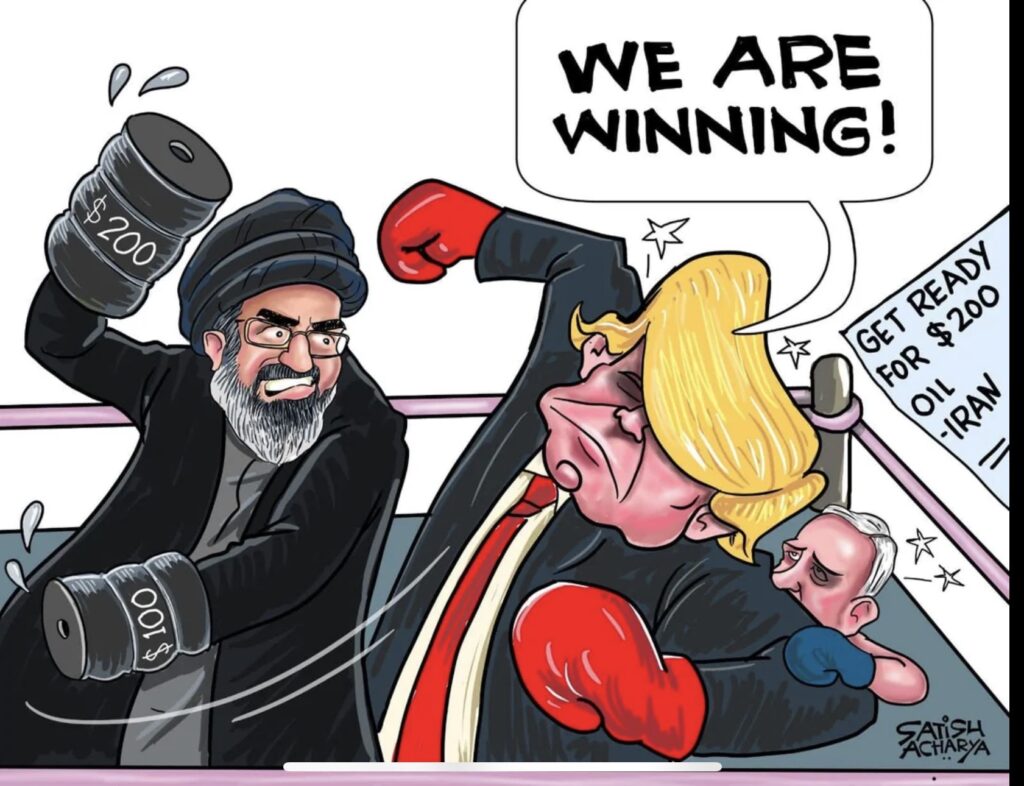
But hey, at least we’re getting a lot of bang for our buck, right? Actually, no. We’re getting very little bang for an astronomical number of bucks.
Remember when Trump was bragging on Truth Social about how the military’s supply of “medium- and upper-medium-grade” munitions had “never been higher” ? Even he had to admit, in the same post, that the stock of higher-end weapons was “not where we want them to be” . That’s like a restaurant owner saying, “Our burgers are great, but we’re all out of meat.”
A Supplemental Funding Request (of Course)
In predictable fashion, the White House is reportedly crafting a supplemental funding package to pay for the war . Because why have a budget for wars when you can just tack the cost onto the national credit card?

Undersecretary of Defense for Policy Elbridge Colby acknowledged the need for more cash, saying, “my understanding is that there may be additional requests” . That’s Pentagon-speak for “start printing money.”
The defense contractors are, naturally, salivating. Lockheed Martin has already signed a deal to more than triple production of Patriot PAC-3 interceptors—from 600 units in 2025 to 2,000 annually by the end of the decade . RTX (formerly Raytheon) is ramping up production of AMRAAMs, Tomahawks, and Standard Missiles . The Pentagon even took the unusual step of investing $1 billion in L3Harris’ solid rocket motor business, buying an equity stake in the company .
So let me get this straight: The U.S. government is now a venture capitalist for weapons manufacturers? At this rate, by 2030, the Pentagon will just own Lockheed Martin outright.

The Bottom Line
Here’s where we stand, America. After less than three weeks of war, the United States has:
· Spent more than $10 billion on operations
· Suffered nearly $3 billion in equipment losses
· Depleted critical munitions stockpiles that took years to build
· Destroyed exactly zero of Iran’s ability to launch cheap drones
· Made Lockheed Martin’s shareholders very, very happy
President Trump promised to run the country like a business. Well, if this were a business, the CEO would have been fired for gross incompetence, the CFO would be under investigation for fraud, and the shareholders would be suing for reckless endangerment of their investment.

But hey, at least the fireworks look nice on TV.
And don’t worry—if we run out of interceptors, we can always just ask the American people to start throwing their wallets at the incoming missiles. At $4 million per throw, we might just break even.
[Author Name] is a contributing editor to [Publication]. He does not own stock in any defense contractors, which is why he can afford to pay his rent.