

If there is one thing Scott Bessent understands, it is the art of the losing bet.
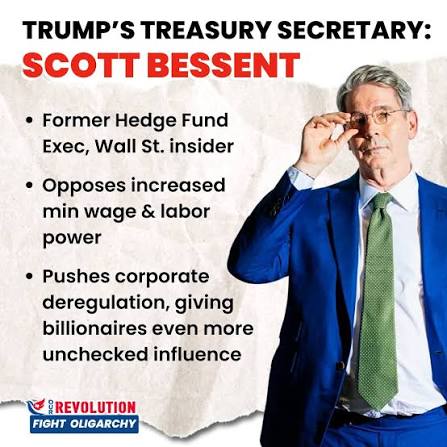
Before being tapped to manage the U.S. economy, Bessent managed to turn a $4.5 billion hedge fund into a cautionary tale, shuttered Key Square Capital after years of lackluster returns, and now finds himself as the human shield for the Trump administration’s most indefensible economic gibberish. But let us start at the beginning—or rather, the beginning of the end of the British pound.
The Soros Years: A Brief Love Affair with Financial Arson
In 1992, a young Scott Bessent helped George Soros “break” the Bank of England . It was the financial equivalent of shooting fish in a barrel, and Bessent was happy to hold the harpoon. For this service, Soros rewarded him handsomely, eventually promoting him to Chief Investment Officer and, by all accounts, treating him as something of a protégé .
Now, one might assume that a man who spent fourteen years in the employ of the Democratic Party’s favorite boogeyman—the man whose name alone sends Fox News anchors into cold sweats—might face some questions when appointed to a Republican cabinet. One would be wrong.

Bessent’s relationship with Soros wasn’t just professional; it was dynastic. When Bessent left to start Key Square Capital in 2015, Soros handed him a $2 billion check as a parting gift . That’s not a severance package; that’s a dowry. It suggests a level of trust and affection that goes well beyond casual employment. It suggests that Bessent was, as Forbes politely put it, Soros’s “protégé” .
Yet when Bessent appeared for his Senate confirmation hearing, the word “Soros” might as well have been Voldemort. Nobody uttered it. Certainly nobody asked the obvious question: How does a man who served as the right-hand to the left’s favorite billionaire square that with serving a president who built his political career on attacking that very same figure? The answer, apparently, is that nobody in Washington has the spine to ask .

The Economic Vision: Three Threes and a Whole Lot of Nothing
Bessent’s grand economic plan is what he calls the “Three Threes”—3% deficit reduction, 3% GDP growth, and 3 million additional barrels of oil production . It sounds good if you say it fast, like a magic incantation. The problem is that arithmetic doesn’t care about alliteration.
The Congressional Budget Office estimates that Trump’s tax cuts will add $3.4 trillion to the deficit over the next decade . The International Monetary Fund projects U.S. public debt will hit 143% of GDP by 2030—roughly where Greece was when its economy collapsed . But Bessent, ever the loyal soldier, continues to insist that everything is fine, that tariffs will somehow revive American manufacturing, and that we can achieve energy independence while also maintaining the dollar’s reserve currency status, and also cut taxes, and also reduce the deficit .
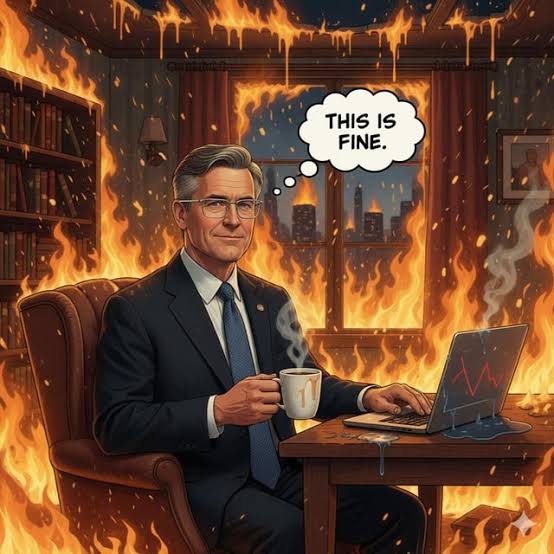
It’s the economic equivalent of promising to lose weight by eating more cake.
When asked about the obvious contradictions in Trump’s tariff policies—which have alienated European allies, spooked markets, and done precisely nothing to revive the Rust Belt—Bessent’s advice to European leaders was to “sit back, take a deep breath, and let things play out” . When a Danish pension fund announced it would divest from U.S. Treasuries over Trump’s threats to seize Greenland, Bessent dismissed the country as “irrelevant” .
One suspects the Danes—and the Germans, and the French, and basically everyone who buys U.S. debt—may not appreciate being told they’re irrelevant by the man responsible for ensuring they keep buying it.
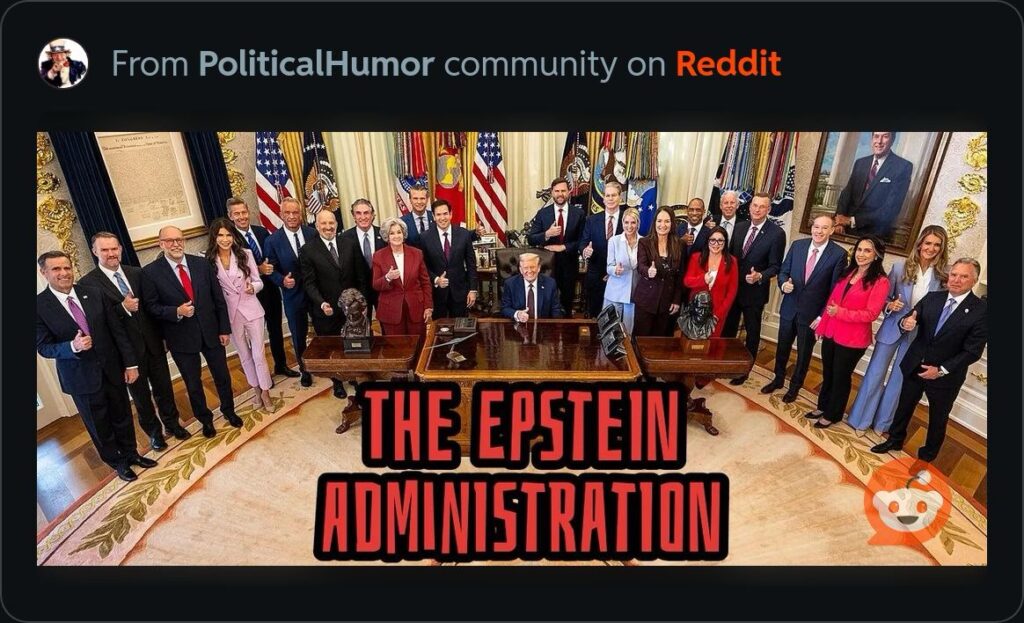
The Epstein Files: A Curious Case of Selective Transparency
Which brings us to the part of the story that the administration would very much like you to ignore.
Senator Ron Wyden has been investigating the financing of Jeffrey Epstein’s sex trafficking operation for three years . Three years. And for three years, the Treasury Department has sat on documents that could shed light on how one of the most prolific pedophiles in modern history moved money around the globe with apparent impunity.
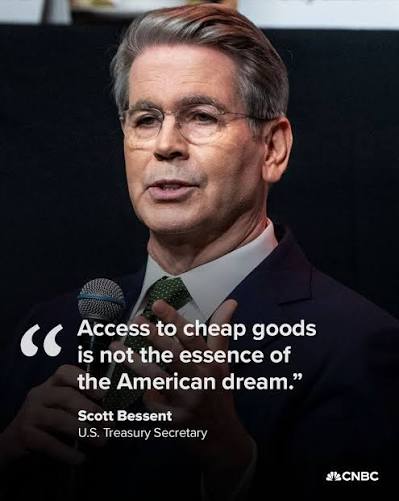
These aren’t just any documents. They’re Suspicious Activity Reports—the very same reports that banks file when they detect transactions that might indicate money laundering or other financial crimes. According to Wyden, just one of these reports shows more than 4,725 wire transfers totaling $1.08 billion among Epstein and his associates . That’s billion with a B.
You might think that information would be useful. You might think that Congress—particularly a committee conducting an investigation—might have a legitimate interest in seeing it. You might think that a Treasury Secretary committed to transparency would happily comply.
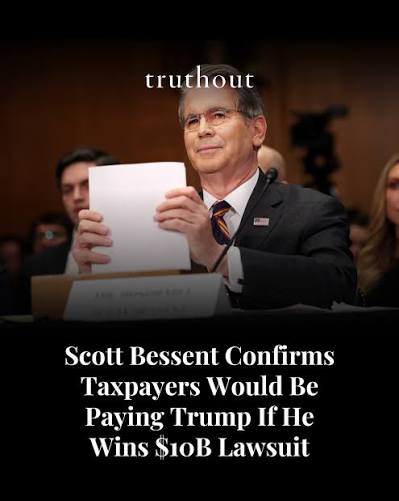
Scott Bessent thinks otherwise.
He has twice refused to provide these records to the Finance Committee . He has accused Wyden of breaking the law for merely discussing the existence of these reports . And when Representative Mary Gay Scanlon tried to introduce a motion to subpoena Bessent for the Epstein files during a House Judiciary Committee hearing, her Republican colleagues literally cut her off mid-sentence and voted to table the motion before she could finish speaking .
Let that sink in. They wouldn’t even let her finish the sentence.
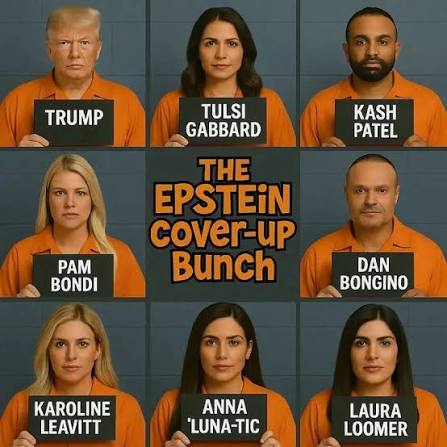
Senator Wyden put it more bluntly: Bessent is “a willing participant in the Trump administration’s Epstein cover-up” . The Treasury Department responded by calling Wyden’s investigation “a pathetic attempt at political theater” .
The Neighbor, The Mentor, and The Missing Files
Here’s where the Venn diagram starts to look less like a coincidence and more like a pattern.
Howard Lutnick, Trump’s Commerce Secretary, was Jeffrey Epstein’s literal next-door neighbor in Manhattan . The FBI received a tip about possible connections between Lutnick and Epstein in 2020—a tip that included an offer of documentation . Deutsche Bank’s own records confirm the proximity .
Scott Bessent, the Treasury Secretary, spent fourteen years working for George Soros, whose name appears 351 times in the Epstein files index . In one document, an individual claiming to be a “friend of George Soros” called the Southern District of New York with information about Ghislaine Maxwell . The voicemail exists. Its contents remain unknown.
And now Bessent is blocking the release of Treasury documents that could connect dots we don’t even know exist.
Is there a direct link between Bessent and Epstein? The files, as currently available, don’t show one . But that’s rather the point, isn’t it? We don’t know what’s in the files because Bessent won’t let anyone see them.
The Black Eye He Didn’t Give
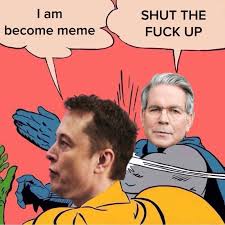
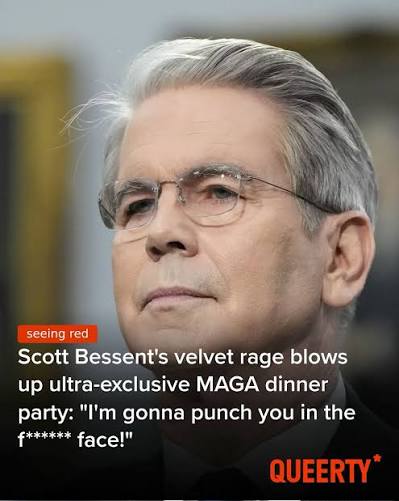
Perhaps the most delightful moment of Bessent’s tenure came when reports surfaced that he and Elon Musk had gotten into a physical altercation over who would run the IRS. Musk subsequently appeared in the Oval Office with a black eye, and Bessent felt compelled to issue a public denial: “I can 100 percent say I did not give him the black eye” .
This is where we are. The Treasury Secretary of the United States has to publicly deny punching Elon Musk in the face. The bar for normalcy has descended into the earth’s core.
The Bottom Line
Scott Bessent is not the worst person to hold his office. That bar, tragically, is higher than it should be. But he is emblematic of everything wrong with this administration: the convenient amnesia about past associations, the cheerful embrace of economically illiterate policies, the stonewalling of legitimate investigations, and the absolute, unshakeable confidence that nobody will ask the hard questions.
We are left with a Treasury Secretary who made his fortune betting against economies, now charged with managing one. A man who worked for George Soros, now serving a president who built his brand on hating him. A man sitting on files that could expose the financial network of a convicted sex trafficker, insisting that transparency would be “political theater.”
The British learned in 1992 what happens when you let Scott Bessent bet against you. Perhaps it’s time we started wondering what—and who—he’s betting against now.