
By Trump ShagsKids
Date: February 21, 2026
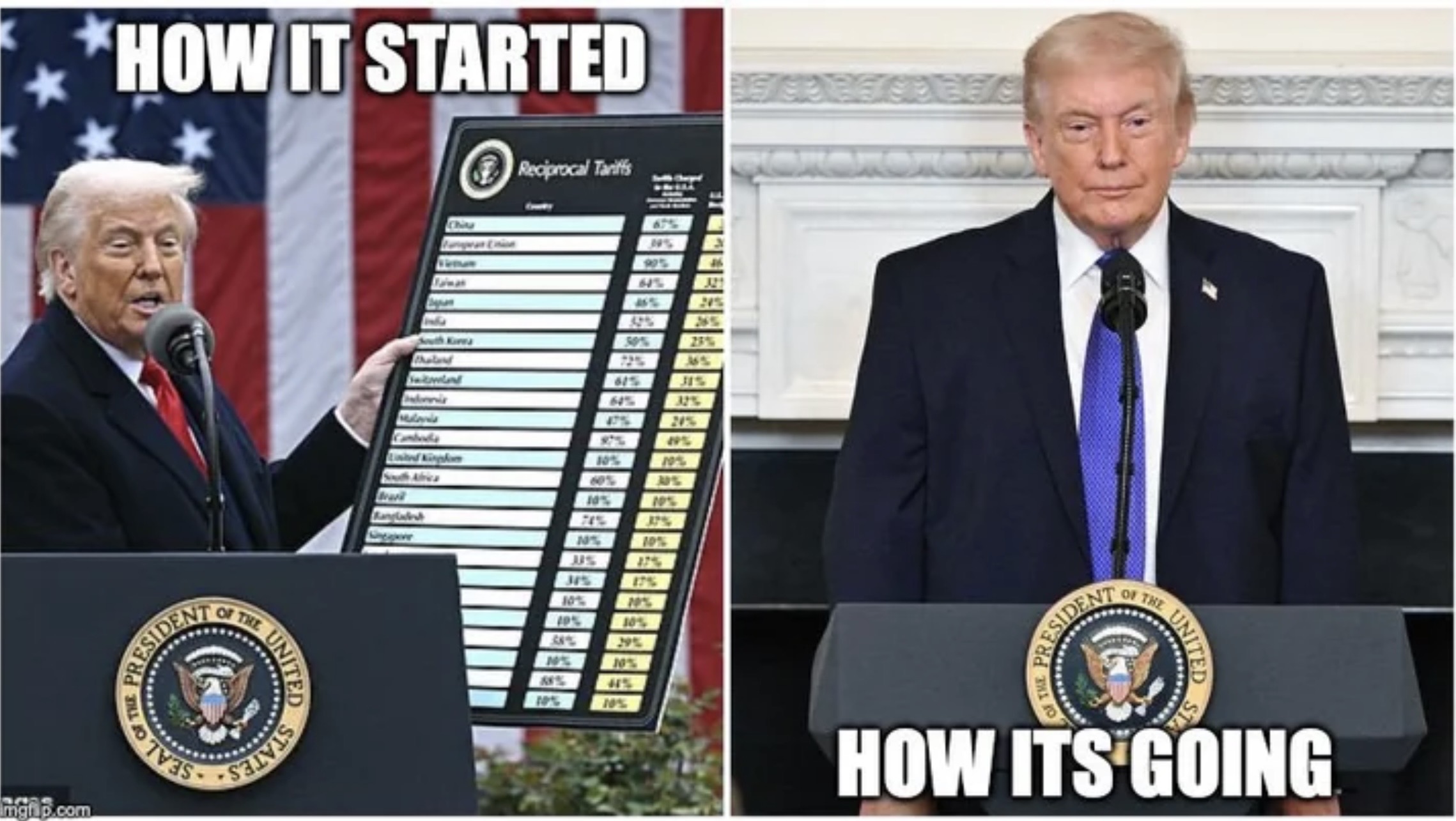
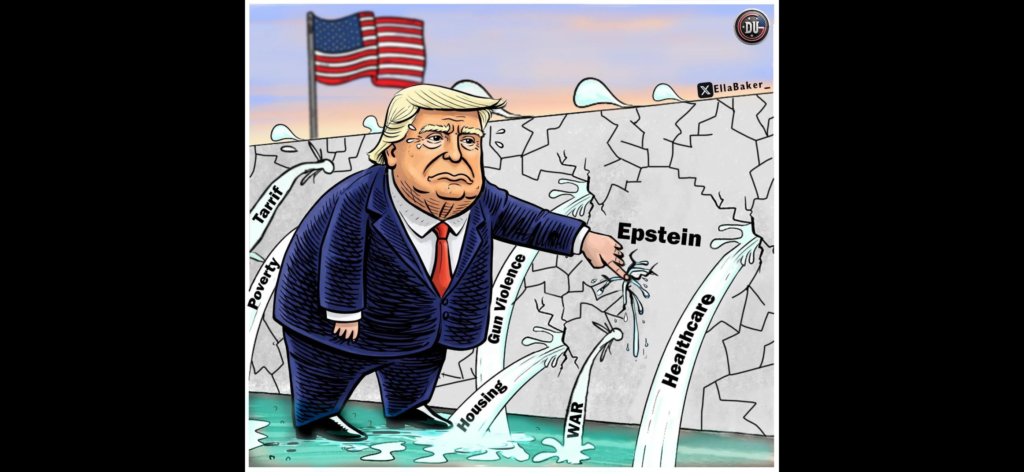
The Supreme Court’s seismic 6-3 ruling against President Donald Trump’s emergency tariffs has done more than just strike down a signature policy—it has detonated a political and financial crisis that threatens to reverberate straight through the November midterm elections. With as much as $175 billion in unlawfully collected duties now in legal limbo, the administration faces a “messy” refund process that Democrats are already weaponizing into a campaign rallying cry, while Trump scrambles to rebuild his trade agenda from scratch .
The Fiscal Fallout: A $175 Billion Question Mark
The numbers are staggering. According to U.S. Customs Agency data, approximately $133 billion was collected under the now-invalidated International Emergency Economic Powers Act (IEEPA) tariffs as of mid-December 2025. However, the influential Penn-Wharton Budget Model projects the total liability could reach $175 billion when all transactions are accounted for—a figure that exceeds the combined annual budgets of the Transportation and Justice Departments .
Yet the Supreme Court offered no roadmap for repayment. Justice Brett Kavanaugh, a Trump appointee, noted in his dissent that the ruling “says nothing today about whether, and if so how, the government should go about returning the billions of dollars that it has collected from importers” . His colleague Justice Amy Coney Barrett, who sided with the majority, reportedly flagged the “messy” process ahead during November arguments—a word Kavanaugh borrowed to warn that “the refund process is likely to be a ‘mess'” .
President Trump himself acknowledged the timeline could stretch for years. “I guess it has to get litigated for the next two years,” Trump told reporters Friday. “We’ll end up being in court for the next five years” .

The Political Ammunition: Democrats Demand Blood
Democrats moved with lightning speed to turn the ruling into a campaign weapon. Illinois Governor JB Pritzker, a potential 2028 presidential contender, sent Trump an invoice demanding nearly $9 billion in refunds for his state’s families—approximately $1,700 per household, the amount Yale University experts estimated the average American family paid in tariff costs last year .
“Your tariff taxes wreaked havoc on farmers, enraged our allies and sent grocery prices through the roof,” Pritzker wrote, warning that further legal action could follow if compensation wasn’t forthcoming .
California Governor Gavin Newsom, another potential White House aspirant, struck an even more confrontational tone. “Time to pay the piper, Donald. These tariffs were nothing more than an illegal cash grab that drove up prices and hurt working families, so you could wreck longstanding alliances and extort them,” Newsom said. “Every dollar unlawfully taken must be refunded immediately—with interest. Cough up!” .
The Democratic Congressional Campaign Committee quickly joined the fray. Chair Suzan DelBene, D-Wash., declared that Trump “is not a king” and his “tariffs were always illegal.” She blasted congressional Republicans for failing to act: “Republicans in Congress could have easily ended this economic crisis by standing up for their communities. Instead, they chose to bend the knee to Trump while families, small businesses and farmers suffered from higher prices” .
The Voter Backlash: Tariffs as a Liability
The political danger for Trump and his party is rooted in cold, hard polling data. An AP-NORC poll conducted after Trump’s “Liberation Day” tariff announcement last April found that 76% of Americans believed the policies would increase the cost of consumer goods—a warning sign for a president elected on promises of taming inflation . By January, another poll showed roughly 6 in 10 Americans said Trump had “gone too far” in imposing new tariffs .
This public skepticism creates a treacherous landscape for Republican candidates forced to defend what are essentially tax increases on American consumers and businesses. Already, cracks are appearing in party unity. Earlier this month, six House Republicans joined Democrats to vote for a resolution against Trump’s tariffs on Canada. At least seven GOP senators have voiced private and public concerns about the trade agenda .
Former Senate Majority Leader Mitch McConnell, R-Ky., issued a pointed statement praising the Supreme Court’s decision. “Congress’ role in trade policy, as I have warned repeatedly, is not an inconvenience to avoid,” McConnell said. “The empty merits of sweeping trade wars with America’s friends were evident long before today’s decision. The American people already know that when Washington throws up artificial barriers, building and buying here at home become more expensive” .
Even former Vice President Mike Pence, who served during Trump’s first term, cheered the ruling. “American families and American businesses pay American tariffs—not foreign countries,” Pence wrote. “With this decision, American families and businesses can breathe a sigh of relief” .
The Corporate Onslaught: 1,800 Lawsuits and Counting
Beyond the political rhetoric lies a tidal wave of litigation. More than 1,800 tariff-related lawsuits have already been filed with the U.S. Court of International Trade since April 2025—a dramatic spike compared to the less than two dozen cases filed in all of 2024 . Plaintiffs include a who’s who of corporate America: Costco, Toyota, Goodyear, Revlon, and Bumble Bee Foods are all seeking to reclaim funds .
Alex Jacquez, chief of policy and advocacy at the liberal Groundwork Collective, noted that many businesses sought refunds even before the Supreme Court ruled, essentially jockeying for position at the front of the line . Trade lawyer Dave Townsend of Dorsey and Whitney told the Associated Press that while Customs does have a process for refunding duties in error cases, “the courts and US customs have never had to deal with anything like this—thousands of importers and tens of billions of dollars at once” .
The administrative burden will be crushing. Trade lawyer Joyce Adetutu, a partner at Vinson and Elkins, predicted “a bumpy ride for a while.” She added: “The amount of money is substantial. The courts are going to have a hard time. Importers are going to have a hard time. It’s going to be really difficult not to have some sort of refund option, given how decisively the Supreme Court repudiated Trump’s tariffs” .
The Trump Counter-Punch: New Tariffs, New Battles
True to form, President Trump refused to accept defeat. Hours after the ruling, he signed a proclamation imposing a 10% global tariff under Section 122 of the Trade Act of 1974—a never-before-used law that allows temporary duties for up to 150 days, after which Congress must act . The administration also signaled it would pursue tariffs under Section 232 (national security) and Section 301 (unfair trade practices) to fill the gap .
Treasury Secretary Scott Bessent attempted to minimize the damage, claiming that combining these alternative authorities “will result in virtually unchanged tariff revenue in 2026” . But the legal gymnastics underscore a deeper vulnerability: Trump’s most powerful trade weapon has been stripped away, and the replacement tools are either temporary, require congressional approval, or demand lengthy investigations .
The 10% global tariff, set to take effect February 24, exempts certain critical minerals, metals, energy products, pharmaceuticals, and electronics. But it applies even to countries that struck trade deals with the U.S., including the UK, India, and the European Union—creating new diplomatic tensions .
The Midterm Calculus: A Looming Anchor
For Republican candidates facing voters in November, the tariff ruling presents a no-win scenario. If refunds flow primarily to corporations—as Treasury Secretary Bessent has suggested is likely—Democrats will hammer the administration for bailing out big business while ordinary families saw grocery prices soar . If the process drags out for years, as Trump himself predicted, voters may see only chaos and broken promises .
The timing could hardly be worse. Trump’s tariff timelines are now “likely to collide with the midterm elections for control of the House and Senate,” as the Economic Times noted . Voter frustration with inflation and economic uncertainty—both exacerbated by the tariff wars—could prove decisive in swing districts where Republican incumbents must defend an increasingly unpopular trade agenda.

Neil Bradley, executive vice president and chief policy officer at the U.S. Chamber of Commerce, welcomed the ruling but urged the administration to “move swiftly to refund unlawfully collected duties and to reset overall tariff policy to promote economic growth and lower costs for families” . The coalition We Pay the Tariffs, representing small businesses, demanded “full, fast and automatic” refunds .
Whether the administration can deliver—or whether the issue will fester as a campaign-season liability—remains an open question. One thing is certain: the $175 billion question isn’t going away, and for Trump and his party, the refund process could prove far costlier than any tariff ever could.