
When the final notes of Bad Bunny’s historic Super Bowl halftime show faded on Sunday night, something remarkable happened across America. In living rooms from California to Puerto Rico, in bars in Miami and community centers in Chicago, people who rarely see themselves reflected on such a monumental stage felt a surge of recognition. What President Donald Trump dismissed as “one of the worst, EVER” and “an affront to the Greatness of America” was, for millions, a long-overdue celebration of the vibrant, Spanish-speaking heart of the nation itself.
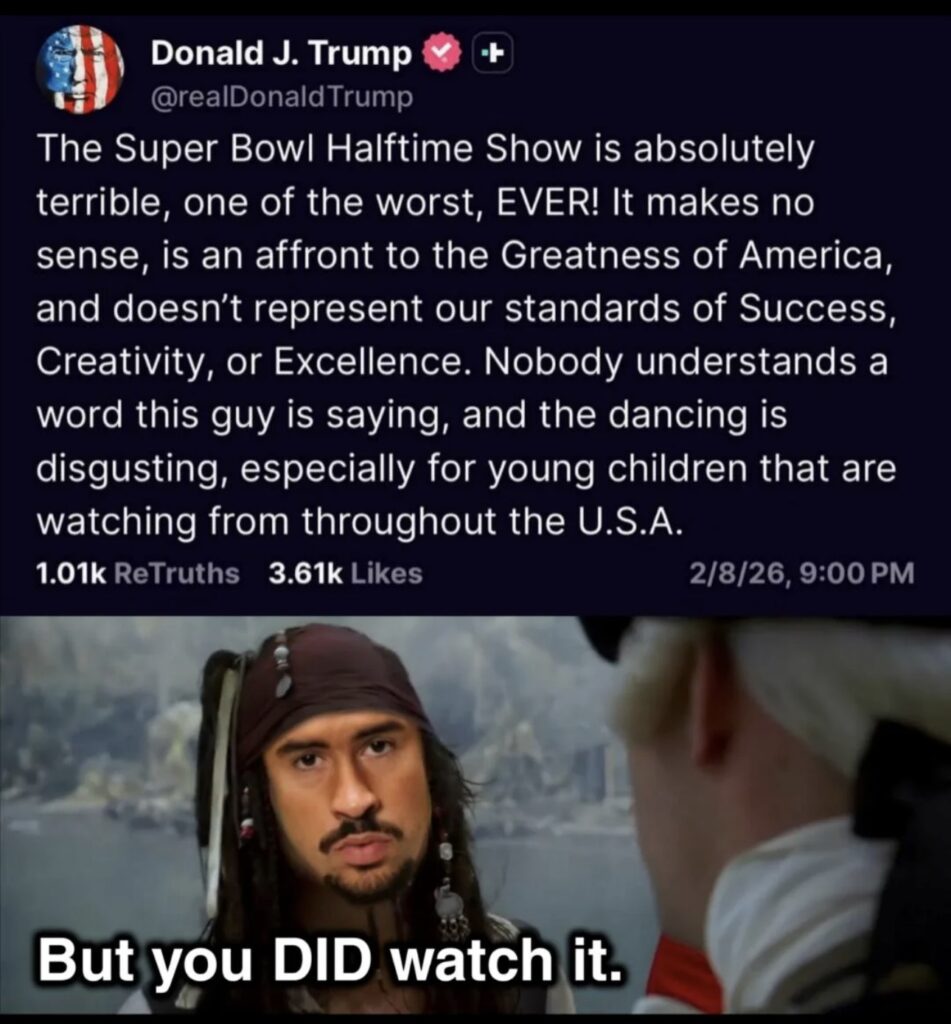
The backlash against Bad Bunny—born Benito Antonio Martínez Ocasio—began months before he took the stage. It revealed less about the Puerto Rican global superstar and more about a political faction uncomfortable with a changing America. The performance and the vitriolic response to it have ignited a crucial national conversation about language, belonging, and who gets to define American culture.
The Performance: A Celebration of Community
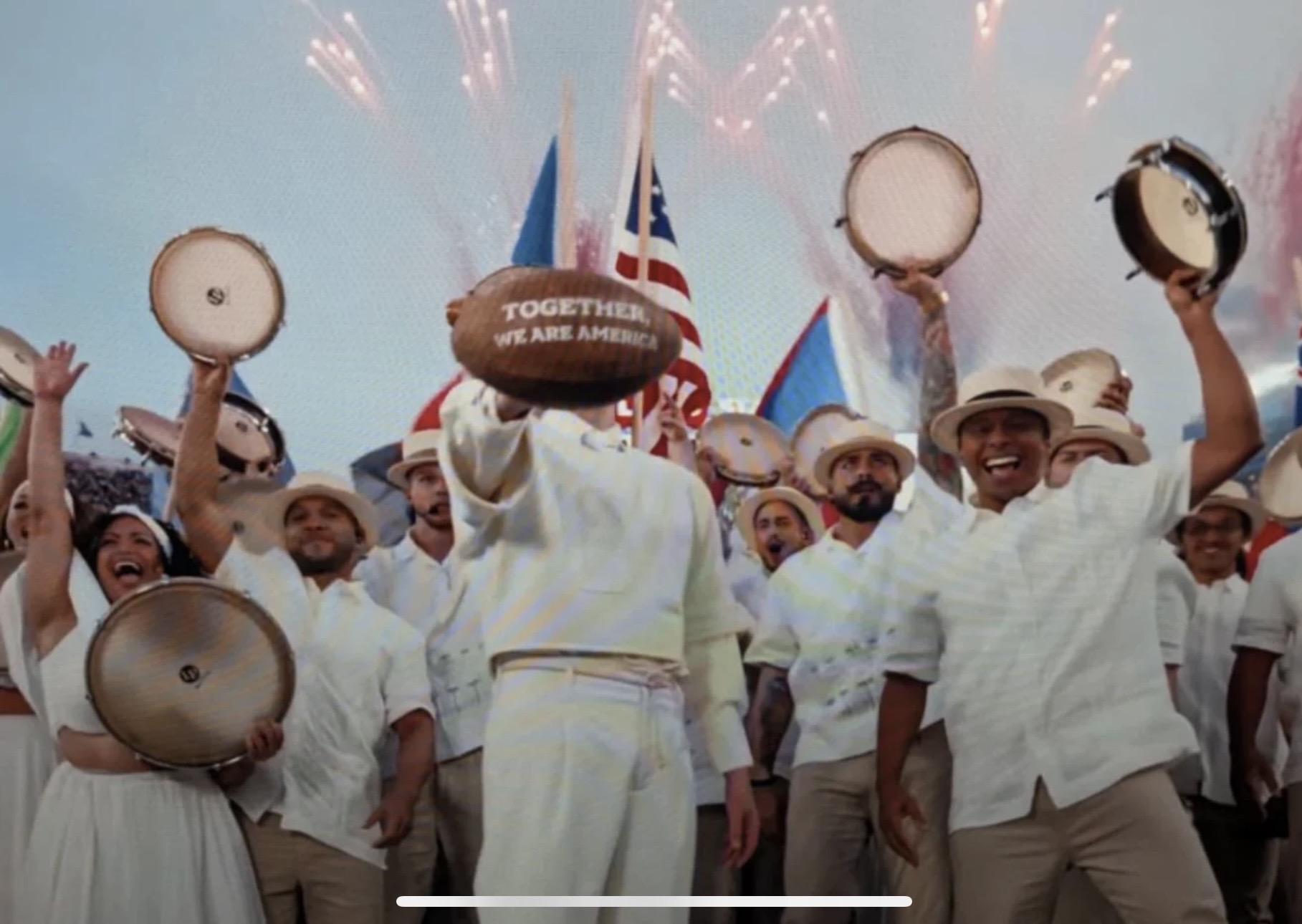
Bad Bunny’s show was a masterclass in cultural celebration. It was a predominantly Spanish-language performance that made no apologies for its identity. Through powerful visuals, he highlighted hardworking Puerto Rican entrepreneurs—barbers, food truck owners, jewelers, and street vendors—placing their stories at the center of America’s biggest stage.
His finale was a pointed and unifying message. Standing beside the U.S. and Puerto Rican flags, he expanded the meaning of “God bless America” to include over twenty nations across the Americas, from Chile to Canada. He held a football inscribed with the words: “Together we are America”. This was not a rejection of American values, but a broader, more inclusive vision of them.
The Backlash: Politics of Exclusion
The criticism from President Trump and his administration was swift, severe, and telling. It focused not on musicality, but on identity.
· Trump’s Perspective:
· Called the show “absolutely terrible” and “a slap in the face”.
· Mocked the Spanish language, stating “nobody understands a word this guy is saying”.
· Criticized the dancing as “disgusting, especially for young children”.
· Dismissed Bad Bunny initially by saying, “I’ve never heard of him” despite the artist’s global fame.
· A Broader Cultural View:
· The U.S. has 41.8 million Spanish speakers at home—about 13.5% of the population.
· Bad Bunny is a three-time Grammy winner and was the most-streamed artist in the world for three consecutive years.
· His 2025 album was the first Spanish-language album to win the Grammy for Album of the Year.
· His message at the Grammys was: “We are humans and we are Americans”.
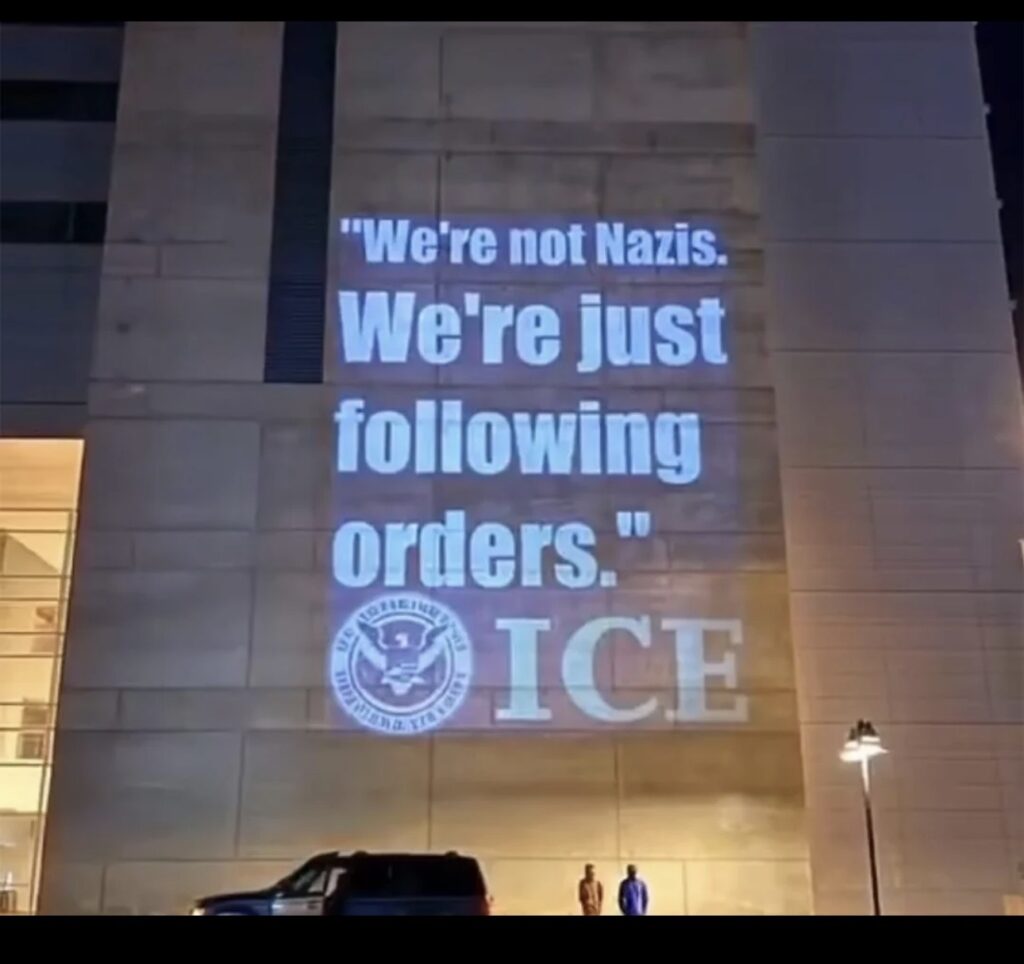
The administration’s hostility extended beyond words. Ahead of the game, Trump adviser Corey Lewandowski and Homeland Security Secretary Kristi Noem insisted that Immigration and Customs Enforcement (ICE) agents would be “all over” the Super Bowl. This threat was particularly pointed given Bad Bunny’s past criticism of ICE and his admission that he avoided U.S. tour dates partly due to fears of raids at his concerts.
A Pattern of Rhetoric
This incident is not isolated. It fits a pattern of rhetoric that seeks to marginalize non-white, non-English expressions of American identity. Just days before the Super Bowl, President Trump shared and then defended a video on his Truth Social account that depicted Barack and Michelle Obama as apes. After fierce backlash, including from Republican Senator Tim Scott who called it “the most racist thing I’ve seen out of this White House,” the video was removed and blame was shifted to a staffer.
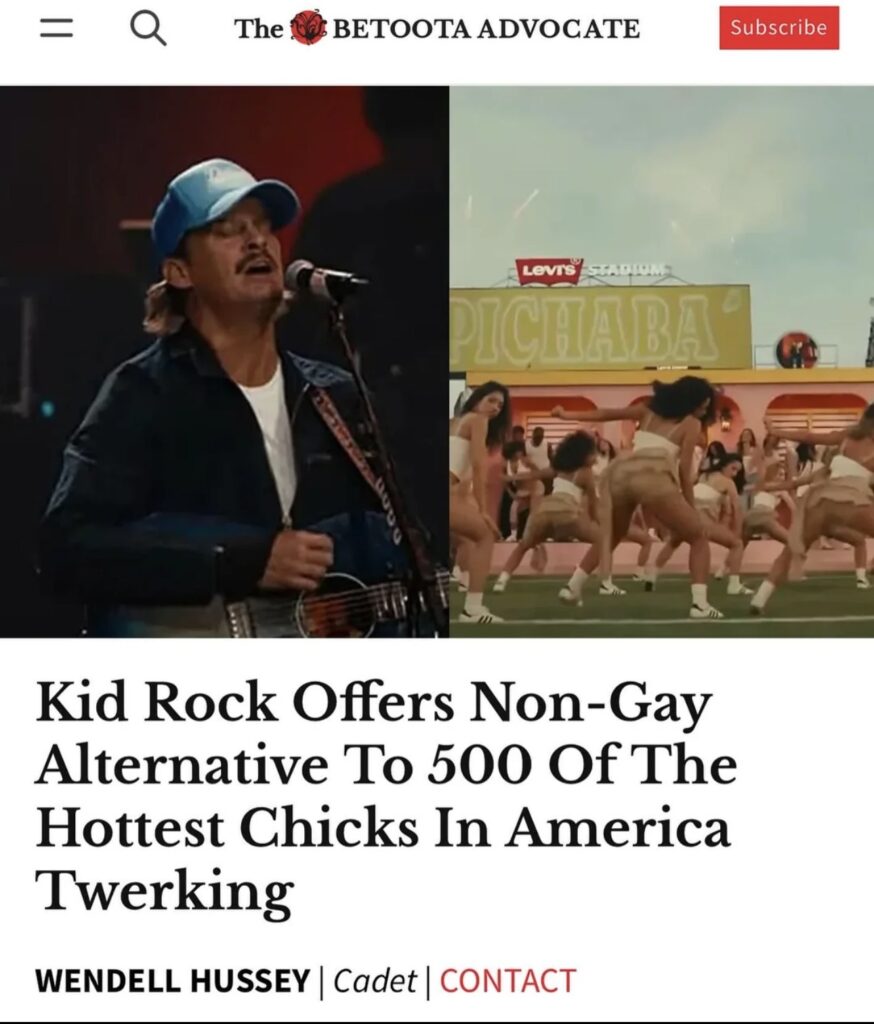
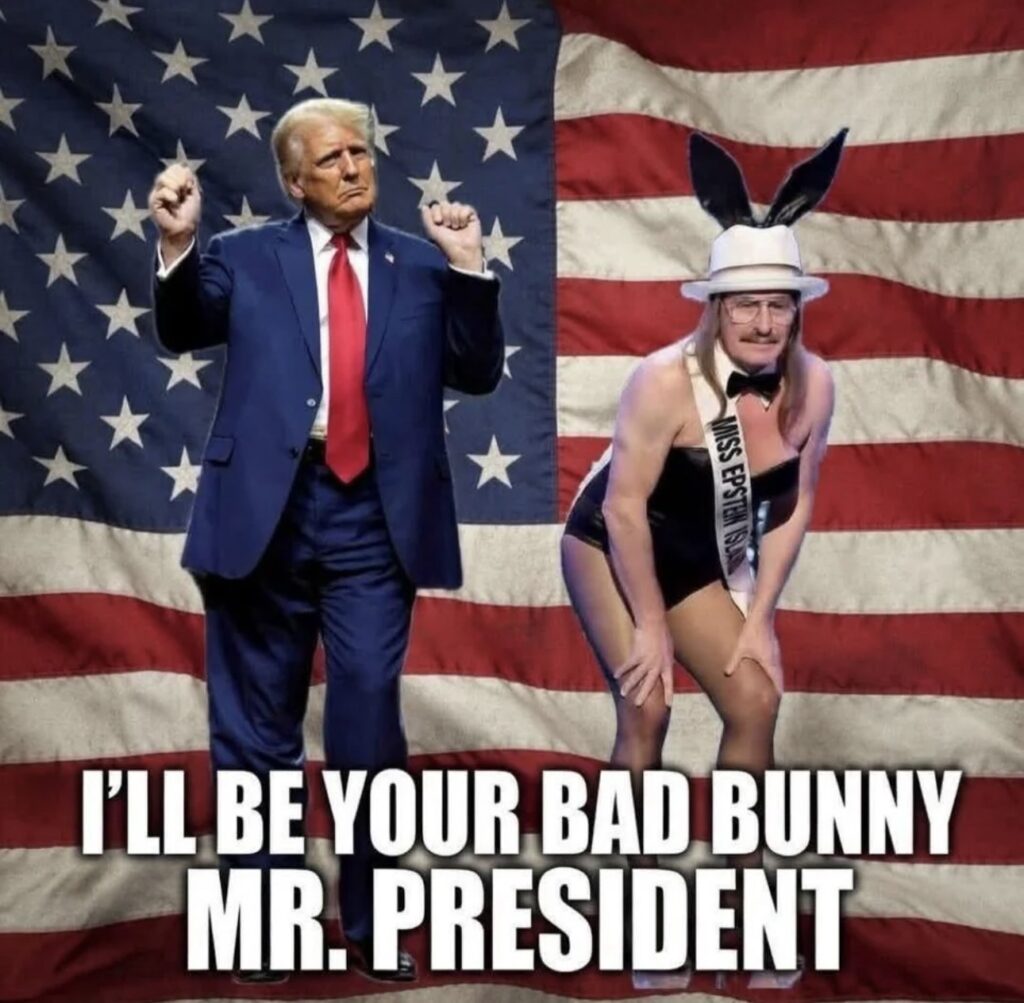
Similarly, the counter-programming to Bad Bunny’s show was revealing. The conservative group Turning Point USA hosted an “All-American Halftime Show” featuring Kid Rock, promoting it as content for “the entire family” with “no agenda other than to celebrate faith, family, and freedom”. The implied contrast was clear: Bad Bunny’s celebration of Latino culture was somehow agenda-driven and un-American, while their show represented true American values.
The Real American Story
What Trump and his cabinet fail to grasp is that Bad Bunny’s story is a quintessential American story. He is a U.S. citizen from Puerto Rico who rose from working-class roots to become a global icon through creativity and hard work. His performance was a tribute to the same communities of immigrants and entrepreneurs who have built the country.
As Bad Bunny himself said when announced as the headliner, his selection was “a win for all of us,” especially Latinos in the U.S. who have worked to open doors. “Our footprints and our contribution in this country,” he added in Spanish, “no one will ever be able to take that away or erase it”.
In the end, the millions who cheered his performance, and the thousands who celebrated in the streets of San Juan, understood what the critics did not. They understood that the “affront to America” Trump decried was, in fact, a profound act of love for an America that is multilingual, multicultural, and vibrantly alive. It is an America that doesn’t fear a changing world but helps lead it—on its own terms, and in more than one language.
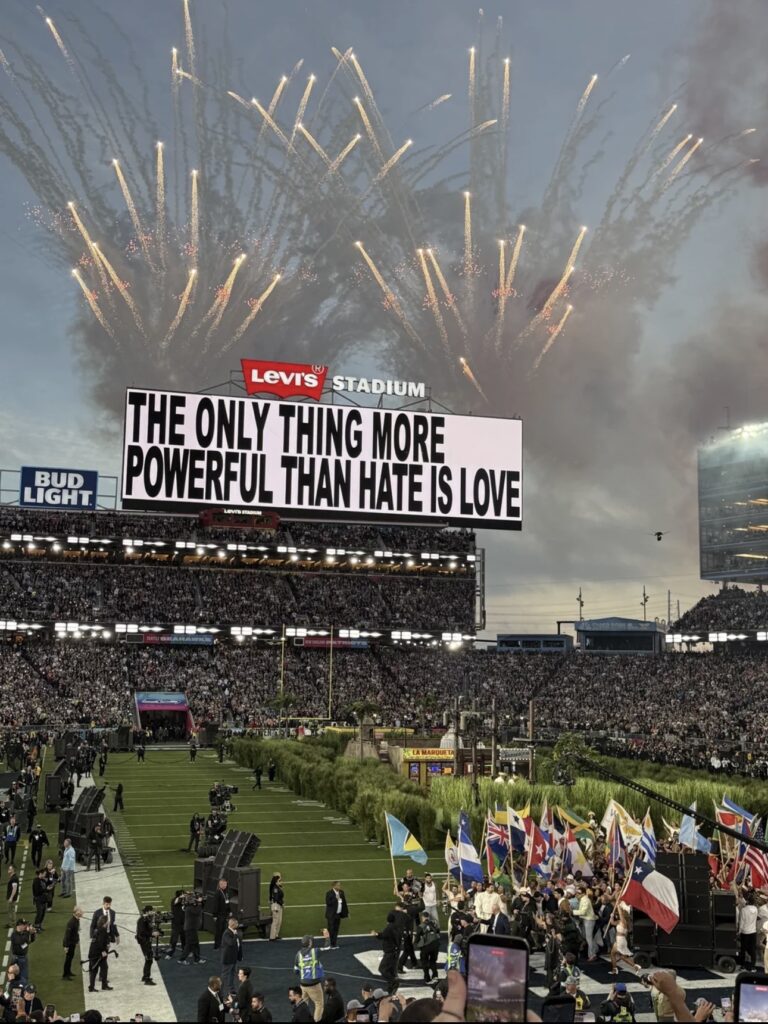
The final, powerful message displayed during his show said it all: “The only thing more powerful than hate is love”. In the face of racism and xenophobia, Bad Bunny chose to answer with an unforgettable celebration. And in doing so, he showed the real greatness of America.