
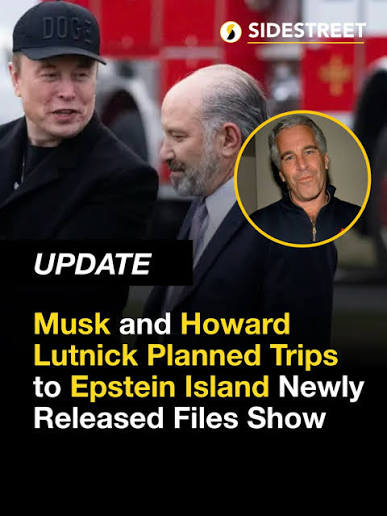
The release of millions of pages from the Jeffrey Epstein investigation has cast a stark light on the past associations of powerful figures, but few contradictions are as sharp as those surrounding Howard Lutnick, the U.S. Secretary of Commerce. Emails show Lutnick planning social visits with the convicted sex offender years after publicly vowing to sever all contact, raising serious questions about credibility at the highest levels of the U.S. government.
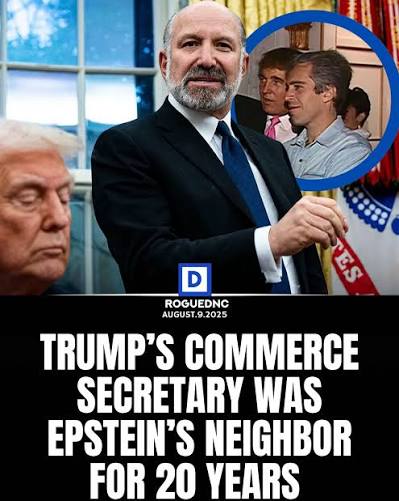
The Contradiction: A 2005 Vow vs. 2012 Emails
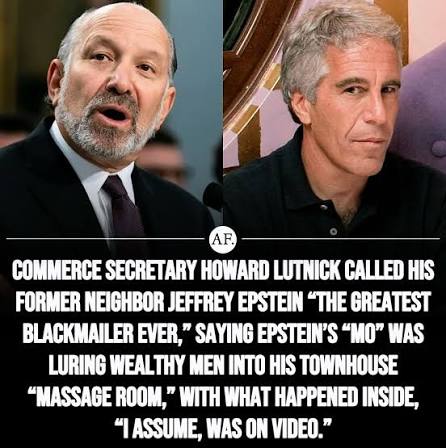
In October 2025, Lutnick presented a clear narrative of his relationship with his former New York City neighbor, Jeffrey Epstein. He described a chilling 2005 tour of Epstein’s home, where a central massage table and Epstein’s whispered comment about “the right kind of massage” led to an immediate decision.
“In the six to eight steps it takes to get from his house to my house, my wife and I decided that I will never be in the room with that disgusting person ever again,” Lutnick stated. He emphasized this meant never being with Epstein “socially, for business, or even philanthropy”.
The documents released by the U.S. Department of Justice in January 2026 tell a different story, evidenced by email exchanges from late 2012.
Key Discrepancies in Lutnick’s Account
Public Claim (2025) Evidence from Released Emails (2012)
Cut all ties in 2005 Coordinated a family visit to Epstein’s island in Dec 2012
“Never be in a room with him” Planned “lunch on Sunday” and asked for docking details
No social contact Wife emailed: “We are looking forward to visiting you”
Portrayed Epstein as a distant, repulsive figure Epstein later messaged: “Nice seeing you”
The planning was detailed. In November 2012, Epstein’s assistant reached out, prompting Lutnick to email “Jeff” directly weeks later to coordinate a dinner during a Caribbean trip with his family and another family. His wife, Allison, followed up with Epstein’s assistant, describing their group as “a crowd… 2 families each with 4 kids” and confirming “We would love to join you for lunch”. A subsequent email from Epstein’s assistant to Lutnick on Christmas Eve 2012 contained the message “Nice seeing you,” suggesting the visit occurred.
Deepening Connections: The 2015 Fundraiser Invitation
The evidence of contact extends beyond 2012. The released files also contain a November 2015 email in which Epstein’s assistant forwarded him an invitation from Lutnick to a “very =ntimate [sic] fundraising event” for presidential candidate Hillary Clinton. While it is unclear if Epstein attended, the invitation itself indicates Lutnick was maintaining a line of communication with Epstein a full decade after his claimed cutoff and seven years after Epstein’s first conviction.
Lutnick’s Defense and Political Ascent
When contacted by news organizations about the 2012 emails, Lutnick offered a brief response: “I spent zero time with him,” before ending the call. A spokesperson for the Commerce Department provided a more formal statement, saying the Secretary “had limited interactions with Mr Epstein in the presence of his wife and has never been accused of wrongdoing”.
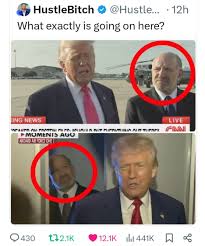
This scrutiny comes as Lutnick holds significant political influence. A longtime friend and top booster of former President Donald Trump, Lutnick was a co-chair of Trump’s 2024 transition team and was subsequently appointed Commerce Secretary. He has cited Trump’s “moral clarity” on Israel as a primary reason for his support, passionately advocating for the former president’s reelection.
· Pro-Israel Advocacy: Lutnick’s commitment to Israel is well-documented. Following the October 7 attacks, he and his wife helped channel millions through the Cantor Fitzgerald Relief Fund to Israeli emergency services. He has stated that Trump’s unwavering defense of Israel was “huge to me” and a key motivator for his political activism.
· Political Profile: His role has placed him in the spotlight, including a speech at a major Trump rally where he declared, “We must elect Donald Trump because we must crush jihad!”. This very public profile makes the inconsistencies in his Epstein account particularly consequential.

A Pattern of Enabling and the Question of Credibility
Lutnick’s emails are part of a broader trove that reveals how Epstein maintained his network. The files show Epstein facilitating introductions for other powerful men, like Prince Andrew, and include manuals detailing strict rules for staff to “see nothing, hear nothing, say nothing”. They also underscore the failed justice in the case, including a drafted 60-count indictment from 2007 that named three co-conspirators alongside Epstein—a case that was never brought, allowing him a lenient plea deal.
Lutnick himself has called Epstein “the greatest blackmailer ever,” speculating that he traded blackmail material for his soft sentence. This accusation makes Lutnick’s own continued social contact with Epstein, as revealed by the emails, even more perplexing.
The central issue is no longer about illegal activity—Lutnick has not been accused of any—but about truthfulness and judgment. The documentary evidence directly challenges his repeated personal narrative of principled disassociation. For a high-ranking official whose role involves international diplomacy and commerce, and who is a vocal advocate for a specific, values-driven foreign policy, these contradictions undermine professional credibility.
The released emails paint a picture not of a man who kept a disgusted distance after 2005, but of one who, years later, was willing to bring his wife and children to the private island of a convicted sex offender and maintain a connection through political fundraising invitations. In the calculus of power and access, the story of Howard Lutnick and Jeffrey Epstein reveals how the lines of social connection often proved more resilient than claims of moral revulsion.