
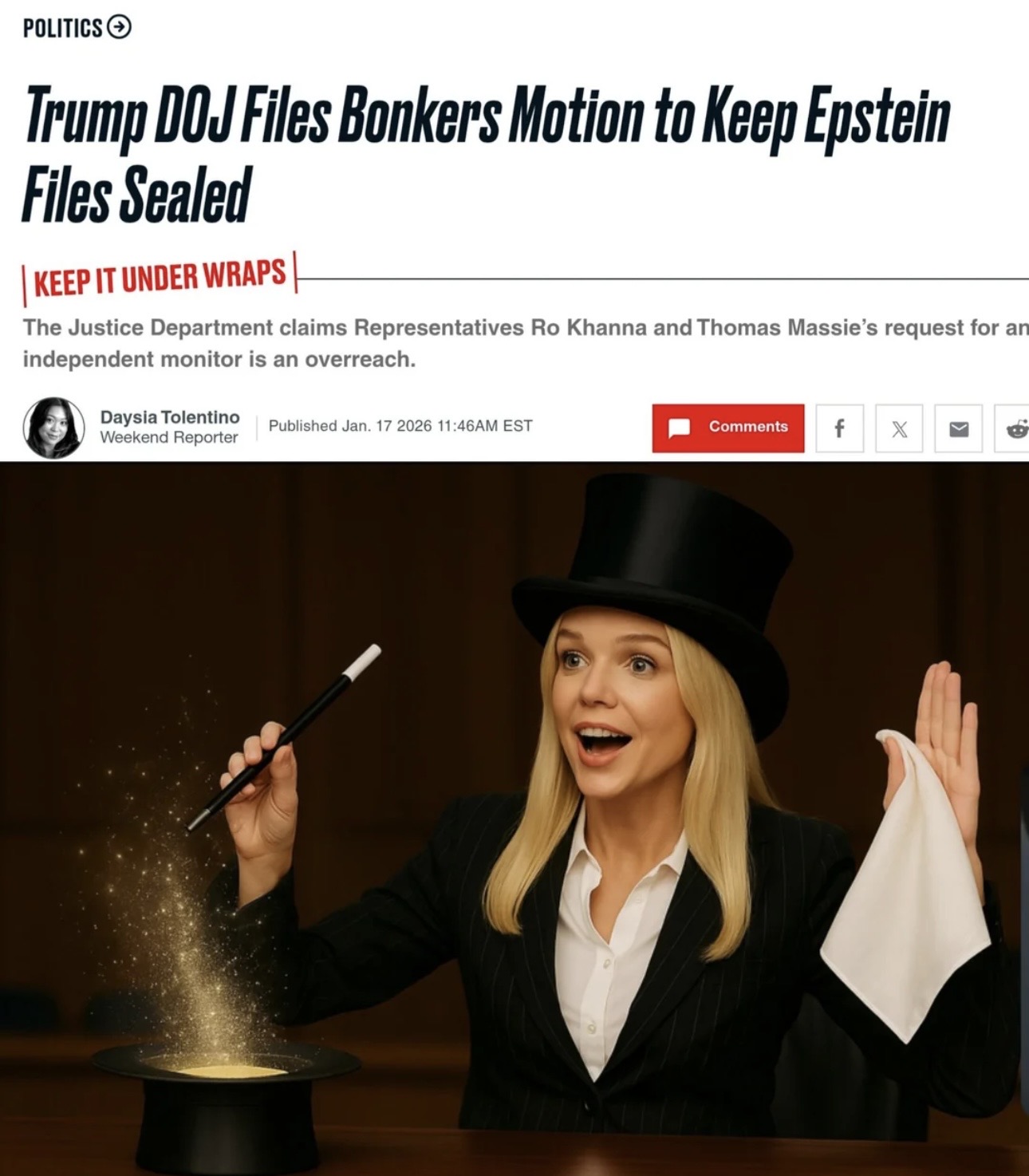
Justice Department releases less than 1% of documents by legal deadline as administration cites victim protection, critics allege obstruction.
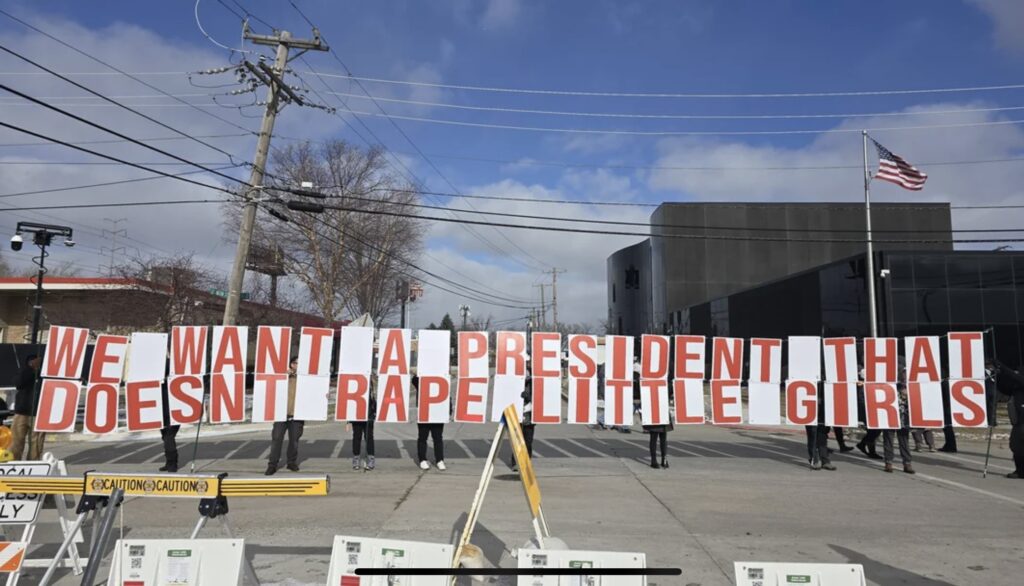
January 18, 2026 | WASHINGTON, D.C. — The U.S. Department of Justice has released less than 1% of the Jeffrey Epstein files required by federal law to be made public by December 19, 2025, triggering accusations of deliberate obstruction, potential constitutional crises, and a direct defiance of congressional authority. Despite a near-unanimous 427-1 congressional vote mandating transparency, the Trump administration continues to withhold millions of pages, with only 125,575 pages made public to date.

The delay has sparked bipartisan frustration, led to calls for impeachment of Attorney General Pam Bondi, and revealed significant rifts within the Republican Party as the MAGA base demands transparency the administration appears reluctant to provide.

The Law vs. The Delay
The Epstein Files Transparency Act, signed by President Donald Trump after he reversed his initial opposition, gave the Justice Department 30 days to release “all unclassified records, documents, communications and investigative materials” related to the Epstein investigation. The congressional mandate was explicit and allowed no room for partial compliance.
Yet, in a January 5, 2026 update to the federal judge overseeing the case, Attorney General Pam Bondi conceded that “more than two million documents potentially responsive to the Act” remain under review. She stated that approximately 400 Justice Department lawyers and 100 FBI document analysts are working on the files, with efforts focused on protecting victims’ identities.
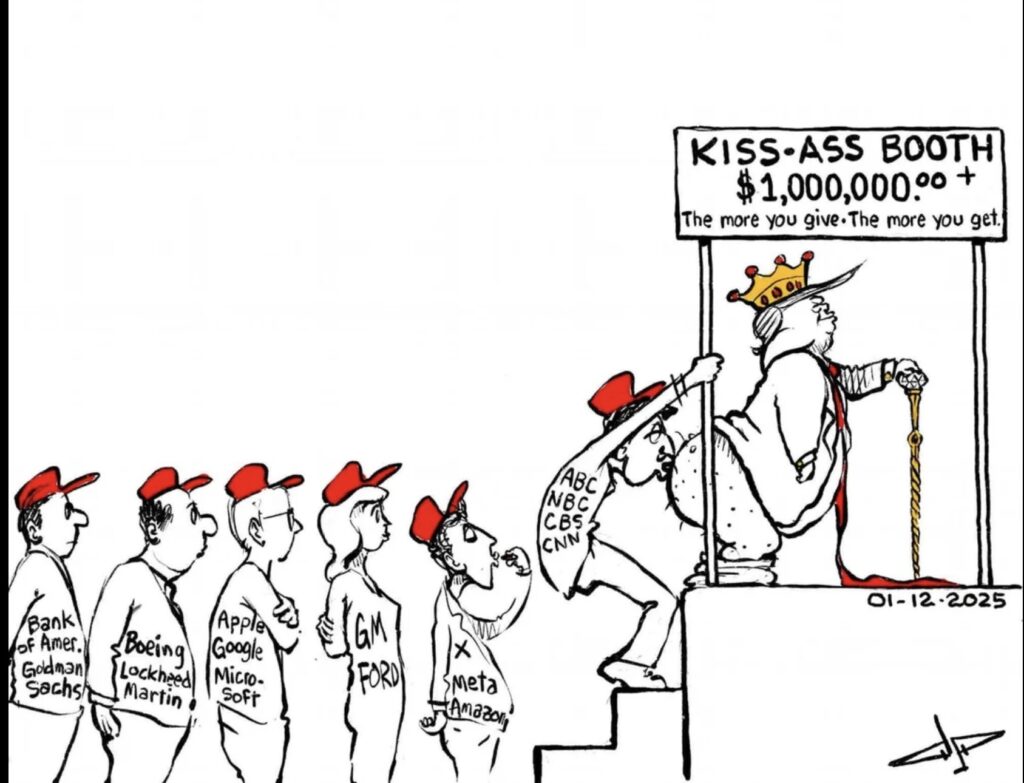
Deputy Attorney General Todd Blanche has become the administration’s public face defending the delay. “The reason why we are still reviewing documents and still continuing our process is simply to protect victims,” Blanche stated on NBC’s “Meet the Press,” accusing critics of being disingenuous.

Political Firestorm and Bipartisan Backlash
The administration’s position has ignited criticism from both sides of the aisle:
· Democratic Leadership: Senate Minority Leader Chuck Schumer has been particularly vocal, stating, “The Trump DOJ’s lawlessness must stop. I will do everything in my power to ensure all the files come out”. He emphasized that failing to release all files by the deadline constitutes breaking the law.

· Bipartisan Congressional Action: Democrat Ro Khanna (Calif.) and Republican Thomas Massie (Ky.) have taken extraordinary steps, asking a federal judge to appoint a neutral expert to oversee the release. They assert the DOJ cannot be trusted with the disclosure process and believe “criminal violations have taken place”.
· Impeachment Threats: Khanna and Massie have also indicated they are considering drafting articles of impeachment against Attorney General Bondi for gross failure to comply with the law.
Key Legal and Political Conflicts
· Statutory Deadline: December 19, 2025, for full release.
· DOJ’s Admitted Compliance: ~125,575 pages released (less than 1%).
· Primary Justification: Need to redact victim-identifying information.
· Major Political Response: Bipartisan call for independent monitor; impeachment discussions.
· Parallel Investigation: House Oversight Committee threatening contempt against Clintons for defying Epstein subpoenas.

A Party Divided: The MAGA Base Revolts
The Epstein file controversy has exposed unusual fractures within the Republican Party, demonstrating the power of the populist base to pressure leadership. President Trump initially dismissed calls for transparency, calling the case “pretty boring stuff” as recently as July. He reversed course only after significant pressure from within his own party, as illustrated by a September poll showing 67% of Republican voters supported releasing all files with victims’ names redacted.

Constitutional Crisis Looms as Trump DOJ Withholds Epstein Files in Defiance of Congressional Mandate
Justice Department releases less than 1% of documents by legal deadline as administration cites victim protection, critics allege obstruction
January 18, 2026 | WASHINGTON, D.C. — The U.S. Department of Justice has released less than 1% of the Jeffrey Epstein files required by federal law to be made public by December 19, 2025, triggering accusations of deliberate obstruction, potential constitutional crises, and a direct defiance of congressional authority. Despite a near-unanimous 427-1 congressional vote mandating transparency, the Trump administration continues to withhold millions of pages, with only 125,575 pages made public to date.

The delay has sparked bipartisan frustration, led to calls for impeachment of Attorney General Pam Bondi, and revealed significant rifts within the Republican Party as the MAGA base demands transparency the administration appears reluctant to provide.

The Law vs. The Delay
The Epstein Files Transparency Act, signed by President Donald Trump after he reversed his initial opposition, gave the Justice Department 30 days to release “all unclassified records, documents, communications and investigative materials” related to the Epstein investigation. The congressional mandate was explicit and allowed no room for partial compliance.
Yet, in a January 5, 2026 update to the federal judge overseeing the case, Attorney General Pam Bondi conceded that “more than two million documents potentially responsive to the Act” remain under review. She stated that approximately 400 Justice Department lawyers and 100 FBI document analysts are working on the files, with efforts focused on protecting victims’ identities.

Deputy Attorney General Todd Blanche has become the administration’s public face defending the delay. “The reason why we are still reviewing documents and still continuing our process is simply to protect victims,” Blanche stated on NBC’s “Meet the Press,” accusing critics of being disingenuous.
Political Firestorm and Bipartisan Backlash
The administration’s position has ignited criticism from both sides of the aisle:
· Democratic Leadership: Senate Minority Leader Chuck Schumer has been particularly vocal, stating, “The Trump DOJ’s lawlessness must stop. I will do everything in my power to ensure all the files come out”. He emphasized that failing to release all files by the deadline constitutes breaking the law.

· Bipartisan Congressional Action: Democrat Ro Khanna (Calif.) and Republican Thomas Massie (Ky.) have taken extraordinary steps, asking a federal judge to appoint a neutral expert to oversee the release. They assert the DOJ cannot be trusted with the disclosure process and believe “criminal violations have taken place”.
· Impeachment Threats: Khanna and Massie have also indicated they are considering drafting articles of impeachment against Attorney General Bondi for gross failure to comply with the law.

Key Legal and Political Conflicts
· Statutory Deadline: December 19, 2025, for full release.
· DOJ’s Admitted Compliance: ~125,575 pages released (less than 1%).
· Primary Justification: Need to redact victim-identifying information.
· Major Political Response: Bipartisan call for independent monitor; impeachment discussions.
· Parallel Investigation: House Oversight Committee threatening contempt against Clintons for defying Epstein subpoenas.

A Party Divided: The MAGA Base Revolts
The Epstein file controversy has exposed unusual fractures within the Republican Party, demonstrating the power of the populist base to pressure leadership. President Trump initially dismissed calls for transparency, calling the case “pretty boring stuff” as recently as July. He reversed course only after significant pressure from within his own party, as illustrated by a September poll showing 67% of Republican voters supported releasing all files with victims’ names redacted.
The most notable rebellion came from Congresswoman Marjorie Taylor Greene (R-Ga.), who said the issue had “ripped Maga apart”. After Trump called her a “traitor” on Truth Social for her advocacy, Greene publicly pushed back—a rare defiance that highlights the issue’s potency.
“This pressure is forcing even the most loyal Trump allies to break ranks,” Republican strategist Rina Shah noted, describing a party where “the grassroots can push leaders to act or they have to pay a price”.

Questions of Motive and Selective Transparency
Critics argue the victim-protection rationale is a pretext. They point to the removal of a photograph showing Trump with Epstein, Melania Trump, and Ghislaine Maxwell from the DOJ website the day after its release. Blanche claimed it was removed because it also showed victims and would be reposted after redaction, insisting, “It has nothing to do with President Trump”.
However, Representative Jamie Raskin (D-Md.) argues the obstruction is about concealment, not protection: “It’s all about covering up things that, for whatever reason, Donald Trump doesn’t want to go public”.
The released documents so far, while voluminous, have contained few major revelations. They include thousands of context-free photos and mundane records, but not the most anticipated materials like FBI interviews with survivors or internal DOJ memos on charging decisions.
A Constitutional Standoff with No Clear Resolution
The stalemate presents a fundamental constitutional question: what happens when the executive branch fails to execute a clear congressional mandate? The courts may ultimately decide. Judge Paul Engelmayer, overseeing the case, has directed the Justice Department to respond to allegations from Khanna and Massie. However, U.S. Attorney Jay Clayton has already indicated that the judge “lacks the authority” to appoint the independent monitor requested by Congress, as the lawmakers lack standing in the criminal case.
This leaves Congress with limited and politically explosive options: escalating impeachment efforts or attempting to wield its inherent contempt powers—a tool not used in decades.
The Victims’ Perspective
Amid the political warfare, the voices of Epstein’s survivors risk being overshadowed. The DOJ maintains its painstaking review is necessary to prevent re-traumatization. In their letter to Judge Engelmayer, officials noted they are conferring with victims and will redact personally identifying information upon request, even if previously public.
Marina Lacerda, who met Epstein when she was 14, has spoken publicly about her desire for accountability, specifically mentioning Prince Andrew. For survivors, the delayed transparency prolongs a long wait for full accountability and understanding of how Epstein’s network operated with such impunity.
The Path Forward
The Justice Department claims it is making “substantial progress,” with over 500 personnel now reviewing materials. Yet, it has provided no definitive timeline for full compliance. Every week that passes without the release of the remaining 99% of documents deepens the constitutional crisis and fuels accusations of a cover-up.
As the 2026 midterm elections approach, the Epstein file delay is more than a bureaucratic dispute—it has become a litmus test for the rule of law, the balance of power between government branches, and the ability of a deeply divided political system to deliver promised transparency. The standoff remains unresolved, with the administration holding the documents, Congress holding the law, and the public waiting for answers.
The most notable rebellion came from Congresswoman Marjorie Taylor Greene (R-Ga.), who said the issue had “ripped Maga apart”. After Trump called her a “traitor” on Truth Social for her advocacy, Greene publicly pushed back—a rare defiance that highlights the issue’s potency.
“This pressure is forcing even the most loyal Trump allies to break ranks,” Republican strategist Rina Shah noted, describing a party where “the grassroots can push leaders to act or they have to pay a price”.
Questions of Motive and Selective Transparency
Critics argue the victim-protection rationale is a pretext. They point to the removal of a photograph showing Trump with Epstein, Melania Trump, and Ghislaine Maxwell from the DOJ website the day after its release. Blanche claimed it was removed because it also showed victims and would be reposted after redaction, insisting, “It has nothing to do with President Trump”.
However, Representative Jamie Raskin (D-Md.) argues the obstruction is about concealment, not protection: “It’s all about covering up things that, for whatever reason, Donald Trump doesn’t want to go public”.
The released documents so far, while voluminous, have contained few major revelations. They include thousands of context-free photos and mundane records, but not the most anticipated materials like FBI interviews with survivors or internal DOJ memos on charging decisions.
A Constitutional Standoff with No Clear Resolution
The stalemate presents a fundamental constitutional question: what happens when the executive branch fails to execute a clear congressional mandate? The courts may ultimately decide. Judge Paul Engelmayer, overseeing the case, has directed the Justice Department to respond to allegations from Khanna and Massie. However, U.S. Attorney Jay Clayton has already indicated that the judge “lacks the authority” to appoint the independent monitor requested by Congress, as the lawmakers lack standing in the criminal case.
This leaves Congress with limited and politically explosive options: escalating impeachment efforts or attempting to wield its inherent contempt powers—a tool not used in decades.
The Victims’ Perspective
Amid the political warfare, the voices of Epstein’s survivors risk being overshadowed. The DOJ maintains its painstaking review is necessary to prevent re-traumatization. In their letter to Judge Engelmayer, officials noted they are conferring with victims and will redact personally identifying information upon request, even if previously public.
Marina Lacerda, who met Epstein when she was 14, has spoken publicly about her desire for accountability, specifically mentioning Prince Andrew. For survivors, the delayed transparency prolongs a long wait for full accountability and understanding of how Epstein’s network operated with such impunity.
The Path Forward
The Justice Department claims it is making “substantial progress,” with over 500 personnel now reviewing materials. Yet, it has provided no definitive timeline for full compliance. Every week that passes without the release of the remaining 99% of documents deepens the constitutional crisis and fuels accusations of a cover-up.
As the 2026 midterm elections approach, the Epstein file delay is more than a bureaucratic dispute—it has become a litmus test for the rule of law, the balance of power between government branches, and the ability of a deeply divided political system to deliver promised transparency. The standoff remains unresolved, with the administration holding the documents, Congress holding the law, and the public waiting for answers.