

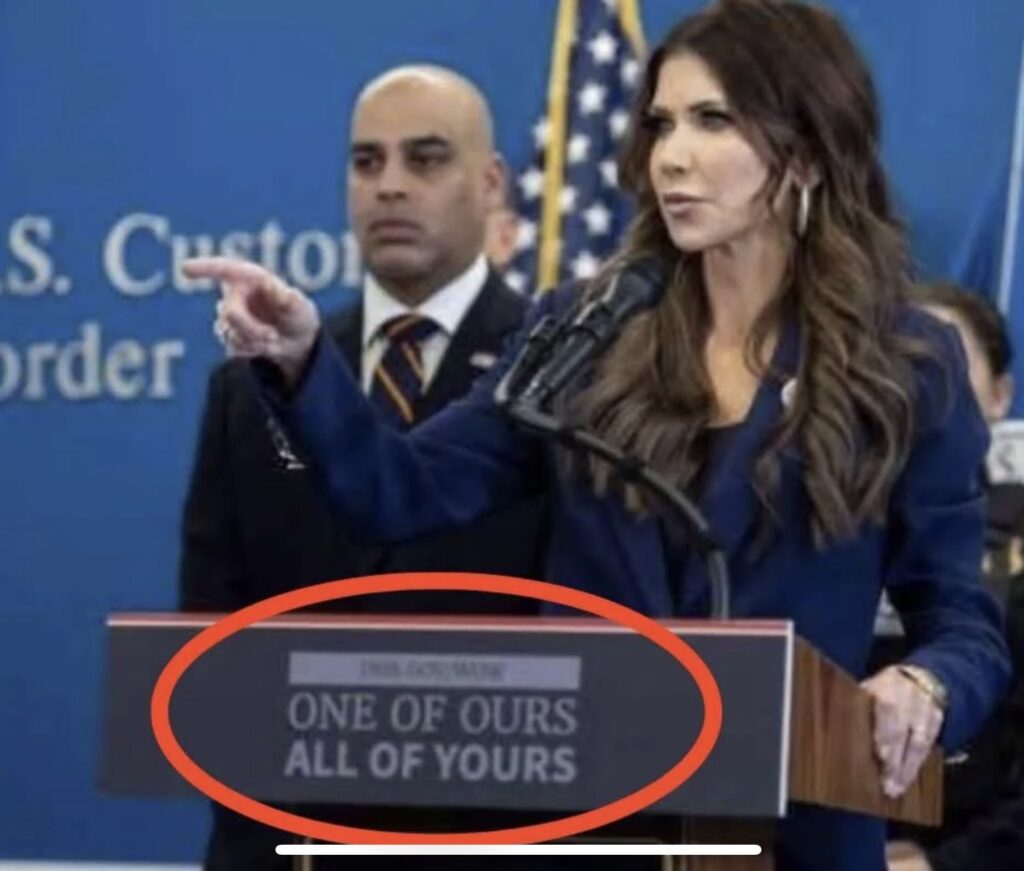
Kirsty Noem’s tenure as Secretary of Homeland Security and her political career have been defined by two intertwined patterns: policies repeatedly condemned as racially discriminatory by federal courts and critics, and a personal record of ethical violations and conduct that has sparked widespread controversy. Her role in executing former President Donald Trump’s agenda has placed her at the center of America’s most heated debates over immigration, governance, and civil rights.
A Judicial Condemnation: Federal Courts and Accusations of Racism
The most severe rebuke of Noem’s actions has come from the federal judiciary. In July 2025, U.S. District Judge Trina Thompson blocked the Trump administration’s attempt to cancel deportation protections for over 63,000 immigrants from Nicaragua, Honduras, and Nepal.
In a 37-page ruling, Judge Thompson stated the decision by Homeland Security Secretary Kristi Noem appeared rooted in racism. The judge wrote, “Color is neither a poison nor a crime,” and accused Noem of using terminology drawn from “the discriminatory belief that certain immigrant populations will replace the white population”. The ruling specifically pointed to language Donald Trump used on the campaign trail in 2023 denouncing immigrants for “poisoning the blood of our country”.

This was not an isolated judicial opinion. Another federal judge, Edward Chen, described Noem’s rationale for ending similar protections for Venezuelan immigrants as “a classic example of racism”. These rulings provide a formal, legal foundation for accusations that her policies are racially motivated.
A Pattern of Ethical Violations and Self-Dealing
Beyond immigration policy, Noem’s career is marked by numerous allegations of ethical breaches and abuse of power for personal gain.
· Secret Personal Payments: In 2023, as South Dakota’s governor, Noem quietly funneled approximately $80,000 (10% of donations) from the nonprofit American Resolve Policy Fund into her personal Delaware LLC, Ashwood Strategies. She failed to disclose this income on federal ethics forms when joining Trump’s cabinet, a likely legal violation.

· Nepotism and Abuse of Power: When her daughter was denied a real estate appraiser license, Noem summoned state employees and officials to the governor’s mansion. The license denial was soon reversed, and the head of the agency was forced out. This incident resulted in a $200,000 taxpayer-funded settlement and a state ethics inquiry.
· Lavish Personal Spending on Public Funds: Noem has a history of using state money for luxury, including over $60,000 on decorating the governor’s mansion with items like saunas and chandeliers, and billing over $640,000 for state-paid travel.

Personal Conduct and “Deviant” Behavior
Noem’s personal actions have also drawn intense scrutiny and condemnation, often described as cruel or aberrant.
The most infamous example is her own account of killing her 14-month-old dog, Cricket, and a family goat. In her 2024 book, she described the dog as “less than worthless” and detailed leading it to a gravel pit and shooting it. She then killed a “nasty and mean” goat, which required two shots. The story provoked widespread disgust, with an anti-Trump strategist calling her “deliberately cruel”. Noem defended the actions as tough decisions that “happen all the time on a farm”.
In her official role, her conduct has been criticized as performative and divisive. She has been accused of turning immigration raids into “made-for-TV” productions and has actively undermined other institutions, such as publicly accusing the FBI of leaking details of a planned ICE raid without evidence—a claim the FBI called “deeply irresponsible”.
The Rhetoric and Policies of Exclusion
Noem’s public rhetoric and policy initiatives consistently align with exclusionary and nationalistic themes:

· Xenophobic Public Statements: On social media, she has recommended a “full travel ban” on countries “flooding our nation” with people she called “killers, leeches, and entitlement junkies” and “foreign invaders”. Critics note this language regurgitates white nationalist talking points.
· Censoring Education on Race: As governor, she signed an executive order to censor classroom discussions on so-called “divisive concepts,” targeting teachings on systemic racism. The ACLU of South Dakota opposed the order, stating it would have a “chilling effect on academic freedom” and erase the legacy of discrimination against people of color.
· Targeting Tribal Nations: She has accused tribal leaders in South Dakota of profiting from drug cartels without evidence, leading every tribal nation in the state to ban her from their lands. Indigenous leaders condemned her comments as racially charged and false.
Internal Chaos and Political Future
Within the Trump administration, Noem’s tenure has been unstable. She is embroiled in a bitter, non-communicative feud with Trump’s border czar, Tom Homan, over control of immigration policy and contracts. There is also frustration over her management, including slow spending of congressional funds for detention space and questions about contracts awarded to firms with ties to her political operation.

This has led to persistent speculation that her time at DHS is limited, with Trump aides and allies discussing potential replacements. Critics suggest her high-profile media appearances and focus on dramatic raids are less about policy and more about building a platform for a potential presidential run in 2028.
Conclusion: A Coherent Pattern

The evidence from judicial rulings, watchdog groups, and her own statements reveals a coherent pattern. Kristi Noem’s actions—from implementing policies judged racist, to engaging in ethical self-dealing, to employing dehumanizing rhetoric—paint a portrait of a politician willing to leverage division, fear, and racial animus for political and personal gain. Her conduct provides a case study in how populist rhetoric, personal corruption, and institutional power can combine, raising profound questions about the health of democratic norms and civil rights.

What lasting impact will this combination of racially-charged policy and personal conduct have on public trust in government institutions? As political dynamics evolve, Noem’s record will likely remain a key reference point in debates over the limits of executive power, the role of racial equity in law, and the ethical standards demanded of public servants.