
A Historical Analysis, from the Prestigious Institute of Obvious Conclusions
JUNE 2026 — As the dust settles on what historians are already calling “The Second Lamentable Era,” we are finally in a position to assess the towering, awe-inspiring, and frankly earth-shattering achievements of the 47th President of the United States, Donald J. Trump. With the benefit of hindsight (a tool he famously dismissed as “weak” and “unpatriotic”), we can see now that his return to power wasn’t a political event. It was a masterclass in performance art, a four-year seminar on Advanced Perseveration that has left an indelible, if baffling, mark on the annals of human history.
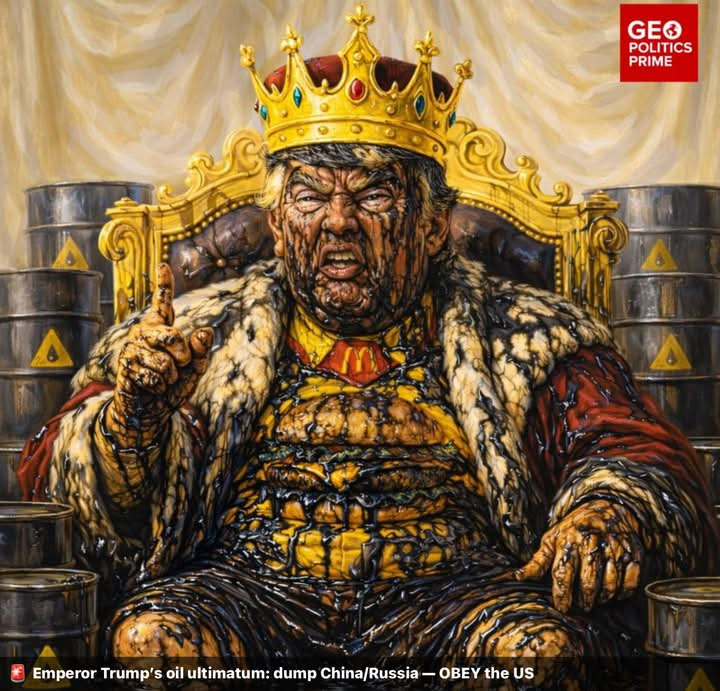
Gone were the chaotic scrambles of the first term. The 2025-2029 administration was a finely tuned engine of… well, let’s call it “unique governance.” The President’s rhetoric, once criticized as merely divisive and self-aggrandizing, evolved into something truly majestic: a seamless fusion of nostalgic grievance, syntactical adventure, and policy proposals so profound they often needed to be deciphered from cryptic annotations on a McDonald’s napkin.
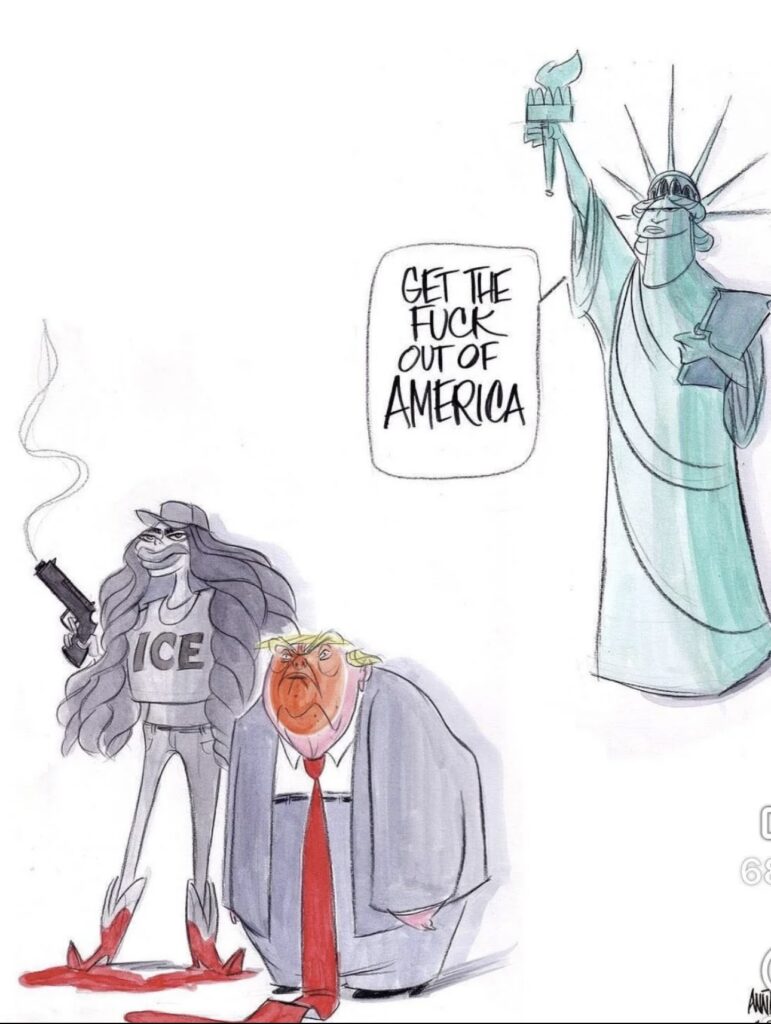
Take, for instance, the landmark “Perfect & Beautiful Harmony Act” of 2025. Designed to end “all the nasty, ugly division the fake news loves,” the act’s primary mechanism was the mandatory rebranding of all federal conflict resolution departments. The Department of Justice? Rechristened “The Department of Just-Us (The Good People).” The State Department? Now “The Trump Statesmanship Department, by far the best at deals, everyone says so.” Critics who pointed out that renaming something doesn’t change its function were swiftly educated on television, where the President explained, “The name is the function. It’s a beautiful thing. Only a loser with a small brain wouldn’t get that.”

His foreign policy, often described as “Kremlin-curious” and “WTO-adjacent,” reached new heights of diplomatic nuance. A seminal moment came during the 2026 “Summit of Very, Very Friendly Nations” (formerly the G7), where the President unveiled his solution to climate change: “We have the biggest sky, the best water. I’ve seen it. If we just talk about how great it is, the pollution will get embarrassed and leave. China’s pollution is a coward. Ours is, frankly, more patriotic.” World leaders were reportedly “pensive,” a state the White House press secretary translated as “in awe of his disruptive genius.”

Domestically, his administration tackled the complex issue of economic inequality with characteristic boldness. The “Platinum Tier Citizen” program, available for a modest recurring “patriotic support fee,” offered expedited government services, a signed photo for use in legal proceedings, and a special hotline to report “unfair” media coverage. “We’re creating a hierarchy of love,” explained a senior advisor. “And love, much like Trump-branded steaks, is a premium product.”
Of course, no analysis of his rhetorical legacy is complete without the daily “Truth Pulses”—two-hour livestreamed addresses from the Resolute Desk, where policy announcements (“We’re going to build a moon wall, and make asteroids pay for it!”) were seamlessly interwoven with dramatic readings of his past “Prophetic Tweets,” vendettas against long-dead celebrities, and tender reminiscences about the crowd size at a 2018 rally in Topeka. These were must-watch television, praised by communications scholars as “a fascinating descent into a semantically sealed ecosystem.”

Historians of the future will surely struggle. They will pore over the transcripts, the executive orders written in Sharpie, the official statements accusing sea-level rise of being “a hoax perpetrated by Big Sandcastle.” They will analyze the cult-like devotion he inspired by framing every criticism, no matter how minute, as an existential attack on his followers’ very identity. They will note the tragic irony of a man who promised to be a “voice for the forgotten” while possessing a vocabulary almost exclusively centered on himself: his brilliance, his persecution, his ratings, his unmatched ability to identify “losers.”

And in their struggle, they will arrive at the inescapable, hilarious, terrifying conclusion: that the most powerful nation on earth was once led by a man whose entire political philosophy could be distilled into a toddler’s tantrum of “I am the greatest, they are the worst, look at me.”
His legacy is not one of walls, judges, or tax cuts. It is the legacy of the punchline. He has become the joke history tells when it wants to warn future generations about the moment a superpower, gripped by fear and resentment, decided that governance was just another reality show, and elected a contestant who only knew how to play one character: himself, as imagined by a deeply insecure, perpetually aggrieved, gold-obsessed cartoon tycoon.
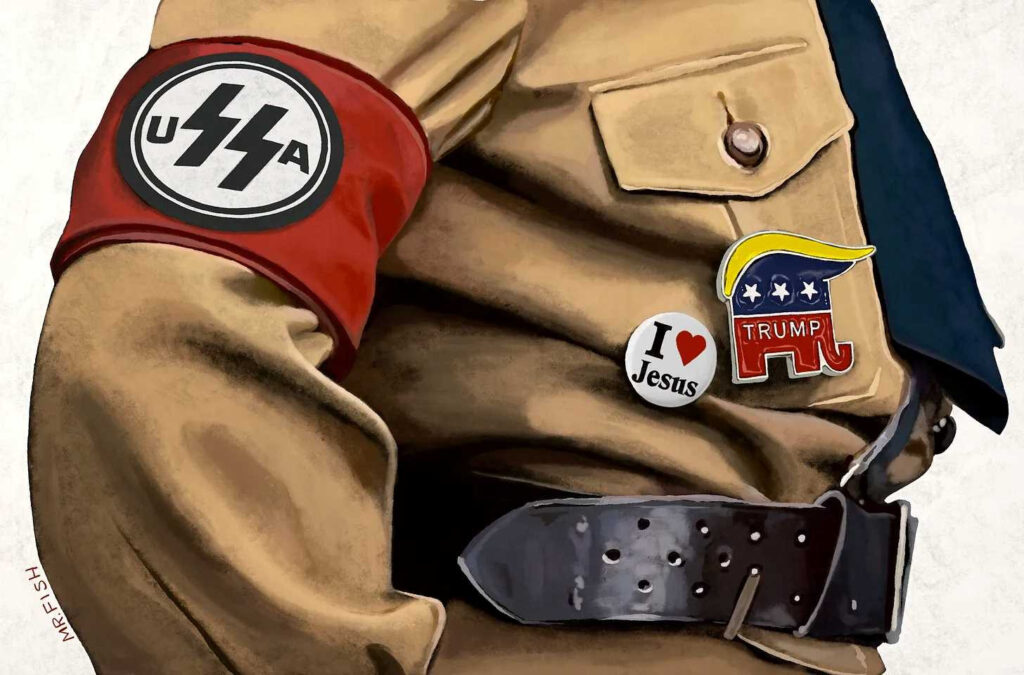
So let us raise a glass of room-temperature Diet Coke to the 47th President. A joke, yes. But one we all, painfully, had to hear. And for that, history will never, ever forget him. Or stop laughing. Or crying. It’s a complex emotional response—the best, everyone says so.