
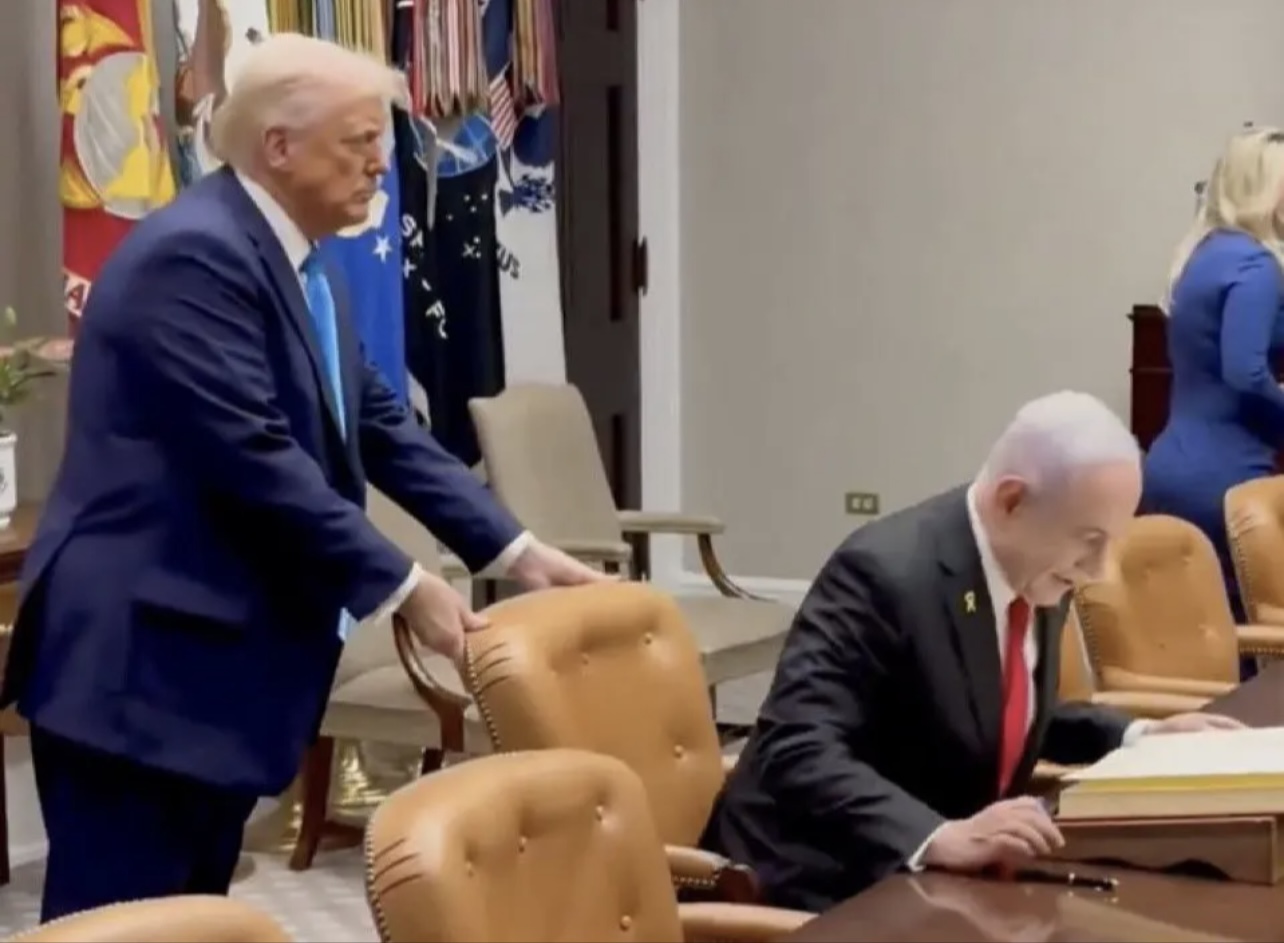
The Global Impact: Trump’s foreign policy shift away from democracy promotion has been described as a “green light” for autocrats, from Viktor Orbán in Hungary to Recep Tayyip Erdoğan in Turkey.
The term “fascist” is among the most potent and contested labels in modern politics. Its application to former U.S. President Donald Trump has sparked intense debate among historians, political scientists, and journalists. Moving beyond casual insult, a serious analysis reveals a pattern of political behavior, rhetoric, and policy that aligns disturbingly with core characteristics of historical fascist movements, adapted for the 21st-century digital age.
The Fascist Framework: More Than Just an Insult
To understand the allegations, one must first define the term. Fascism is a far-right, authoritarian political ideology characterized by several key pillars: extreme nationalism, a dictatorial leader, forcible suppression of opposition, and the belief in a natural social hierarchy where the individual is subordinated to the nation. Scholars like Robert Paxton describe it as a form of political behavior marked by a preoccupation with community decline and victimhood, compensated by cults of unity, energy, and purity.

Historically, fascist movements progress through stages: emerging from national disillusionment, gaining power through alliances with conservatives, and then dominating institutions to implement radical reforms. Experts stress that fascism is not a binary state but a process of democratic erosion.

Aligning Characteristics: Trumpism Through a Historical Lens
A side-by-side examination of classic fascist traits and Trump’s political modus operandi reveals significant overlaps.
Core Fascist Trait 1: Cult of the Leader and Personalist Rule
· Historical Precedent: Centralized, charismatic authority (Il Duce, Führer). The leader’s will supersedes institutions.
· Trump Manifestation: Governance centered on personal loyalty. Former Chief of Staff John Kelly noted Trump prioritized loyalty to himself over the Constitution. The Republican Party has largely transformed into a vehicle for his persona, sidelining traditional platform politics.
Core Fascist Trait 2: “Us vs. Them” Scapegoating and Mythic Palingenesis
· Historical Precedent: Identification of enemies (immigrants, ethnic minorities, leftists) as a unifying cause. Promise of national rebirth from a state of humiliation.
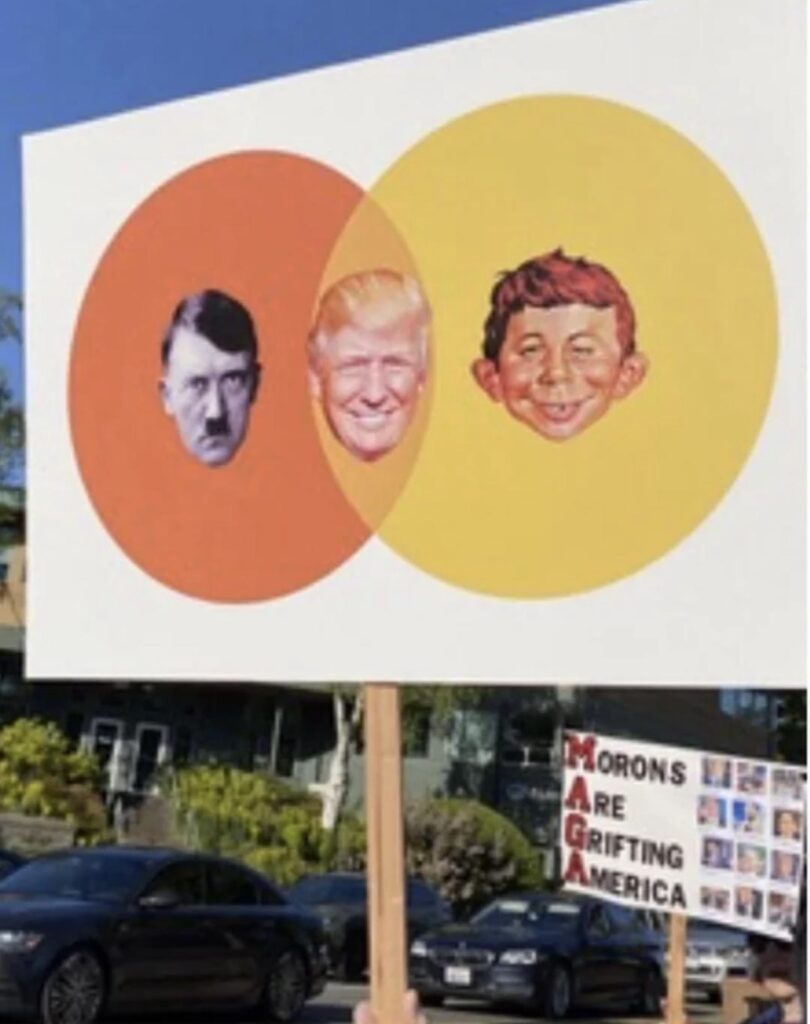
· Trump Manifestation: Consistent rhetoric framing immigrants as “infesting” the nation and political opponents as “vermin” or “the enemy within”. Campaign ads propagate a “great replacement” conspiracy theory, suggesting a shadowy elite is orchestrating demographic change.
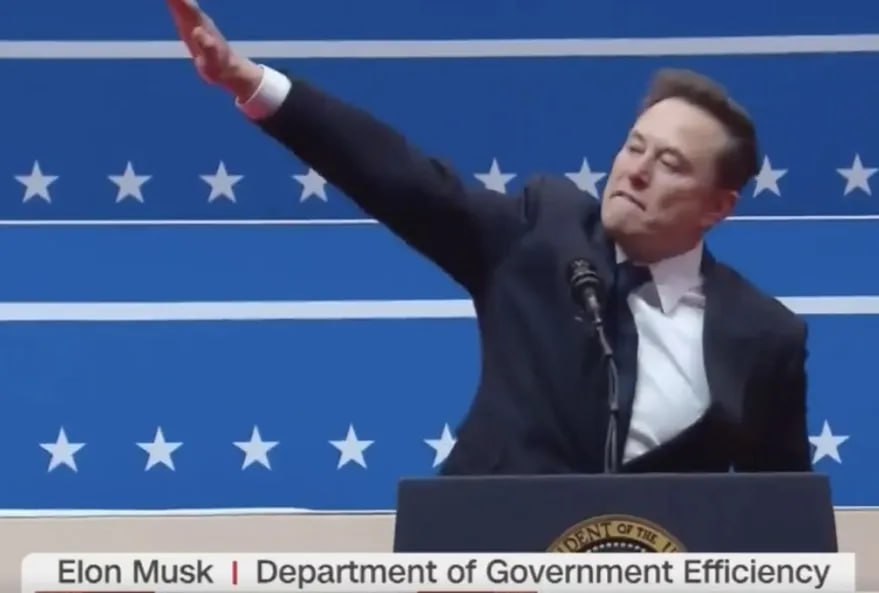
Core Fascist Trait 3: Disdain for Liberal Democracy and the Rule of Law
· Historical Precedent: Rejection of pluralism, independent media, and an independent judiciary. Use of law as a tool for political opponents.
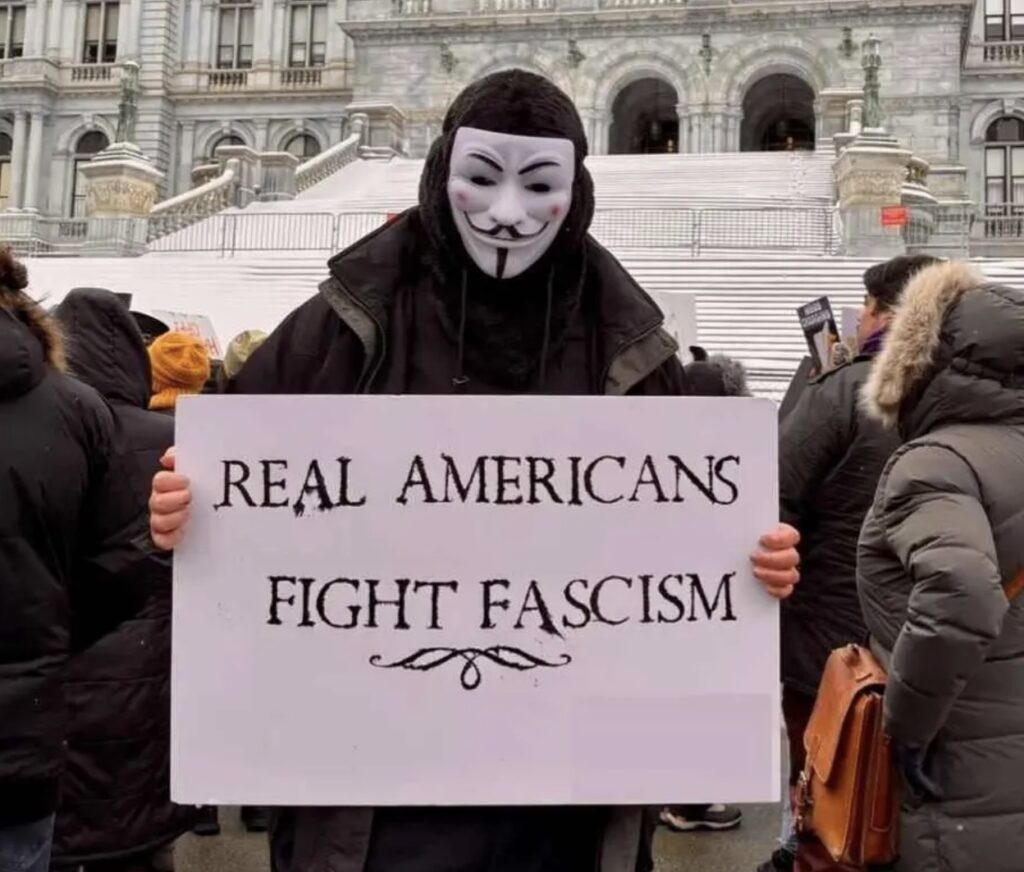
· Trump Manifestation: Attempts to overturn the 2020 election and the subsequent “Big Lie”. Launching investigations against political foes. Openly pressuring independent institutions like the Federal Reserve and the Bureau of Labor Statistics. Flouting court orders in immigration cases.
Core Fascist Trait 4: Glorification of Force and Authoritarian Violence
· Historical Precedent: Celebration of militant mobilization and political violence as purifying.
· Trump Manifestation: Rhetoric encouraging violence at rallies (“I’d like to punch him in the face”). Failure to unequivocally condemn the January 6th insurrection and the creation of a “cult of January 6th martyrs”. Unprecedented domestic deployment of the National Guard and Marines against the wishes of state governors.

Core Fascist Trait 5: Controlled Mass Media and Reality Distortion
· Historical Precedent: Propaganda machinery to create a mythic reality aligned with the leader’s narrative.
· Trump Manifestation: Relentless attacks on the free press as “the enemy of the people.” Masterful use of social media to bypass traditional gatekeepers and spread disinformation. As noted in The New Yorker, the fascist “does not serve the language; the language serves him”. The FCC’s investigations into major broadcast networks except Fox News mirrors tactics used by Orbán in Hungary.
The Psychological Dimension: Narcissism Meets Ideology
Some analysts argue that the fusion of personality and politics is key. Over 200 mental health professionals have described Trump as exhibiting “malignant narcissism”—a condition marked by grandiosity, paranoia, lack of empathy, and sadistic satisfaction in destroying others. This pathological self-absorption dovetails with the fascist requirement for a leader whose ego is synonymous with the nation’s destiny. Former Chairman of the Joint Chiefs General Mark Milley reportedly concluded Trump is “fascist to the core” after observing his governing style.
The Global Authoritarian Echo Chamber
Trump’s impact extends beyond U.S. borders, providing what one report calls a “green light for authoritarianism”.
· In Hungary, Prime Minister Viktor Orbán cited Trump’s election as lifting the “American boot” off his chest, allowing him to escalate attacks on LGBTQ+ rights and civil society.
· In Serbia, President Aleksander Vučić has used Trump’s rhetoric to justify raids on pro-democracy organizations.
· In Turkey, President Recep Tayyip Erdoğan has escalated repression of political opponents while Trump praised him as “very smart” and a “strongman”.
This global pattern reveals how a U.S. retreat from championing democratic norms emboldens autocrats worldwide.
A “Competitive Authoritarianism” or Full Fascism?
Hundreds of political scholars in the Bright Line Watch survey believe the U.S. is swiftly sliding from liberal democracy toward “competitive authoritarianism”—a system where elections exist but are systematically skewed in favor of the ruling party through the erosion of checks and balances. This differs from the totalitarian one-party state of historical fascism but shares its anti-democratic trajectory.
Key alarming moves consolidating this shift include the federalization of the D.C. police, the use of tariffs to claim emergency powers constitutionally reserved for Congress, and the instrumental use of immigration enforcement to test the limits of executive power and dehumanize a target group.
Conclusion: A Process, Not a Label
Calling Trump a fascist is not merely name-calling when grounded in historical and political analysis. The evidence suggests he leads a movement that embodies core fascist strategies: nationalist revivalism based on grievance, the personalist conflation of leader and nation, the systematic scapegoating of minorities, the contempt for legal and institutional constraints, and the normalization of political violence.
As historian Brian Hughes notes, “fascism is a process”. Whether the United States completes that process remains an open question, fiercely contested in courts, at the ballot box, and in the public square. The ultimate check may not be academic definitions but the resilience of democratic institutions and the collective will of the citizenry to defend them.
This analysis is based on reporting and research from The New Yorker, The Guardian, CNN, NPR, the Council on Foreign Relations, American Progress, and academic definitions of fascism.