

As the conflict with Iran approaches its fourth week, the United States and its allies are confronting a sobering reality: the air war, while inflicting devastating blows on Iranian military infrastructure, has come at a significant material cost. For an American defense establishment accustomed to air supremacy with minimal losses, the tally of damaged and destroyed aircraft represents the most intense period of combat attrition since the Vietnam War.

The Human Toll
Before examining the hardware, it is essential to acknowledge the human cost. Since operations began on February 28, 2026, 13 U.S. service members have been killed. Six of these were crew members aboard a KC-135 Stratotanker that crashed in western Iraq, while seven died in Iranian attacks during the early stages of the conflict. Approximately 200 U.S. personnel have been wounded across seven Middle Eastern countries, though most have since returned to duty.

Counting the Losses: Aircraft Damaged and Destroyed
According to reports compiled from Bloomberg, Anadolu Agency, and confirmed by U.S. Central Command statements, the U.S. has lost at least 16 military aircraft in the conflict so far. The losses span a range of platforms, from high-tech stealth fighters to critical support aircraft and drones.
Friendly Fire: The F-15E Strike Eagle Incident
The most significant single loss of crewed aircraft came not from Iranian fire but from friendly forces. Early in the conflict, three F-15E Strike Eagle fighter jets were accidentally shot down by Kuwaiti air defenses. This incident occurred during combat that included “attacks from Iranian aircraft, ballistic missiles, and drones,” creating a confused battlespace that led to the tragic friendly fire event. Fortunately, all six crew members from the three aircraft were able to eject and survive.

The replacement cost for these three F-15E Strike Eagles is estimated at $282 million.
The KC-135 Stratotanker Crash
Adding to the losses was the crash of a KC-135 Stratotanker aerial refueling aircraft in western Iraq. The Pentagon has stated that the loss “was not due to hostile fire or friendly fire,” though Iran-backed Iraqi factions claimed responsibility. The crash killed all six crew members aboard, whose identities were released by the Pentagon in mid-March.

The KC-135, a platform that has been in service for over 60 years, carries a replacement cost estimated at $80 million when adjusted for inflation.
The F-35 Incident: A First for the Stealth Fighter
In a development that sent shockwaves through the defense community, a U.S. F-35 stealth warplane was reportedly struck by suspected Iranian fire and forced to make an emergency landing at a U.S. air base in the Middle East. U.S. Central Command spokesperson Captain Tim Hawkins confirmed the aircraft landed safely and the pilot was in stable condition, though he would not verify the cause.

Iran’s state-run Press TV claimed its air defense systems badly damaged the fifth-generation fighter over the country’s central region. If confirmed, this would represent the first known instance of an F-35 being hit by enemy fire since the aircraft entered service approximately ten years ago.
The F-35, with its advanced stealth coatings and sensor suite, costs up to $77 million per unit according to 2023 Congressional Research Service figures.
Reaper Drones: The Heavy Toll
The most numerous losses have been among unmanned systems. U.S. officials speaking to CBS News have confirmed that 11 MQ-9 Reaper drones have been downed during the conflict. Other reports suggest the number of Reapers destroyed or damaged may be as high as 10, with some lost to Iranian air defenses and others to accidents.
At a unit cost of roughly $30 million each, the total loss of these drones represents approximately $330 million. The Reapers were meant to be “attritable”—flown in higher-risk areas because they lack pilots and are cheaper to replace than crewed aircraft—but the scale of losses has raised questions about their vulnerability against Iranian air defenses.
Ground-Based Assets: The $4 Billion Question
While aircraft losses are significant, the financial toll extends to ground-based systems. Anadolu Agency’s analysis of open-source intelligence and satellite imagery suggests the U.S. has lost approximately $3.84 billion in military assets in the first two weeks of “Operation Epic Fury”.
The single most expensive loss was an AN/FPS-132 early warning radar system at Al Udeid Air Base in Qatar, valued at $1.1 billion, which was struck by an Iranian missile. Additionally, four AN/TPY-2 radar components of the THAAD anti-ballistic missile system—deployed in the UAE, Jordan, and Saudi Arabia—have been hit, with combined replacement costs estimated at $2 billion.

Iran also claimed to have destroyed an AN/TPY-2 radar component at Al-Ruwais Industrial City in the UAE, a claim supported by satellite imagery suggesting a successful strike. That single component is valued at $500 million.
Allied Losses and Regional Impact
While U.S. forces have borne the brunt of the losses, allied nations have not emerged unscathed. The conflict has drawn in regional partners, with military installations across Bahrain, Kuwait, Qatar, the UAE, Jordan, and Saudi Arabia coming under attack.
The US Navy’s Fifth Fleet headquarters in Bahrain was struck early in the conflict, destroying two satellite communications terminals valued at approximately $20 million and damaging several buildings. U.S. diplomatic missions in Riyadh, Kuwait City, and Dubai have also been targeted by drones and missiles.

Analysis: Why the High Losses?
The attrition rate has surprised many defense analysts. During the last major U.S. air campaign—the military intervention in Libya in 2011—there were only three reported combat losses over four months. So why the difference?
Peter Layton, a former Royal Australian Air Force officer and visiting fellow at the Griffith Asia Institute, suggests the answer lies in the scale of operations: “The difference might be a much greater rate of effort. More sorties flown each day”. The U.S. conducted more strikes in the first day of the war than in the “shock and awe” aerial attacks of the 2003 Iraq War.

Additionally, Iran’s air defense network has proven resilient. While U.S. and Israeli strikes targeted Iranian air defenses as a priority, completely establishing air supremacy has remained elusive. Chairman of the Joint Chiefs of Staff Dan Caine has stated that the U.S. only has localized air superiority over specific swathes of Iranian airspace.
Iran employs systems like the infrared-guided 358 surface-to-air missile, which has no radar and provides no warning to aircraft being tracked. Such systems have proven effective against U.S. assets in previous conflicts, including the 2025 campaign over Yemen.
The Cost of Replacement
The total replacement cost for U.S. military assets damaged or destroyed in the conflict currently stands at approximately $3.84 billion, according to Anadolu Agency’s estimates. However, this figure includes only the first two weeks of fighting and primarily accounts for major systems. The final tally will almost certainly be higher.
Some key replacement cost figures include:
Asset Estimated Replacement Cost
AN/FPS-132 Radar System $1.1 billion
Four AN/TPY-2 Radars $2.0 billion
Three F-15E Strike Eagles $282 million
11 MQ-9 Reaper Drones $330 million
KC-135 Stratotanker $80 million
Two SATCOM Terminals $20 million
Sources: Anadolu Agency, TASS

Conclusion
As Operation Epic Fury continues into its fourth week, the U.S. military faces a complex operational environment. While the air campaign has significantly degraded Iran’s missile production capabilities and, according to Israeli estimates, destroyed approximately 60 percent of its launchers, the cost has been substantial.
The loss of an F-35 to enemy fire—if confirmed—would be a historic first that may prompt a reassessment of stealth aircraft vulnerabilities. The attrition of MQ-9 Reaper drones, meanwhile, highlights the challenges of operating unmanned systems against a capable adversary.

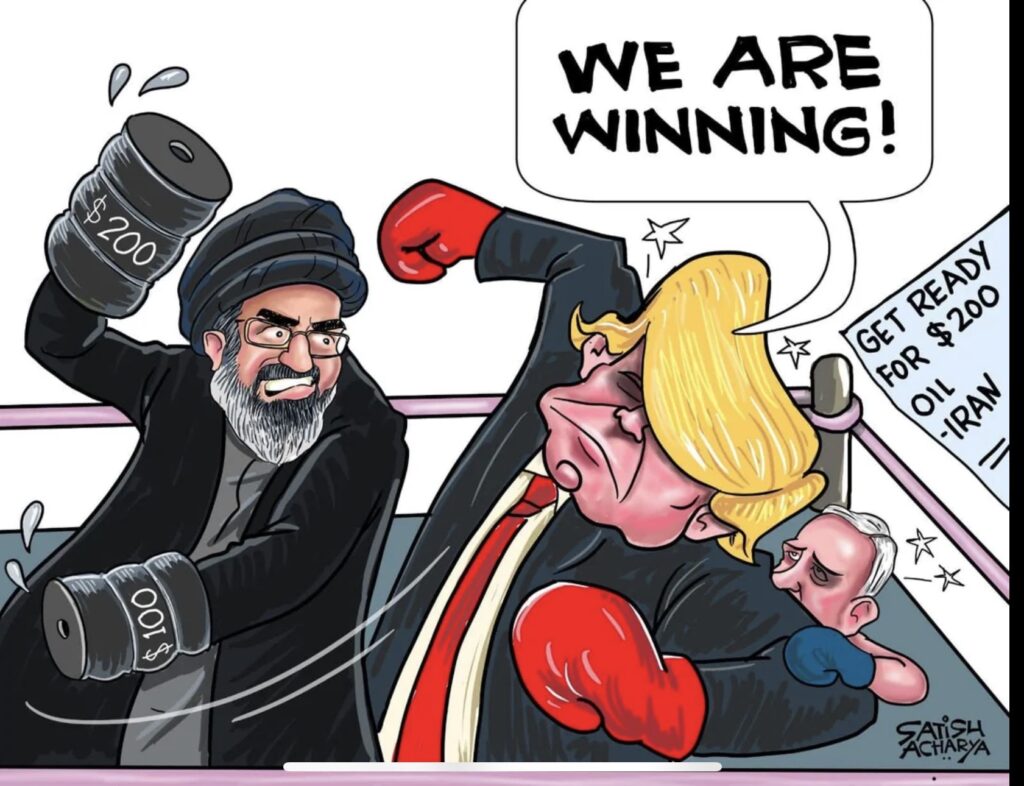
For the Trump administration, the rising material costs—approaching $4 billion and climbing—add a financial dimension to the already significant human and geopolitical stakes of the conflict. As Secretary of Defence Pete Hegseth has noted, Iranian attacks have declined by about 90 percent since the start of the conflict. Whether this reduction justifies the losses incurred remains a question that will likely fuel debate for months to come.